Type 212
Germany's pioneering fuel-cell AIP attack submarine — the ultra-quiet Type 212A, now evolving into the larger Type 212CD for North Atlantic/Arctic operations, operated by Germany, Italy and (on order) Norway.
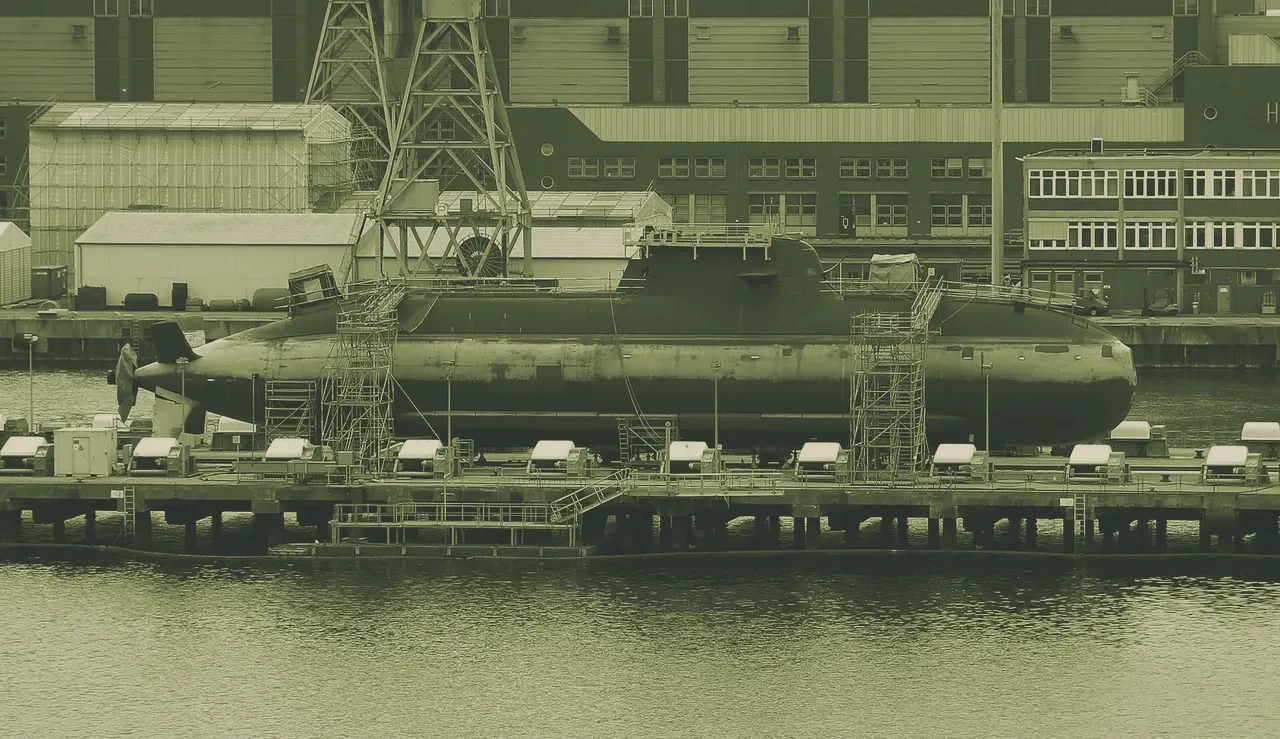
Germany's pioneering fuel-cell AIP attack submarine — ultra-quiet, non-magnetic, now evolving into the larger Type 212CD for North Atlantic/Arctic operations.
Overview
The Type 212, principally embodied in the in-service Type 212A (Todaro class in Italian service), is a compact diesel-electric attack submarine equipped with hydrogen fuel-cell air-independent propulsion (AIP). Designed by thyssenkrupp Marine Systems / HDW, it is optimised for long silent submerged operations in the confined, shallow waters of the Baltic, North Sea and Mediterranean, providing anti-submarine and anti-surface warfare, intelligence gathering and special forces support. Its non-magnetic steel hull and exceptionally quiet AIP plant made it, at its 2005 entry into service, one of the stealthiest conventional submarines ever fielded. The follow-on Type 212CD enlarges the design into a joint German–Norwegian common platform for North Atlantic and Arctic missions, with Norway ordering six boats and Germany two.
Development
The Type 212A was developed by the German Submarine Consortium (ARGE U212) led by Howaldtswerke-Deutsche Werft (HDW, now part of thyssenkrupp Marine Systems), with Fincantieri building the Italian boats under a co-production programme. The lead boat, U-31, was commissioned in 2005 after the programme had matured a Siemens PEM fuel-cell AIP system that allowed the boat to operate submerged for weeks without access to atmospheric oxygen, a leap beyond contemporary diesel-electric designs. According to the Naval Technology report on the follow-on programme, the 212A's success prompted the larger Type 212CD "Common Design" for Germany and Norway, aimed at delivering a boat with greater range, endurance, and arctic capability.
Design & capabilities
The 212A’s hydrodynamically optimised single-hull form is constructed from non-magnetic steel, reducing its magnetic signature and thereby its vulnerability to magnetic-influence mines and airborne magnetic anomaly detectors. Its propulsion arrangement pairs a single MTU 16V 396 diesel generator with a Siemens PEM hydrogen fuel-cell AIP system and a Permasyn permanent-magnet electric motor driving a single skewed seven-bladed propeller. The result is a submerged endurance of approximately three weeks on AIP without snorkelling, a top submerged speed of 20 knots, and an overall noise signature that the Seaforces online reference characterises as among the lowest of any conventional submarine. The six 533 mm torpedo tubes can launch DM2A4 Seehecht and—in Italian boats—Black Shark heavyweight torpedoes, carry up to 24 mines, and are being integrated with the IDAS fibre-optic-guided missile for helicopter and small-craft defence. The boat’s sensor suite is built around the DBQS-40 (CSU 90) sonar. The significantly larger Type 212CD displaces roughly 2,800 tonnes submerged, is 73 metres long, embarks two MTU 4000 diesels alongside an evolved PEM AIP plant, and carries its Common Heavy Weight Torpedo in four 533 mm tubes.
Variants
- Type 212A: Baseline 1,830-tonne boat; six in German service (U-31 to U-36), four in Italian service (Todaro class, built by Fincantieri). All 10 are in active service.
- Type 212CD (Common Design): Larger, stealth-optimised German–Norwegian collaborative design. Germany ordered two boats; Norway initially ordered four and then exercised an option for two more in early 2026, bringing the Norwegian total to six. First delivery to Norway is planned for 2029.
- U212 NFS (Near Future Submarine): An Italian evolution of the 212A incorporating lithium-ion batteries alongside the fuel cell, built by Fincantieri for the Italian Navy; not yet in service.
Combat record / operational use
As of 2026 the Type 212 family has no recorded combat. The German Navy has employed the 212A in Baltic and North Sea patrols, NATO exercises, and long-duration intelligence-gathering missions for which its AIP endurance is particularly suited; Italy’s Todaro-class boats perform similar roles in the Mediterranean. The boats’ operational record is one of technical demonstration and deterrence patrols rather than kinetic action, and no 212 has been lost or engaged in hostilities, a fact consistent with the extensive service history catalogued by Seaforces.
Advantages
- Hydrogen fuel-cell AIP gives weeks of submerged loiter without snorkelling, making the boat exceptionally difficult to detect.
- Non-magnetic steel hull reduces vulnerability to magnetic mines and MAD sensors.
- Extremely small acoustic signature; classed among the quietest conventional submarines.
- Modest crew size (23–27) minimises human and logistic footprint.
- Proven design with a decade-plus of operational experience across two navies.
Drawbacks / limitations
- Limited displacement restricts weapon loadout (six tubes, no vertical launch), reducing sustained salvo weight against larger surface action groups.
- Torpedo-tube anti-ship missile options (IDAS) are still developmental; no VLS, no tube-launched land-attack cruise missile.
- The baseline 212A is small and optimised for littoral/coastal waters; open-ocean blue-water endurance is limited compared to larger SSKs or SSNs.
- High unit cost (€280–560 million, depending on build lot) limits fleet numbers.
- The 212CD introduces more capability but at higher cost and with a delivery timeline that stretches into the 2030s.
Counterparts
- Improved Kilo (Russia) — a larger, Kalibr-capable SSK without AIP, heavily exported and combat-proven.
- Type 039 Yuan (China) — a Stirling-AIP SSK of similar generation, in wide service with the PLAN and now exported, the principal AIP rival.
- Scorpène class (France/Spain) — comparable diesel-electric SSK, optionally fitted with MESMA AIP, heavily exported.
Outlook
The Type 212A will remain the backbone of German and Italian conventional-submarine forces through the 2030s, while the Type 212CD and the Italian U212 NFS will begin delivering from the end of the decade. The 212CD’s increased size and endurance position it as Germany’s definitive answer to the demands of North Atlantic and Arctic operations, and Norway’s expansion to six boats reinforces a powerful multi-national AIP fleet. The design’s strengths lie in silent persistence, not raw payload, and its operational value will be measured by mission-days submerged rather than missile counts.
Key specifications
| Spec | Value |
|---|---|
| Type | Diesel-electric attack submarine with air-independent propulsion (AIP) |
| Full-load displacement | 1,830 t submerged |
| Length / beam / draft | 56 m / 6.8 m / 6.4 m |
| Propulsion | 1 × MTU 16V 396 diesel + Siemens PEM hydrogen fuel-cell AIP + Permasyn electric motor; single 7-bladed prop |
| Max speed (kts) | 20 kts submerged / 12 kts surfaced |
| Range / endurance | ~8,000 nm at 8 kts; submerged endurance ~3 weeks on AIP |
| Complement | 23–27 |
| Armament | 6 × 533 mm torpedo tubes (DM2A4 Seehecht, Black Shark torpedoes; up to 24 mines; IDAS missile in development) |
| Sensors / combat system | DBQS-40 (CSU 90) sonar suite |
| Aviation facilities | None |
Note: The follow-on Type 212CD is substantially larger (2,800 t submerged, 73 m length, 10 m beam, 41-day submerged AIP endurance, 4 torpedo tubes).
Sources
- German Navy Type 212A class submarine — Seaforces Online — https://www.seaforces.org/marint/German-Navy/Submarine/Type-212A-class.htm
- Type 212A submarine — Wikipedia — https://en.wikipedia.org/wiki/Type_212A_submarine
- Type 212CD submarine — Wikipedia — https://en.wikipedia.org/wiki/Type_212CD_submarine
- TKMS to build six Type 212CD submarines for Germany and Norway — Naval Technology — https://www.naval-technology.com/news/tkms-to-build-six-type-212cd-submarines-for-germany-and-norway/
- Norway orders two more Type 212CD submarines from TKMS — Naval Today — https://www.navaltoday.com/2026/01/30/norway-orders-two-more-type-212cd-submarines-from-tkms/