Ukraine's Ground Robots Passed 100,000 Missions. Now the Ministry Writes the Spec.
Ukraine has logged more than 100,000 unmanned ground vehicle missions this year, and its procurement agency has just started buying whole classes of ground robots to ministry-written specifications.
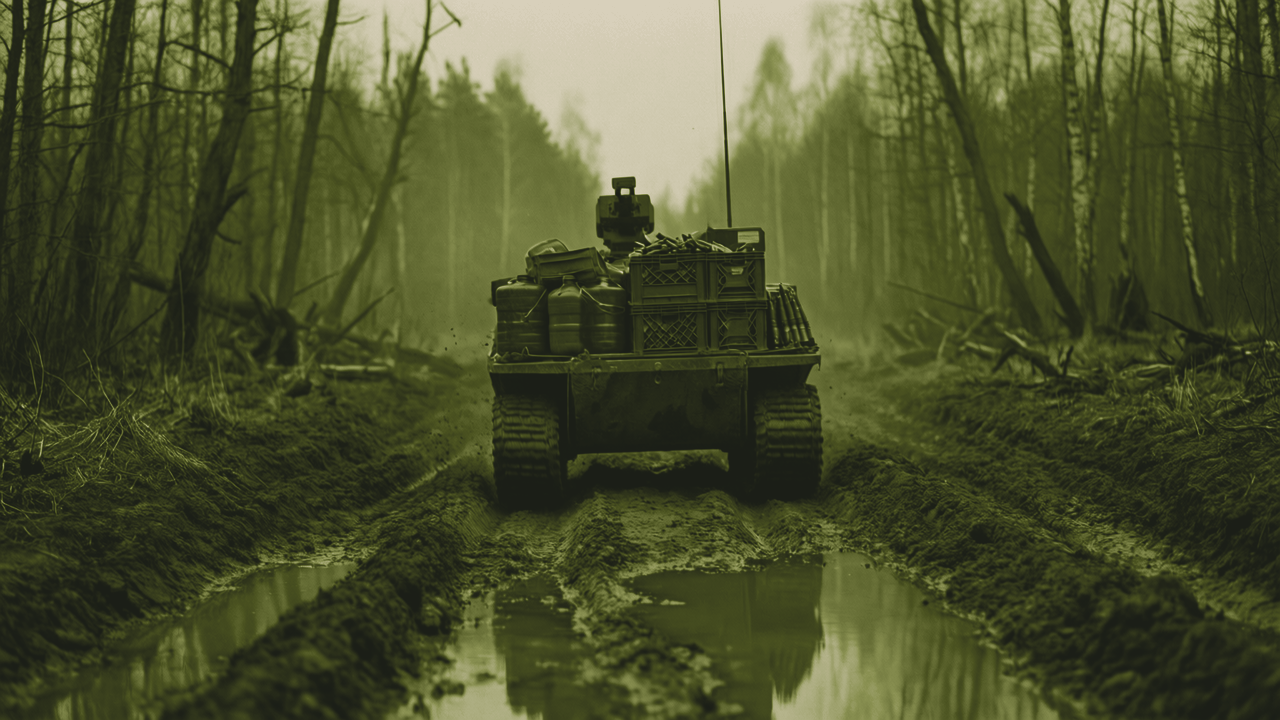
Ukraine crossed a robotic-logistics milestone the same week it stopped buying ground robots one model at a time.
Ukraine's Defense Forces have run more than 100,000 logistics and evacuation missions with unmanned ground vehicles since January, every one of them logged in the DELTA combat system, the Defense Ministry said. Monthly volume climbed from 7,511 in January to 19,969 in July, the heaviest month on record. Units logged another 15,729 between 1 and 20 August, about 790 a day against roughly 640 a day in July.
Frequently Asked Questions
How many UGV missions has Ukraine run this year?
More than 100,000 logistics and evacuation missions between January and 20 August 2026, all recorded in the DELTA combat system, according to Ukraine's Defense Ministry.
What do these ground robots actually do?
They deliver ammunition, food and water to forward positions and evacuate wounded and fallen service members, taking personnel out of the most exposed stretches of the front, per the Defense Ministry.
What changed in how Ukraine buys them?
The Defense Procurement Agency now tenders logistics and strike ground robotic complexes against ministry-written specifications instead of approving individual models. Complexes are grouped into classes by range and payload, with four to five lots per class, and no supplier may win more than half of a class.
Why cap a single manufacturer at half a class?
Deputy Defense Minister Mstyslav Banik said splitting an order among several manufacturers buys more equipment for the same money and reduces the risk of supply disruption.
How large is the ground robot fleet?
More than 22,000 UGVs have been contracted since January 2026, close to double the total for all of 2025, and the number of units operating them grew from 117 at the end of 2025 to 230 by mid-2026.
Is the evacuation use case accepted?
Not universally. Tetiana Chornovol, an anti-tank guided missile platoon commander, has argued ground robots are too slow for casualty evacuation and vulnerable to Russian drones, and that units need dedicated evacuation teams and light-armored vehicles.
AI-generated summary, reviewed by an editor. More on our AI guidelines.
Below this point
6 more sections.

Marcus Schuler
Marcus Schuler edits BattlePolicy, a daily defense-technology brief connecting the companies and capabilities behind modern war to the contest among Europe, the US, Russia, and China.