Ukrainian drones hit a helium plant and Russia's top satellite-comms node, 1,200km deep
Kyiv's cheap long-range drones are now reaching the inputs to Russian missile production and military space links, not just refineries and Crimea.
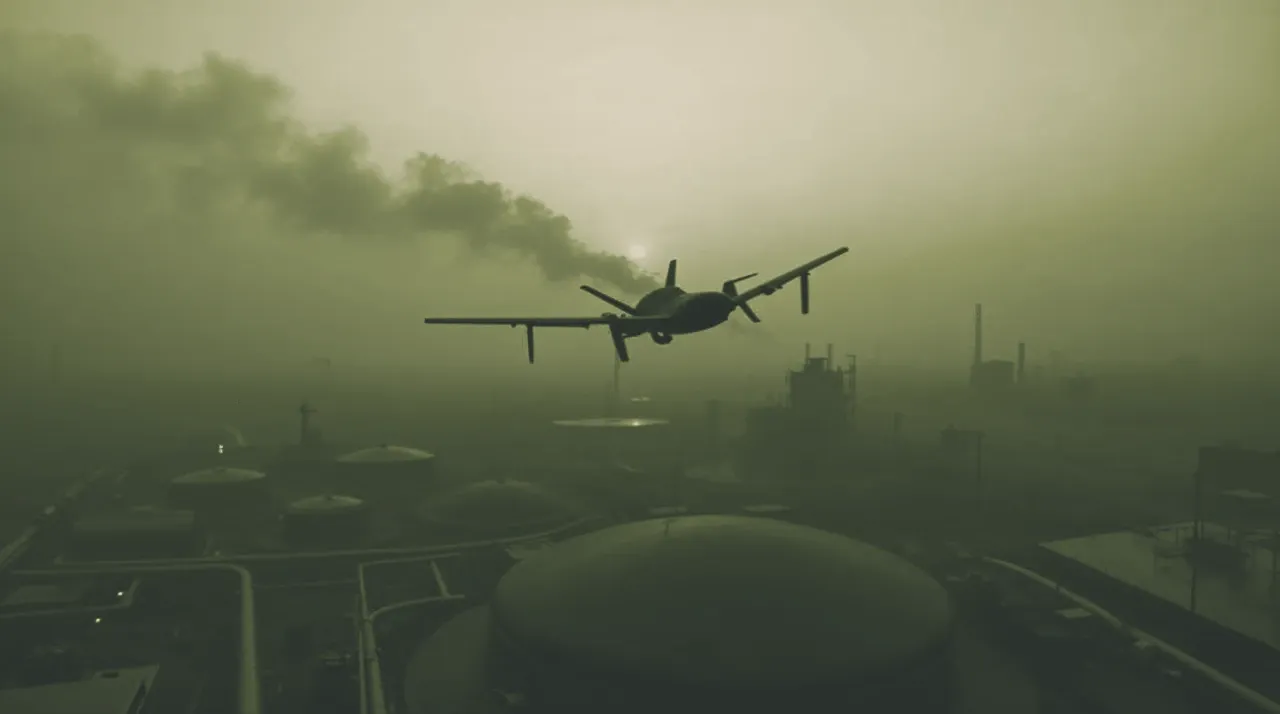
Kyiv's cheap long-range drones are now reaching the inputs to Russian missile production and military space links, not just refineries and Crimea.
Ukrainian forces struck the Orenburg Gas Processing Plant and two military satellite-communications centers in overnight attacks, Ukraine's General Staff said, ABC News reported. The Orenburg complex, more than 1,200 kilometers from the front, houses Russia's only helium plant and was set on fire. One of the comms sites was the Dubna Space Communications Center near Moscow, which the General Staff called Russia's largest ground-based satellite complex.
The targeting marks a step up in a deep-strike campaign that has spent months on refineries and Crimean supply lines. Helium feeds liquid-fuel rocket engines and guidance systems. Ethane, also produced at Orenburg, goes into solid rocket fuel and gunpowder. Kyiv is now reaching for the inputs to the missiles and shells Russia fires back.
The drones doing it are cheap. Ukrainian long-range one-way attack drones run between $20,000 and $100,000 and clear Russia's S-400, Pantsir, and Buk layers at a 20 to 30 percent penetration rate, a deep-strike officer told Militarnyi, Defence Blog reported. Russia answers a $50,000 drone with a Pantsir interceptor near $300,000. Fire Point's FP-1 carries a 50-kilogram warhead to 1,600 kilometers, and President Zelenskyy said on June 20 that engineers had demonstrated 3,000.
That asymmetry is the point. A drone that reaches a plant making guidance-grade helium costs Russia the capacity to build the interceptors it burns trying to stop the drones. The pace shows it: Militarnyi cited roughly 7,000 long-range drones launched in March 2026, against about 1,000 in August 2024.
Crimea took the same treatment. The Security Service hit the Saki and Gvardeyskoye airfields and air defenses near the Kerch Strait, and overnight strikes cut power to Sevastopol. Russia has pulled air defenses back to Moscow and the Kerch Bridge, Zelenskyy said, and is building a new causeway near Henichesk to replace bridges its drones wrecked, UNITED24 Media reported citing ISW satellite imagery.
The battlefield and the startup story — free in your inbox every week. No paywall.
Subscribe Free →What to watch: whether Orenburg signals a turn from burning Russia's fuel to starving its missile plants.
Frequently Asked Questions
What did Ukraine hit at Orenburg?
Ukraine's General Staff said the overnight strike hit the Orenburg Gas Processing Plant, part of a complex that houses Russia's only helium plant, and set it on fire, per ABC News. The site sits more than 1,200 kilometers behind the front.
Why do a gas plant and a satellite center matter militarily?
Orenburg produces helium, used in liquid-fuel rocket engines and guidance systems, and ethane, a component of solid rocket fuel and gunpowder, the General Staff said via The Independent. The Dubna site is described as Russia's largest ground-based military satellite-communications complex.
How are cheap drones getting through Russian air defenses?
A Ukrainian deep-strike officer told Militarnyi, as reported by Defence Blog, that long-range one-way drones costing $20,000 to $100,000 achieve a 20 to 30 percent penetration rate against layered S-400, Pantsir, and Buk defenses, an asymmetry that favors the attacker.
How far can these drones reach?
Fire Point's FP-1 carries a 50-kilogram warhead to 1,600 kilometers, and President Zelenskyy said on June 20 that engineers had demonstrated a 3,000-kilometer reach, per Defence Blog, putting most of Russia within range.
What is happening in Crimea?
Ukraine's Security Service said it struck the Saki and Gvardeyskoye airfields and air defenses near the Kerch Strait, and overnight strikes cut power to Sevastopol, per Kyiv Post and ABC News. Russia is building a new causeway near Henichesk to replace bridges damaged by drones, UNITED24 Media reported.
AI-generated summary, reviewed by an editor. More on our AI guidelines.

Marcus Schuler
Marcus Schuler edits BattlePolicy, a daily defense-technology brief connecting the companies and capabilities behind modern war to the contest among Europe, the US, Russia, and China.