ERAM (AGM-188 Rusty Dagger)
The US Air Force went to two firms almost nobody had heard of, asked for a cruise missile cheap enough to run out of without regret, and got flight tests in four months. ERAM is the West's answer to the cost-exchange crisis Shahed created.
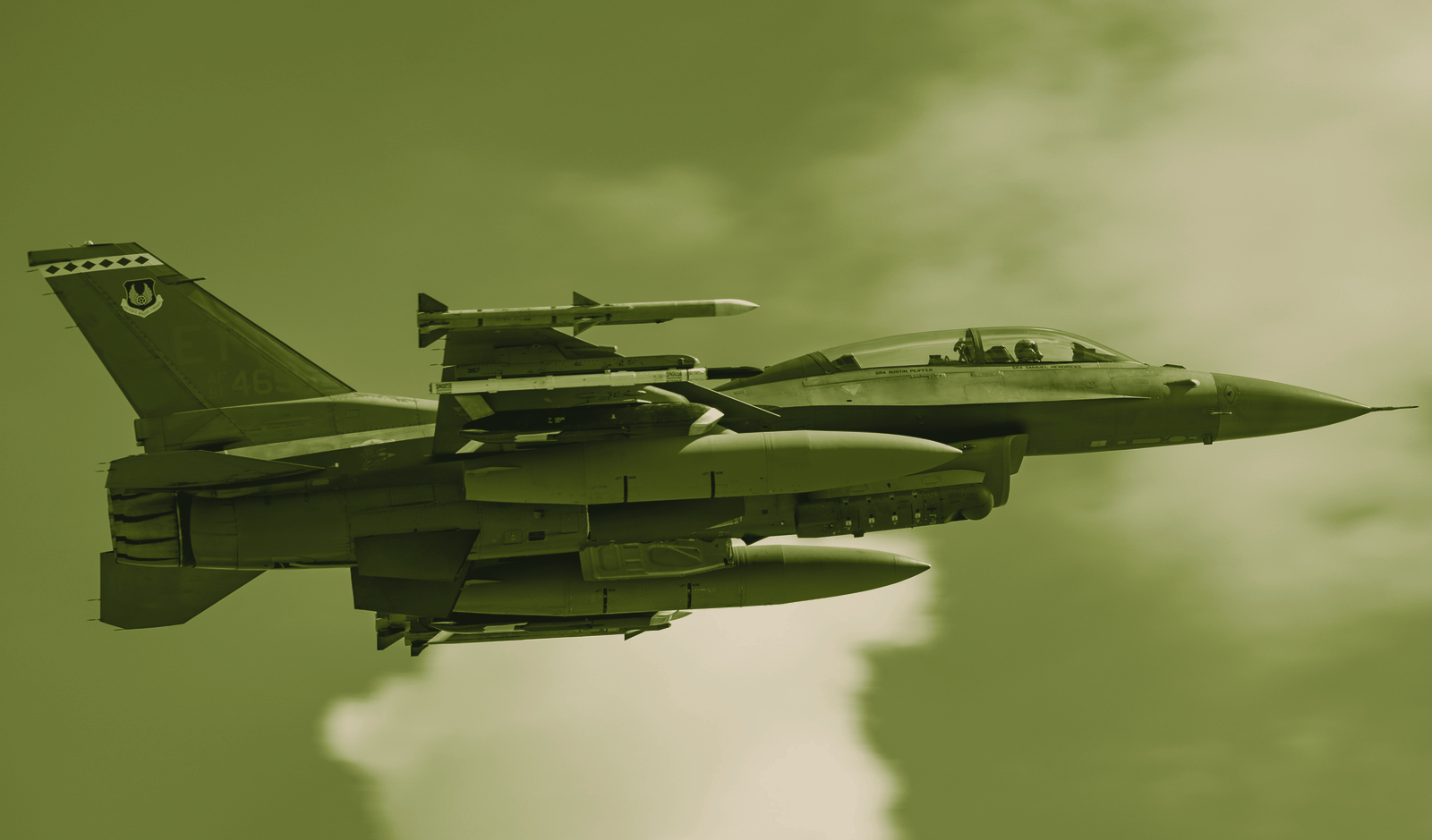
The US Air Force went to two firms almost nobody in defence had heard of, asked for a cruise missile cheap enough that running out of them would not be a strategic event, and had flight tests four months later. ERAM is the West's structural answer to the cost-exchange problem the Shahed created.
Overview
The Extended Range Attack Munition (ERAM) is a United States Air Force programme, begun in August 2024, to field a class of low-cost precision-guided air-launched standoff weapons — initially and explicitly to supply Ukraine. The lead weapon, Zone 5 Technologies' AGM-188A "Rusty Dagger," received its designation in February 2026; a parallel design from CoAspire was developed under the same programme, and Anduril's Barracuda-500M was subsequently designated AGM-189A within the same low-cost push.
ERAM matters less for what it is than for what it represents. Western deep-strike inventories are built around weapons like the Tomahawk, JASSM and Storm Shadow — exquisite, expensive and produced in the hundreds. Russia and Iran demonstrated that a $30,000 airframe launched in the thousands imposes costs no exquisite magazine can absorb. ERAM is the first serious American attempt to compete on that axis: a 500 lb-class weapon flying subsonically to a target hundreds of kilometres away, guided accurately enough to matter in a jammed environment, and cheap enough to expend freely.
A note on the range figure. The programme requirement is at least 250 nautical miles (460 km). Reporting on the fielded AGM-188A puts its range at more than 930 km — roughly double the floor. Both numbers are cited below with their source; the requirement and the delivered article are not the same thing.
Development
The Air Force launched ERAM in August 2024 with an unusual acquisition posture: rather than approaching the established missile houses, it awarded prototype contracts in October 2024 to two non-traditional suppliers — Zone 5 Technologies of San Luis Obispo, California, and CoAspire of Fairfax, Virginia. Both companies completed first flights within four months of contract award, a timeline that in conventional missile procurement would be consumed by preliminary design review.
The published requirement set is unusually explicit and worth reproducing, because it defines what "low-cost mass" means in American practice:
- 500 lb (225 kg) class total weight, integrable on any fighter able to carry a Mk-82/GBU-38-class store
- Range of at least 250 nautical miles (460 km)
- Speed of at least Mach 0.6
- Accuracy of 10 m CEP or better in GPS-degraded environments
- Delivery of at least 1,000 all-up rounds no later than 24 months after contract award
That last line is the requirement that distinguishes the programme. A thousand rounds in two years is a production commitment written into the specification, and it forced design choices toward manufacturability rather than performance maximisation.
The Air Force conducted a live-fire test in February 2026, which Air Force officials characterised as proving that a contract could become lethal, cost-effective capability in under two years. The AGM-188A designation was assigned in the same month. By mid-2026 the effort had broadened well beyond Ukraine: the USAF disclosed plans to buy roughly 28,000 low-cost cruise missiles over five years, with ERAM and the related RAACM effort as the foundation.
Design & capabilities
ERAM is best understood as a deliberate hybrid between a guided bomb and a cruise missile — described in open sources as carrying a 500 lb-class warhead to several hundred kilometres at high subsonic speed.
- Weight class: approximately 225 kg (500 lb), sized to fit existing fighter pylons and bomb racks with no aircraft modification. This is the single most important design decision: it means any F-16 that can carry a JDAM can carry ERAM, which matters enormously for Ukraine's mixed fleet.
- Propulsion: the AGM-188A is turbojet-powered, which is what enables the long-range figures reported for the fielded weapon.
- Speed: at least Mach 0.6 by requirement; roughly 690–735 km/h in open-source descriptions.
- Range: ≥460 km by requirement; more than 930 km reported for the delivered AGM-188A.
- Warhead: a unitary high-explosive warhead in the 500 lb class, described as suited to hardened and semi-hardened targets — bunkers, air-defence radars, supply depots and command nodes.
- Guidance: the defining requirement is 10 m CEP or better in GPS-degraded environments, which necessarily implies inertial navigation supplemented by a non-satellite terminal or mid-course reference. This is a direct response to the Russian electronic-warfare environment, where satellite-guided munitions have repeatedly underperformed.
- Integration: designed for any fighter capable of carrying 227 kg-class stores, deliberately avoiding aircraft-specific integration work.
The AGM-189A, Anduril's air-launched Barracuda-500M, sits in the same programme space with a reported range above 930 km and a lighter 45 kg payload — a different balance of reach against effect, covered in the separate Anduril Barracuda entry.
Variants
- AGM-188A "Rusty Dagger" (Zone 5 Technologies) — the lead ERAM weapon, turbojet-powered, ~225 kg, reported range above 930 km. Deliveries to Ukraine have begun.
- CoAspire ERAM design — the parallel prototype awarded under the same October 2024 contract action; first flight within four months of award. Less publicly documented than the Zone 5 article.
- AGM-189A (Anduril Barracuda-500M) — designated February 2026 within the broader low-cost cruise-missile effort; >930 km range, 45 kg warhead. A separate munition rather than an ERAM variant proper.
- RAACM — the related Air Force low-cost cruise-missile line that ERAM feeds into, part of the ~28,000-round five-year buy.
Combat record / operational use
ERAM has no confirmed combat record. Zone 5 has publicly confirmed that AGM-188A deliveries to Ukraine have begun, and Ukrainian defence media reported in June 2026 that circumstantial indicators suggested the missile might already be in Ukrainian service — while explicitly cautioning that no official confirmation existed and the claim should be treated carefully.
The intended employment is straightforward and follows Ukraine's established pattern with Storm Shadow and JASSM: F-16 or other Western-compatible aircraft launching from within Ukrainian airspace against fixed high-value targets — air-defence nodes, command posts, logistics hubs, airfields and production facilities — at ranges that keep the launch aircraft outside Russian air-defence coverage. What ERAM adds is quantity. Ukraine's constraint with Storm Shadow and ATACMS has always been magazine depth and political release; a missile explicitly specified for 1,000 rounds in 24 months addresses the first of those.
The wider strategic context in 2026 is that Britain and France agreed to transfer Storm Shadow/SCALP technology to Ukraine for domestic production, and Ukraine is developing indigenous ballistic missiles. ERAM is the American contribution to the same shift: from donating scarce munitions to enabling volume.
Advantages
- Cost structure built for attrition — designed to be expended freely rather than husbanded, the first Western deep-strike weapon specified that way.
- Production speed as a requirement — 1,000 rounds within 24 months of award is written into the specification, not left to industrial goodwill.
- Jam-resistant accuracy — 10 m CEP in GPS-degraded conditions directly answers the electronic-warfare environment that has degraded satellite-guided munitions in Ukraine.
- Universal fighter integration — 500 lb-class sizing means no aircraft-specific integration programme, a decisive advantage for Ukraine's mixed inventory.
- Rapid development proven — contract to first flight in four months, contract to live-fire in under two years, with two suppliers competing.
- Range well beyond requirement — the fielded weapon reportedly reaches more than double its 460 km specification floor.
- Non-traditional supplier base — Zone 5 and CoAspire demonstrate that missile production is not structurally limited to the legacy primes.
Drawbacks / limitations
- No combat record — deliveries have begun but no confirmed operational use or performance data exists.
- Unit cost undisclosed — "low-cost" is asserted throughout without an official figure, so the central claim of the programme is unverified in public.
- Subsonic and non-stealthy — at Mach 0.6-plus with no disclosed low-observable features, it is vulnerable to modern layered air defence in a way JASSM-ER is designed not to be.
- Requires a launch aircraft — unlike a ground-launched drone, ERAM needs a surviving fighter and a permissive-enough launch window.
- Range figures conflict — 460 km requirement against 930 km reported is a wide gap, and the discrepancy is unexplained in public sources.
- Warhead against hardened targets is modest — 500 lb class is useful against soft and semi-hardened targets but is not a bunker-defeating weapon.
- Programme concentration risk — two small non-traditional suppliers carrying a 28,000-round ambition is an unproven industrial base at that scale.
Counterparts
- JASSM (USA) — the exquisite, stealthy, expensive standoff weapon ERAM is designed to complement rather than replace.
- Storm Shadow (UK/France) — Ukraine's existing deep-strike cruise missile; far more capable per round, far scarcer.
- Anduril Barracuda (USA) — the AGM-189A designated munition in the same low-cost family.
- Castelion Blackbeard (USA) — the same low-cost-mass philosophy applied to ground-launched strike.
- Shahed-136 and Garpiya-A1 (Iran/Russia) — the cheap-mass weapons that created the problem ERAM exists to answer.
- Liutyi and FP-5 Flamingo (Ukraine) — Ukraine's own cheap deep-strike systems, developed under the same logic.
Outlook
ERAM's significance is procedural before it is military. The Air Force took a category that normally runs eight to twelve years from requirement to fielding, gave it to two companies without missile heritage, and had a live-fire demonstration inside eighteen months. Whether or not the AGM-188A performs, that acquisition record is the more consequential output, and the 28,000-round five-year plan indicates the service intends to institutionalise it.
The open question is cost. Every public description calls ERAM low-cost without naming a price, and the entire strategic argument depends on that number. A $300,000 missile changes the calculus against a $30,000 Shahed only marginally; a $150,000 missile bought in tens of thousands changes it fundamentally. Until a unit price appears in a budget document, the programme's central claim rests on assertion.
For Ukraine the near-term test is simpler: whether ERAM arrives in quantity and survives contact with Russian air defence. If a cheap subsonic turbojet missile can reach targets at several hundred kilometres and be launched in salvos rather than singles, it changes what Ukrainian air power can attempt. Watch for the first confirmed operational use, the first published unit cost, and whether CoAspire's design or Zone 5's takes the volume production.
Key specifications
| Spec | Value |
|---|---|
| Type | Low-cost air-launched standoff missile (guided-bomb/cruise-missile hybrid) |
| Range | ≥460 km (250 nm) by requirement; >930 km reported for the fielded AGM-188A |
| Speed (Mach / km·s⁻¹) | ≥Mach 0.6 by requirement; ~690–735 km/h in open-source descriptions |
| Warhead (type & weight) | Unitary high-explosive, 500 lb / ~225–230 kg class |
| Guidance | Inertial with jam-resistant terminal guidance; requirement of ≤10 m CEP in GPS-degraded environments |
| Accuracy (CEP) | ≤10 m in GPS-degraded conditions (programme requirement) |
| Launch platform(s) | Any fighter able to carry a 227 kg (Mk-82/GBU-38) class store |
| Propulsion | Turbojet (AGM-188A) |
| Length / diameter / launch weight | ~225 kg (500 lb) class; dimensions not officially released |
| Production requirement | ≥1,000 all-up rounds within 24 months of contract award |
| Programme scale | USAF plans ~28,000 low-cost cruise missiles over five years (ERAM + RAACM) |
Sources
- Wikipedia — "Extended Range Attack Munition." https://en.wikipedia.org/wiki/Extended_Range_Attack_Munition
- Designation-Systems.net — "Zone 5 Technologies AGM-188 Rusty Dagger." https://www.designation-systems.net/dusrm/m-188.html
- DefenseScoop — "Air Force conducts live test of low-cost cruise missile developed for Ukraine." https://defensescoop.com/2026/02/02/eram-extended-range-attack-munition-cruise-missile-air-force-ukraine/
- Defense News — "US Air Force tests new, rapidly developed cruise missile." https://www.defensenews.com/air/2026/02/04/us-air-force-tests-new-rapidly-developed-cruise-missile/
- Militarnyi — "ERAM Missile for Ukraine Receives Official U.S. Designation." https://militarnyi.com/en/news/eram-missile-receives-official-designation/
- The War Zone — "USAF Plans To Buy 28,000 Low-Cost Cruise Missiles In Five Years, Advance With New Deals." https://www.twz.com/air/usaf-plans-to-buy-28000-low-cost-cruise-missiles-in-five-years-advance-with-new-deals
- Defence Industry Europe — "United States speeds delivery of new ERAM cruise missiles to Ukraine under fast-track plan." https://defence-industry.eu/united-states-speeds-delivery-of-new-eram-cruise-missiles-to-ukraine-under-fast-track-plan/
- Defense Express — "Ukraine May Already Have 930-km ERAM Cruise Missiles in Service: What Is Known So Far." https://en.defence-ua.com/weapon_and_tech/ukraine_may_already_have_930_km_eram_cruise_missiles_in_service_what_is_known_so_far-18752.html
- Kyiv Post — "US Successfully Tests Ukraine-Bound ERAM Missile as Deliveries Near." https://www.kyivpost.com/post/69408
- Army Recognition — "ERAM Extended Range Attack Munition Missile." https://www.armyrecognition.com/military-products/army/missiles/tactical-missiles/eram-extended-range-attack-munition-missile
🔒 The Analyst Section on ERAM (AGM-188 Rusty Dagger) is for BattlePolicy Pro members. Below the line: procurement and contract history, the suppliers and companies behind the system, our head-to-head analyst view of the systems it actually competes with, and the BattlePolicy assessment note. Unlock the full file with BattlePolicy Pro →
Below this point
- Analyst Section
- Procurement & contracts
- Suppliers & related companies
- Comparable systems — analyst view
- Analyst note