GRID-REF 37°47′N 122°25′W
DISPATCH 02/26 · 12 Jun 2026
BATTLEPOLICY
Startup to front line. Strategy to consequence.
Lexicon · USA

F-22 Raptor

The world's first operational fifth-generation fighter — an all-aspect stealth, supercruise, thrust-vectoring air-dominance jet that remains the US Air Force's premier air-superiority asset, from the 2014 ISIS debut to the 2023 spy-balloon kill and the 2025–26 Iran crisis.
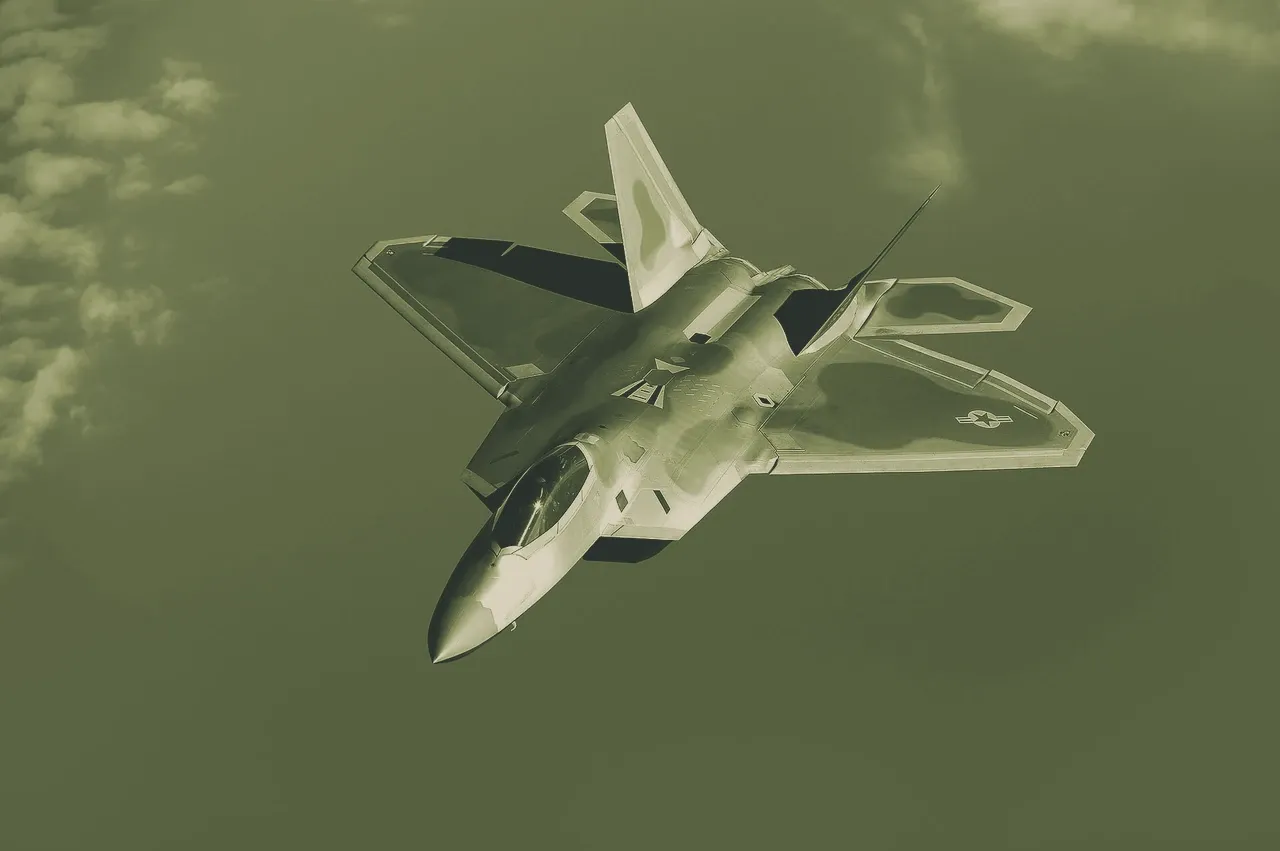
F-22 Raptor
FIG.01 · USA Image - U.S. Air Force F-22 Raptor in flight. Photo by F-22_Raptor.JPG: Master Sgt. Andy Dunaway, Public domain, via Wikimedia Commons.
The world's first operational fifth-generation fighter, combining all-aspect stealth, supercruise, thrust vectoring and fused sensors — the US Air Force's premier air-superiority asset since 2005, with a combat record that runs from the opening night of the ISIS air war to the 2025–26 stand-off with Iran.

Overview

The Lockheed Martin F-22A Raptor is a single-seat, twin-engine air-dominance fighter built for penetrating counter-air operations against the most advanced surface-to-air systems and opposing fighters of its era. It is the only combat aircraft to combine very-low-observable (stealth) shaping, sustained supersonic cruise without afterburner (supercruise above Mach 1.5), two-dimensional thrust-vectoring nozzles for exceptional high-alpha agility, and an integrated avionics suite that fuses data from its own AESA radar, passive receivers and off-board feeds into a single pilot-centric picture. The US Air Force (USAF) accepted 187 operational jets between 2002 and 2012; with production capped at 195 airframes (including eight test articles), the fleet is both the service's most potent air-superiority weapon and a shrinking, high-demand asset that is only now receiving the mid-life upgrades needed to keep it viable into the 2040s.

Development

The Advanced Tactical Fighter (ATF) programme was launched in the early 1980s to replace the F-15 Eagle in the air-to-air domain, with a new class of fighter that would dominate future air battles through stealth, speed and sensor integration. Lockheed’s YF-22 prototype first flew on 29 September 1990 and beat Northrop’s YF-23 in a fly-off the following year, leading to a full-scale engineering-and-manufacturing-development phase. The first representative F-22 test aircraft lifted off on 7 September 1997, and the programme sailed through low-rate production approval in 2001, full-rate production in 2005, and initial operational capability on 15 December 2005. Air & Space Forces Magazine traces the type’s design heritage and production chronology, noting that early plans for roughly 750 aircraft were repeatedly cut as post-Cold-War threat assessments evolved and cost pressures mounted. The final tally was 195 aircraft: the last F-22 rolled off the Marietta, Georgia line in December 2011 and was delivered to the Air Force in May 2012. A 2024 Government Accountability Office review of the subsequent push to retire 32 non-combat-coded Block 20 jets flagged that the USAF had not fully modelled the training and operational consequences of the proposed divestment, a factor in Congress repeatedly blocking any retirements through at least FY2027. GAO

Design & capabilities

At the core of the Raptor’s design is a carefully balanced set of compromises between stealth, aerodynamics and internal volume. The aircraft’s faceted planform, radar-absorbent materials and edge-aligned treatments deliver an all-aspect low-observable signature that allows it to penetrate modern integrated air-defence systems. According to the official USAF fact sheet, the F-22 is “a combination of stealth, supercruise, maneuverability and integrated avionics” that gives it a first-look, first-shot, first-kill advantage against any current fighter.

The heart of the sensor suite is the AN/APG-77 active electronically scanned array (AESA) radar, a frequency-agile system that open-source literature places in the 200-240 km detection class against fighter-size targets. It is paired with the AN/ALR-94 passive receiver suite, which can geolocate emitters at extreme ranges without betraying the aircraft’s position, and the AN/AAR-56 missile-launch detectors. The original design lacked an internal infrared search-and-track (IRST) sensor, a gap that the Air Force is closing with a podded IRST and the Infrared Defensive System (IRDS) for missile warning, as detailed by The War Zone in its account of the funded “viability” upgrade package. Further enhancements include a Scorpion helmet-mounted display (arriving after decades without one), stealthy low-drag external fuel tanks and pylons, and integration of the future AIM-260 Joint Advanced Tactical Missile. Two Pratt & Whitney F119-PW-100 afterburning turbofans, each delivering roughly 156 kN (35,000 lb-class) thrust, enable supercruise above Mach 1.5 without lighting the burners; trade-press estimates place the top speed at around Mach 2.25 and the service ceiling at approximately 19.8 km (65,000 ft).

Armament is carried exclusively in three internal bays — one large main bay and two side bays — allowing the jet to fight while preserving its stealth envelope. The standard air-to-air load is six AIM-120 AMRAAMs and two AIM-9M/X Sidewinders; air-to-ground sorties can carry two 1,000-lb GBU-32 JDAMs or eight GBU-39 Small Diameter Bombs together with the AAMs, plus an internal M61A2 20 mm cannon with 480 rounds. Four underwing hardpoints, each rated for 5,000 lb (2,270 kg), are available for external tanks or munitions when stealth is not required.

Variants

All 187 production-representative airframes were built as F-22A. Of these, roughly 32 are Block 20 jets configured for training roles and were never upgraded to the combat standard; the remaining 142–150 are Block 30/35 combat-coded aircraft. Two concept derivatives — the tail-less X-44 MANTA and the FB-22 regional bomber — were studied but did not proceed beyond the drawing board. The sole production line produced no sub-variants for export, and the USAF remains the type’s only operator.

Combat record / operational use

The Raptor’s combat debut came on 22 September 2014 when F-22s of the 27th Fighter Squadron, 1st Fighter Wing, struck an ISIS command-and-control building in Syria with 1,000-lb GPS-guided bombs, opening the coalition air campaign of Operation Inherent Resolve. Between September 2014 and July 2015, F-22s flew 204 sorties, dropped 270 bombs on 60 locations, and used their passive sensors to escort strike packages while deterring Syrian and Russian aircraft, as chronicled by The Aviationist. The type later conducted its first Afghanistan strikes in 2017, employing GBU-39 Small Diameter Bombs. The Aviationist

On 4 February 2023 an F-22 from Langley AFB (callsign FRANK01) destroyed a Chinese high-altitude surveillance balloon off the South Carolina coast with an AIM-9X fired from 58,000 ft — the first air-to-air kill in the Raptor’s history — and the type was subsequently involved in shoot-downs of additional unidentified objects over Alaska and Canada. Audio and data released by the USAF and reported by Air & Space Forces Magazine detailed the extreme altitude and the timing of the engagement. In June 2025, during the Israel–Iran war, twelve 1st Fighter Wing F-22s surged through RAF Lakenheath to the CENTCOM area (reportedly Muwaffaq Salti Air Base, Jordan) and ultimately escorted B-2 Spirit bombers that struck Iran’s nuclear facilities in Operation Midnight Hammer on 22 June 2025. The Aviationist confirmed the deployment, and Air & Space Forces Magazine reported the subsequent movement of additional F-22s to Israel. In February 2026, with tensions still high and some Arab partners restricting US strike operations from their soil, 11–12 Raptors were flown to Ovda Air Base in Israel — the first time the fighter had been positioned on Israeli territory ahead of potential combat operations, as verified through commercial satellite imagery and reported by the Foundation for Defense of Democracies.

Advantages

  • First-look, first-shot, first-kill envelope: all-aspect stealth, supercruise above Mach 1.5, thrust-vectoring agility and sensor fusion provide an air-dominance capability that the USAF assesses as unmatched by any current fighter.
  • Proven multi-role performance: beyond pure counter-air, the F-22 has conducted precision strikes, escort missions and stealthy battle-management/ISR over Syria, Iraq and Afghanistan.
  • Only fighter to have confirmed a very-high-altitude air-to-air kill (the 2023 spy balloon engagement at 58,000 ft).
  • Crisis-response credibility: surged as the deterrent of choice to the Middle East in the 2025 and 2026 Iran stand-offs, including the first escort of B-2 bombers in combat and a historic deployment to Israel.
  • An endorsed, funded upgrade path — IRDS, podded IRST, stealthy external tanks, Scorpion helmet display and AIM-260 integration — designed to extend operational edge into the 2030s–2040s.

Drawbacks / limitations

  • Small, shrinking fleet: only 185 aircraft, of which ~143 are combat-coded; mission-capable rate dropped to 40 percent in 2024, and the production line closed in 2011.
  • Maintenance-intensive: stealth coatings demand heavy depot attention and cost per flying hour was estimated at ~$59,116 in FY2015, a factor that strains availability.
  • 32 Block 20 training-configuration jets cannot be upgraded to combat standard at a cost the Air Force deems affordable; contractor-estimated upgrade path would take ~15 years and cost ≥$3.3 billion.
  • Combat radius is not publicly disclosed, but the explicit funding of stealthy external tanks signals a range shortfall for Pacific scenarios.
  • The original avionics lagged contemporary fighters: no built-in IRST, no helmet-mounted display until the Scorpion HMD reaches the fleet, and the sensor suite is only now receiving the mid-life updates that peers have enjoyed for years.

Counterparts

Outlook

The Air Force selected Boeing’s F-47 as the Next-Generation Air Dominance (NGAD) platform in March 2025, with an intended buy of 185-plus aircraft that will eventually succeed the F-22. While the Raptor’s replacement is decades away from fielding, the USAF has attempted since FY2023 to retire the 32 non-combat-coded Block 20 jets to free funds for NGAD, but Congress — citing the GAO finding that the service had not fully analysed the divestment’s impact — has forbidden any retirements through at least FY2027. In parallel, a multi-billion-dollar viability upgrade package (low-observable signature management, electronic warfare and cryptographic modernisation, dynamic synthetic aperture radar, IRDS, and about $90 million in FY2026 funding) and the fielding of 30 initial podded IRST sensors from FY2028 will keep the roughly 142 Block 30/35 jets credible, with Lockheed Martin indicating that the fleet can serve into the 2040s. The War Zone The fighter remains the Air Force’s sole penetrating air-superiority platform until F-47 arrives, dictating its continued presence in every high-end contingency.

Key specifications

Spec Value
Crew 1
Length / wingspan 18.9 m (62 ft 1 in) / 13.6 m (44 ft 6 in); height 5.1 m (16 ft 8 in)
Max speed Mach 2 class; supercruise above Mach 1.5 (est. Mach 2.25 max, Mach 1.8 supercruise)
Service ceiling Above 15 km (50,000 ft); trade-press up to ~19.8 km (65,000 ft)
Combat radius / range Combat radius not publicly published; ferry range 2,960+ km (1,850+ mi / 1,600 nm) with two external tanks
Payload Internal fuel 8,200 kg (18,000 lb); 11,900 kg (26,000 lb) with two external tanks; internal weapons ~2× 1,000-lb JDAM class plus AAMs
Hardpoints 3 internal bays (1 main + 2 side); 4 underwing stations (5,000 lb / 2,270 kg each), normally left empty to preserve stealth
Radar / sensors AN/APG-77 AESA radar (est. 200–240 km detection vs fighter-size targets); AN/ALR-94 passive receiver suite; AN/AAR-56 missile-launch detectors; podded IRST and IRDS in procurement
Powerplant 2× Pratt & Whitney F119-PW-100 turbofans, ~156 kN (35,000-lb class) thrust each, with 2D thrust-vectoring nozzles
Armament 1× M61A2 20 mm cannon (480 rds); internal — 6× AIM-120 AMRAAM + 2× AIM-9M/X Sidewinder, or 2× GBU-32 JDAM / 8× GBU-39 SDB + 2× AIM-120 + 2× AIM-9; AIM-260 JATM integration planned

Sources

  1. U.S. Air Force — F-22 Raptor Fact Sheet — https://www.af.mil/About-Us/Fact-Sheets/Display/Article/104506/f-22-raptor/
  2. Air & Space Forces Magazine — F-22 Raptor Weapons & Platforms profile — https://www.airandspaceforces.com/weapons/f-22/
  3. U.S. Government Accountability Office — F-22 Aircraft: Air Force Needs to Better Document Options Before Divesting (GAO-24-106639) — https://www.gao.gov/products/gao-24-106639
  4. The War Zone — New F-22 Upgrade Package To Keep The Jets Viable Laid Out — https://www.twz.com/air/new-f-22-upgrade-package-to-keep-the-jets-viable-laid-out
  5. The Aviationist — U.S. F-22 Raptors Are Deploying To The Middle East — https://theaviationist.com/2025/06/20/u-s-f-22-raptors-departed-to-me/
  6. The Aviationist — Raptors Unleashed: A Look Back At The F-22’s Initial Combat Operations Against ISIS — https://theaviationist.com/2025/07/03/f-22-initial-combat-operations-against-isis/
  7. Air & Space Forces Magazine — LISTEN: New Details from the Audio of the Chinese Spy Balloon Shoot Down — https://www.airandspaceforces.com/listen-new-details-audio-chinese-spy-balloon-shoot-down/
  8. Air & Space Forces Magazine — Massive Buildup Against Iran Continues: F-22s to Israel, More F-35s and F-15Es to Europe — https://www.airandspaceforces.com/us-iran-f-22-israel-f-35-f-15e-europe/
  9. Foundation for Defense of Democracies — U.S. Deploys F-22s to Israel as Iran Tries To Intimidate Washington’s Arab Partners — https://www.fdd.org/analysis/2026/02/27/u-s-deploys-f-22s-to-israel-as-iran-tries-to-intimidate-washingtons-arab-partners/
  10. Wikipedia — Lockheed Martin F-22 Raptor — https://en.wikipedia.org/wiki/Lockheed_Martin_F-22_Raptor
FIELD DISPATCH · WEEKLY

BattlePolicy Weekly — free.

Defense tech, startups, and security — weekly. No paywall.

Related
USA · missiles · loitering-munition · vtol · autonomous · ai-guided · man-portable · AndurilPro

Anduril Bolt-M

Anduril's man-portable VTOL loitering munition — AI-guided, returnable if no strike, and the U.S. Marine Corps' first squad-level autonomous organic precision fires system, ordered under the $249M OPF-L program.

USA · missiles · loitering-munition · vtol · autonomous · ai-guided · man-portable · Anduril
USA · drones · autonomous · tanker · carrier · navy · unmanned · aerial-refuelingPro

MQ-25 Stingray

The U.S. Navy's first operational carrier-based unmanned system—a dedicated aerial tanker designed to free Super Hornets from buddy-tanking and extend the reach of the carrier air wing.

USA · drones · autonomous · tanker · carrier · navy · unmanned · aerial-refueling
USA · Air · fighter · multirole · aesa · semi-stealth · indigenous · 4-5-generation · asia-pacificPro

KF-21 Boramae

South Korea's indigenous 4.5-generation twin-engine fighter—a semi-stealth, AESA-equipped multirole platform designed to replace legacy ROKAF jets and compete for export orders among nations that cannot obtain the F-35.

USA · Air · fighter · multirole · aesa · semi-stealth · indigenous · 4-5-generation · asia-pacific