GRID-REF 37°47′N 122°25′W
DISPATCH 02/26 · 9 Jun 2026
BATTLEPOLICY
Startup to front line. Strategy to consequence.
Lexicon · Europe

F100 Frigate

Spain's Álvaro de Bazán-class frigate — the first European Aegis air-defence combatant, carrying 48 Mk 41 VLS cells and shaping a generation of allied frigate designs.
F100 Frigate
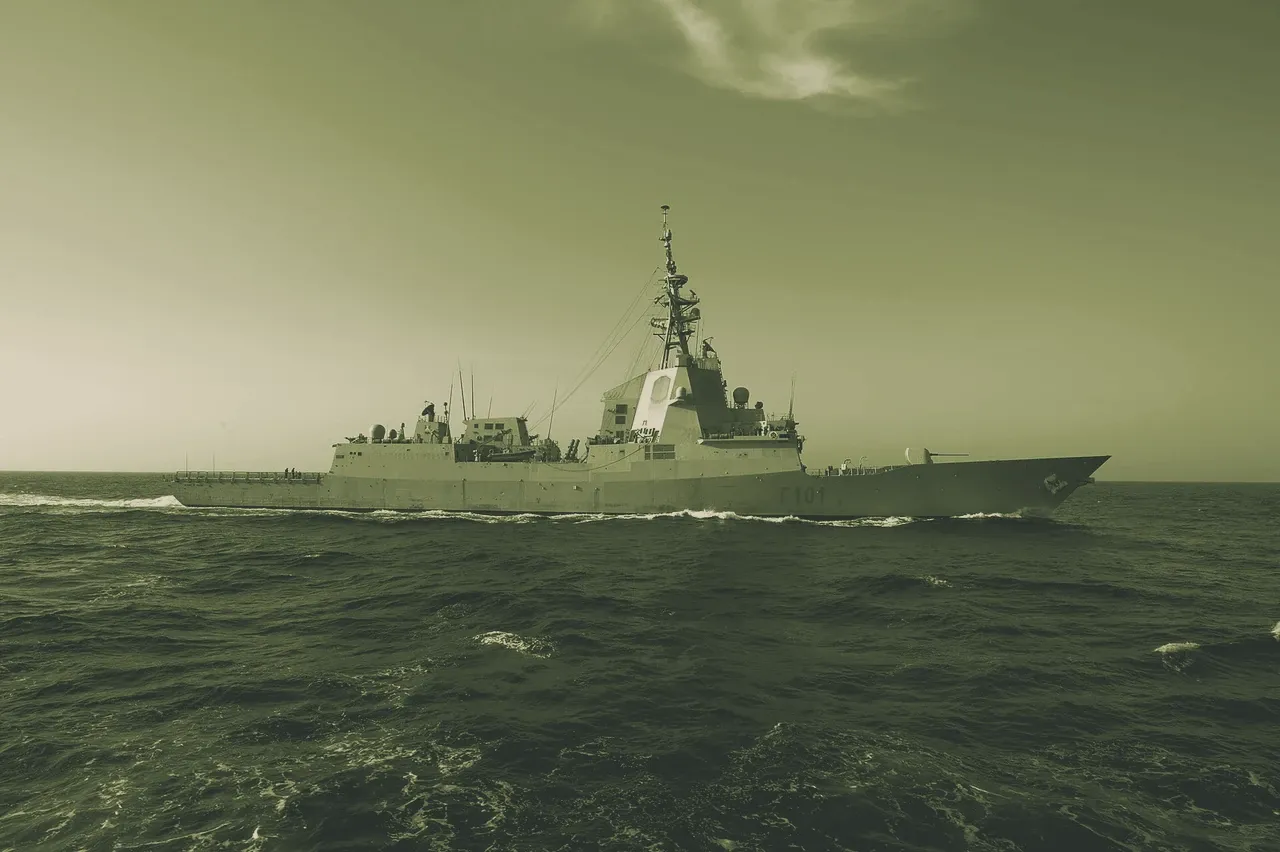
FIG.01 · Europe FILE PHOTO
Spain's pioneering Aegis air-defence frigate — a compact but powerful combatant that proved a European hull could host the SPY-1D radar and 48 Mk 41 cells, and became the design parent of Norway's Nansen-class and inspiration for Australia's Hobart-class.

Overview

The F100 Álvaro de Bazán-class frigate, also called the Bazán-class, is a guided-missile frigate in service with the Spanish Navy. It was the first European warship to be built around the United States’ Aegis Combat System, pairing a passive phased-array radar with a 48-cell vertical launch system in a hull roughly one-third the displacement of the US destroyers that carried the same sensor. Five ships were delivered between 2002 and 2012, and the class has provided task-group air defence for allied carrier missions while directly influencing the design of Norway’s F310 Nansen-class frigates and Australia’s Hobart-class destroyers.

Development

Spain never operated large Aegis destroyers, yet it needed a modern area air-defence capability to escort its own carrier group and operate within NATO. The solution was to shrink the Aegis system into a frigate-sized hull, an idea that had not been attempted before. Navantia (then Bazán) at Ferrol drew up the F100 design in the 1990s, and the five ships were constructed between 1999 and 2012. The lead ship, F101 Álvaro de Bazán, commissioned in September 2002 as the first European Aegis combatant, and the programme proved that the compact arrangement worked — Navantia delivered the final unit, F105 Cristóbal Colón, in 2012.

Design & capabilities

The F100 is built around the Aegis Weapon System with the AN/SPY-1D passive phased-array radar and Mk 99 fire-control illuminators. Its principal armament is a 48-cell Mk 41 vertical launch system forward, normally loaded with SM-2MR Block IIIA area-defence missiles and quad-packed RIM-162 Evolved Sea Sparrow Missiles (ESSM). Eight deck-mounted Harpoon canisters give a surface-strike reach, and a 5-inch (127 mm) Mk 45 gun provides naval gunfire support. Close-in defence is handled by either a Meroka 20 mm or a 20 mm Phalanx CIWS, and two twin Mk 32 torpedo tubes sit amidships for the Mk 46 lightweight torpedo. The AN/SPY-1D radar feeds targeting data to the Aegis combat system in the same way as a US destroyer, giving the ship simultaneous multi-track and multi-engagement capability in a hull that displaces only about 5,800–6,400 tonnes.

Propulsion is a CODOG arrangement (combined diesel or gas) with two General Electric LM2500 gas turbines and two diesel engines driving two shafts, good for a maximum speed of around 28–29 knots and an endurance of roughly 4,500 nautical miles. The ship typically operates one Sikorsky SH-60B Seahawk helicopter from its flight deck and hangar. The baseline crew is about 202, rising to 250 with an aviation detachment.

Variants

The fifth and final ship, Cristóbal Colón (F105), embodied a lightly modified design with an increased full-load displacement of approximately 6,391 tonnes, structural enhancements and updated combat-system components that also informed the F-110 Bonifaz-class successor programme. The earlier four units share the same core combat system but sit around 5,800 tonnes standard displacement.

Combat record / operational use

The F100 class has not fired in anger, but it has routinely escorted allied carrier strike groups and taken part in NATO standing maritime groups, providing area air-defence for high-value units. In February 2026 the United States cleared a potential $1.7 billion mid-life modernization package for the five F100s, covering combat-system refreshes, sensor upgrades and missile-reload equipment, signalling that the ships will remain the Spanish Navy’s primary air-defence escorts into the 2030s.

Advantages

  • Proved that a full-blown Aegis combat system could be installed on a frigate-sized hull, opening the way for smaller allied navies to acquire area air-defence.
  • 48 Mk 41 cells give a respectable local-area and fleet air-defence magazine in a 6,000-tonne package.
  • Layered missile mix (SM-2 for long-range engagements, ESSM for point-defence) without an added launcher type.
  • CODOG propulsion offers a balance of fuel economy for patrol and sprint speed for task-group operations.
  • Design DNA directly transferred to the Norwegian Nansen-class and heavily influenced the Australian Hobart-class, reducing international risk.

Drawbacks / limitations

  • The AN/SPY-1D is a passive electronically scanned array, while modern active-array radars (such as the SPY-6 family) offer improved resistance to jamming and better reliability.
  • With only 48 cells, the air-defence magazine is smaller than contemporary destroyers (e.g., Arleigh Burke’s 96 cells), limiting engagement depth in saturation attacks.
  • The hull is optimised for air defence; anti-submarine warfare capability is modest compared with dedicated ASW frigates.
  • Ageing Harpoon anti-ship missiles will need replacement to keep the surface-strike dimension credible.
  • As an early Aegis frigate design, it lacks the growth margins for large-scale power generation or cooling required by newer radar arrays without a deep rebuild.

Counterparts

Outlook

With the $1.7 billion US-cleared modernisation programme beginning mid-decade and the successor F-110 Bonifaz-class still in early construction, the five F100s are set to remain the Spanish Navy’s principal area air-defence platforms into the 2030s. The upgrade will extend their relevance while preserving the operational model the class established: a compact frigate that can plug seamlessly into a US-style Aegis network and protect high-value assets during coalition operations.

Key specifications

Spec Value
Type Guided-missile frigate (area air defence)
Full-load displacement ~6,391 t (F105 Cristóbal Colón); earlier units ~5,800 t std
Length / beam / draft 146.7 m / 18.6 m / ~4.8 m
Propulsion CODOG — 2 × GE LM2500 gas turbines + 2 diesels, 2 shafts
Max speed (kts) ~28–29 kts
Range / endurance ~4,500 nm
Complement ~250 (202 crew + 48 aviation detachment)
Armament 48 × Mk 41 VLS (SM-2MR Block IIIA, ESSM); 8 × Harpoon; 1 × 5-in Mk 45 gun; Meroka or Phalanx CIWS; 2 × twin Mk 32 torpedo tubes
Sensors / combat system Aegis Weapon System with AN/SPY-1D passive phased-array radar; Mk 99 fire-control illuminators; hull-mounted sonar
Aviation facilities Flight deck & hangar for 1 × SH-60B Seahawk

Sources

  1. Naval Technology — F100 Alvaro de Bazan Class Frigate. https://www.naval-technology.com/projects/f100/
  2. Naval Today — US clears potential $1.7B mid-life upgrade sale for Spain's Álvaro de Bazán-class frigates. https://www.navaltoday.com/2026/02/02/us-clears-potential-1-7b-mid%E2%80%91life-upgrade-sale-for-spains-alvaro-de-bazan-class-frigates/
FIELD DISPATCH · WEEKLY

BattlePolicy Weekly — free.

Defense tech, startups, and security — weekly. No paywall.

Related
Ukraine · Europe · Air Defense · Alta Ares · counter-drone · shahed

Alta Ares raises €50M to mass-produce drone interceptors proven over Ukraine

Alta Ares, a Franco-Ukrainian maker of AI drone interceptors used in Ukraine, raised €50 million to scale production as demand for cheap air defense climbs.

Ukraine · Europe · Air Defense · Alta Ares · counter-drone · shahed
Europe · Autonomy · Airbus · U145 · H145

Airbus unveils the U145, an uncrewed H145 built for contested resupply

Airbus is turning its best-selling H145 light twin into a pilotless cargo helicopter for frontline resupply, with a maiden flight due late 2026 and service entry not before the early 2030s.

Europe · Autonomy · Airbus · U145 · H145