Germany Turns to Ukraine's War Software Under a Deal That Excludes Combat Data
DELTA access, German Babka production and a drone-regiment wish list bring Ukrainian technology into Bundeswehr planning. Kyiv keeps control of the combat data, and Germany still has to build its own operational record.
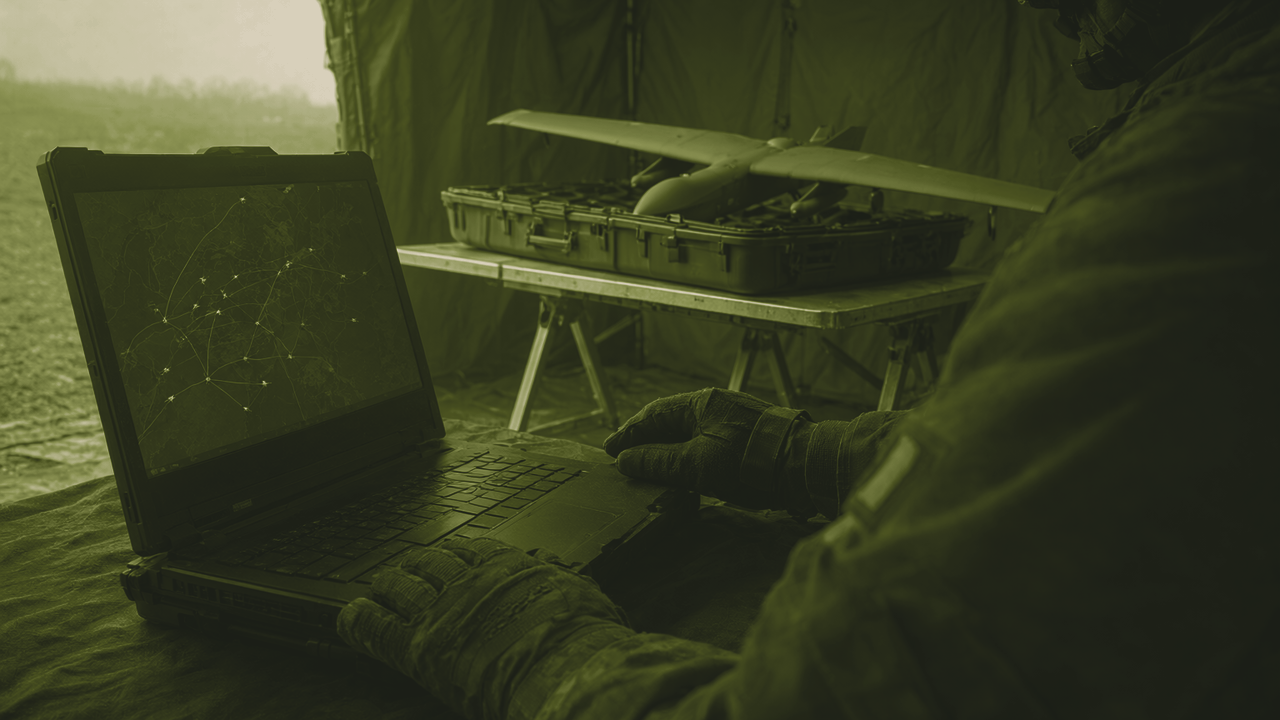
DELTA access, German Babka production and a drone-regiment wish list bring Ukrainian technology into Bundeswehr planning. Kyiv keeps control of the combat data, and Germany still has to build its own operational record.
Berlin, Nov. 23
Berlin's Nov. 23 agreements to adopt Ukrainian battle-management software and build Ukrainian drones move Germany from financing Kyiv's war toward acquiring its tools, while leaving the Bundeswehr to build the operational-data loop behind them. Defense Ministers Boris Pistorius and Yevhenii Khmara signed a letter of intent making Germany the first country to receive access to DELTA, Ukraine's Defense Ministry said. German use will not involve transferring or accessing Ukrainian combat or operational data.
The meeting, Khmara's first Berlin visit as minister, also produced an implementation agreement for German production of Ukrainian tactical reconnaissance drones. Ukraine's ministry plans several thousand aircraft in 2027. Pistorius identified the drone as Babka and put Germany's contribution to production capacity at about €34 million.
As our Babka report detailed, TAF Industries and Wingcopter are the partners. The joint venture's first series output goes to Ukraine's forces, Militarnyi reported, and the companies plan to offer the drone to the Bundeswehr and other NATO forces later.
Four days before the meeting, POLITICO revealed internal documents listing nine systems for Germany's first drone regiment, seven already used in Ukraine. Planners estimate about €150 million for thousands of drones. The army has yet to settle the formation's final shape.
"For Germany, supporting Ukraine has long ceased to be a one-way street," Pistorius told a meeting of Ukraine's military backers in Brussels. The Berlin agreements give that line substance. Their limits matter too: software and airframes cross the border, and the records that tell an army what to fly next stay under Kyiv's control.
Frequently Asked Questions
What did Germany and Ukraine sign in Berlin?
A letter of intent making Germany the first country with access to Ukraine's DELTA battle-management system, and an implementation agreement for a joint venture to build Ukrainian Babka reconnaissance drones in Germany, per Ukraine's Defense Ministry and Pistorius.
Does Germany get Ukraine's combat data through DELTA?
No. Ukraine's Defense Ministry said German use of DELTA will not involve transferring or accessing Ukrainian combat or operational data. A separate April data-exchange memorandum covers combat-data access on terms the ministry sets.
How much is Germany paying?
Pistorius put Germany's contribution to Babka production capacity at about €34 million. No price has been published for DELTA; a follow-on agreement is to set practical, technical and legal terms.
What will Germany's first drone regiment use?
Internal documents obtained by POLITICO list nine systems, seven already used in Ukraine, including Raybird, Termit, Quantum Systems' Vector, three Perennial Autonomy drones and Fire Point's Flamingo missile. The army says the final shape is still being worked out.
When does the regiment stand up?
The army plans to start with about 350 soldiers in 2027 and grow to about 600 by 2029, according to POLITICO.
AI-generated summary, reviewed by an editor. More on our AI guidelines.
Read next — from the Lexicon
Below this point
- DELTA's 3 million strike missions
- Daum's dataset rule
- The regiment's nine-system list
- Rudninkai and the operator gap
- Babka's German production
- The next agreements and 2027 deliveries

Marcus Schuler
Marcus Schuler edits BattlePolicy, a daily defense-technology brief connecting the companies and capabilities behind modern war to the contest among Europe, the US, Russia, and China.