Russia Builds a Ballistic Missile Every Five Hours. Kyiv's Answer Is a Cheaper Shot at Everything Else
Strikes have damaged Russia's missile plants without capping its estimated output. Ukraine's nearer lever is to kill drones cheaply with DESNA and programmable rounds and keep scarce interceptors for ballistic missiles.
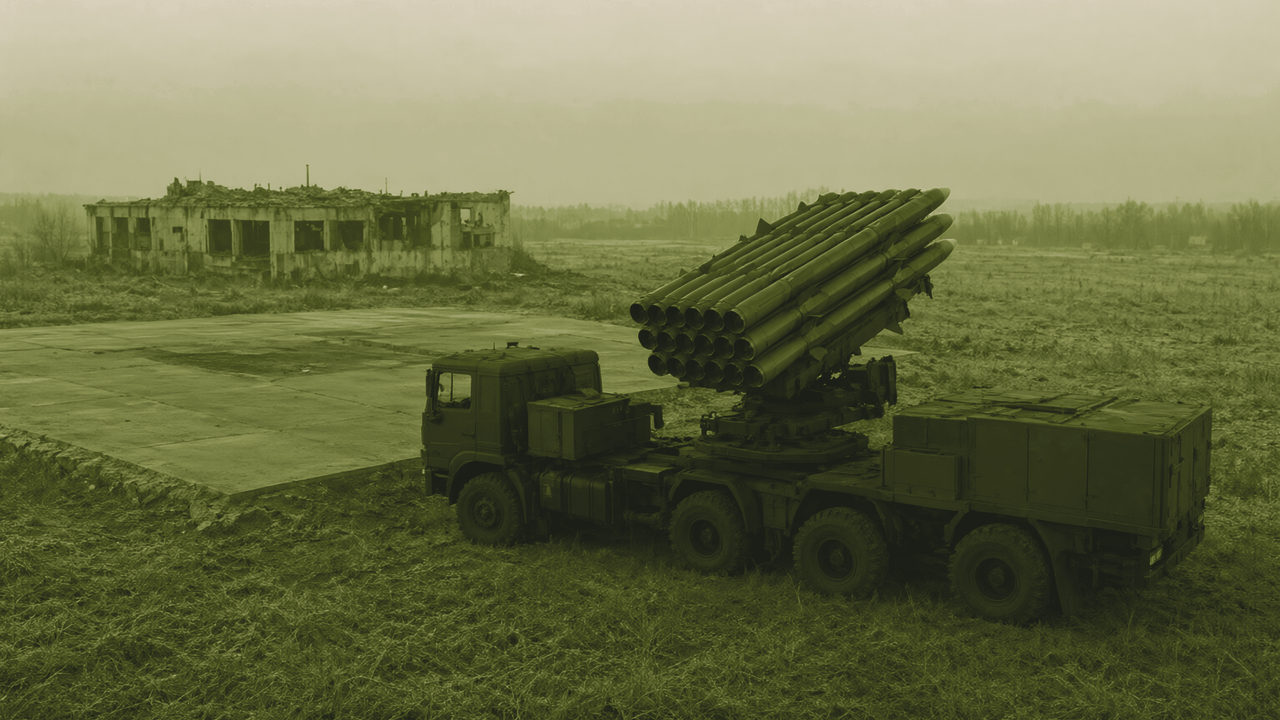
Strikes have damaged Russia's missile plants without capping its estimated output. Ukraine's nearer lever is to kill drones cheaply and keep scarce interceptors for the ballistic missiles nothing cheap can stop.
Berlin, November 23
Russia now builds a ballistic missile every five hours and keeps speeding up, Defense Minister Yevhenii Khmara told the NATO Parliamentary Assembly in Berlin on November 23. Russia fired 153 ballistic missiles at Ukraine in the past month, he said.
Khmara put air defense, especially anti-ballistic defense, first among his requests to NATO. He also sought 40 more fighter jets and support for unmanned systems, including interceptors for jet-powered Shaheds. His proposal would bring missiles forward: partners would transfer interceptors from existing stocks and receive replacements through contracts Ukraine has already signed.
A day later, satellite imagery published by the monitoring group Exilenova+ showed the electroplating and stamping workshop at the Votkinsk Plant cleared to the ground, nine months after Ukrainian FP-5 Flamingo cruise missiles hit it. Read together, the two facts say Kyiv cannot strike Russian output down this winter. Its nearer lever is to make drone interception cheaper and keep Patriot-class interceptors for ballistic missiles.
Oslo, November 24
In Oslo on November 24, Norwegian Defense Minister Tore Sandvik confirmed Ukraine was already using DESNA, developed with Kongsberg, and said Norway would expand the project. Khmara said production is scaling and that the system has proved effective against drones, including jet-powered models.
Ukraine's 18th Army Corps also announced that Rheinmetall KF41 Lynx vehicles had entered service with the 21st Separate Mechanized Brigade, with programmable ammunition the corps says can hit air targets. Both additions address drones. Neither addresses ballistic missiles, which is where Khmara's list starts.
Frequently Asked Questions
How many ballistic missiles does Russia produce?
Ukraine's defense minister Yevhenii Khmara said on Nov. 23, 2026 that Russia builds one ballistic missile every five hours, about 144 a month, and is accelerating. Ukraine's military intelligence (HUR) estimated in early November that capacity was up to 110 a month. Both are Ukrainian government estimates.
What happened at the Votkinsk Plant?
Ukrainian FP-5 Flamingo cruise missiles struck the plant, which makes Iskander-M and Oreshnik missiles, on the night of Feb. 20–21, 2026. Satellite imagery published by Exilenova+ in November shows the damaged electroplating and stamping workshop demolished to a cleared site.
What is the DESNA air-defense system?
DESNA pairs Ukrainian missiles and launchers with a Kongsberg fire control system. Its RK-2PZ missile is derived from the Barrier anti-tank missile. Norway's defense minister Tore Sandvik said Ukraine already uses it against drones and that Norway will expand the project.
Can DESNA stop Iskander ballistic missiles?
Nothing disclosed says so. Officials describe DESNA as a counter-drone system. Its value is that cheaper rounds against drones leave NASAMS and Patriot interceptors free for harder targets.
How much does Ukraine produce by comparison?
Luch Design Bureau's director general, Oleh Korostelov, told The Wall Street Journal that Neptune output will reach the hundreds this year but stay below 1,000, and acknowledged Ukraine produces less than Russia. Luch makes more than 1,000 Palianytsia missile-drones a year.
AI-generated summary, reviewed by an editor. More on our AI guidelines.
Read next — from the Lexicon
Below this point
- Russia's 110 and 144
- Votkinsk, nine months after the strike
- DESNA and the 30mm layer
- Kongsberg and Ukraine's factories
- The next deliveries and estimates
Russia's 110 and 144
Ukraine's own estimates put Russian ballistic production on an upward path, although they do not independently establish the increase. Defense Intelligence of Ukraine, or HUR, estimated in early November that Russia could manufacture up to 110 ballistic missiles a month, roughly one every six and a half hours. Khmara's five-hour interval three weeks later implies about 144 in a 30-day month, roughly a third more if both figures are taken at face value. Both are Ukrainian government estimates, not independently verified production counts.
HUR put Russia's combined cruise and ballistic capacity above 200 missiles a month. Its October stock estimate included up to 700 ballistic missiles and thousands of cruise missiles, with approximately 115 Iskander-M rounds. The ballistic category also includes RM-48U missiles launched from S-400 systems. Production feeds an inventory Russia can draw down, so a month's launches need not match that month's manufacturing.
Luch's director general, Oleh Korostelov, acknowledged the Ukrainian production disadvantage in The Wall Street Journal's November 21 report. He projected hundreds of Neptune missiles this year, fewer than 1,000, and said more funding could raise output. That upper bound averages below 83 a month. HUR's Vadym Skibitskyi put Russia's July production of Kh-101 cruise missiles alone at 87. One Russian type in one month exceeded Ukraine's monthly average under the Neptune ceiling, although neither figure establishes a sustained rate.
The Journal put Luch's Palianytsia production above 1,000 a year. Ukrainian estimates of Russian jet-powered drone capacity run to thousands a month, and the published figures differ. These weapons differ in capability and purpose, so the totals cannot measure combat power directly. They do establish the manufacturing problem: Ukraine cannot base winter protection on matching every incoming weapon with another long-range strike weapon.
Votkinsk, nine months after the strike
Votkinsk shows that reaching a missile factory and suppressing national missile output are different achievements. The plant makes 9M723 Iskander-M, Oreshnik, Yars and Bulava missiles, about 1,300 kilometers from Ukraine's border. Ukraine's General Staff confirmed the Flamingo strike on the night of February 20–21, and the OSINT project CyberBoroshno geolocated footage showing damage to production workshops.
Exilenova+'s November imagery adds a specific result: the electroplating and stamping building no longer stands. It does not establish whether Russia intends to rebuild there, moved the work elsewhere or absorbed the disruption inside other production lines. Nor does the cleared site quantify missiles Russia failed to build. Both Ukrainian estimates published since the strike put ballistic output at 110 a month or more.
Khmara has called attacks on launchers an asymmetric answer to ballistic missiles. He said Ukraine struck 16 Iskander and S-400 launchers in recent months and that defense-industrial facilities remain targets. Such attacks try to interrupt launches and manufacturing before missiles reach Ukrainian airspace, and their value does not depend on destroying an entire production line.
But the disclosed figures do not show a drop in launch volume. Khmara's count of 153 ballistic missiles in a month is the continuing burden on interception. Votkinsk supports a narrower conclusion: deep strikes can impose repair costs and disruption, but Kyiv cannot budget this winter's air defense around a collapse in Russian supply.
DESNA and the 30mm layer
DESNA goes after the part of that burden Ukraine can try to make cheaper. Kongsberg describes a system combining Ukrainian missiles and launchers with Norwegian fire control. It complements NASAMS, in Ukrainian service since 2022, which fires missiles including the AIM-9, AIM-120 and AMRAAM-ER. A Ukrainian munition gives defenders another option against drones without spending those stocks on every engagement.
Ukroboronprom presented DESNA's RK-2PZ missile at September's MSPO exhibition. Derived from the Barrier anti-tank missile, it uses laser beam guidance and a proximity fuze. Its operational range remains undisclosed. The design adapts an existing Ukrainian missile family to air defense, but the published information does not establish how much territory a launcher can protect or its engagement limits.
Sandvik grounded the project in a supply shortage: global demand has left too few anti-aircraft missiles. He called DESNA's rounds cheaper than traditional ones. Neither a unit price nor a production rate was disclosed, so the commercial case rests on a relative cost claim and on volume production that has yet to be shown, not on a demonstrated cost per interception.
Rheinmetall's Lynx engages drones a different way, with programmable cannon ammunition. The company disclosed a first contract for five vehicles, signed in December 2025, worth a mid double-digit million euro sum and financed by Germany. Rheinmetall has also opened a factory in Ukraine. Five infantry fighting vehicles do not amount to broad air-defense coverage, and the purchase price says nothing about the cost of a drone kill. What they add is another drone-capable weapon already with a frontline brigade.
Ukraine's Air Force supplied the immediate demand figure: Russia launched 96 drones overnight on November 23–24, 64 of them jet-powered. Its preliminary tally counted 73 shot down or suppressed. The account credits several branches of the defense effort and gives no breakdown by weapon, so it cannot establish DESNA's share or how many missiles were saved.
The operational objective is nevertheless clear. Where a DESNA round, a programmable shell or an interceptor drone replaces a NASAMS or Patriot engagement, the more expensive missile stays available for another target. DESNA does not give Kyiv the anti-ballistic capability it needs against an Iskander, and nothing disclosed suggests it does. Cheap drone defense preserves scarce interception capacity. It does not remove the need for partners to deliver anti-ballistic missiles.
Kongsberg and Ukraine's factories
Norway's own procurement shows why Ukraine cannot rely solely on buying more conventional interceptors. The Norwegian government announced plans to buy roughly 22 billion kroner of NASAMS-compatible air-defense missiles for its own air bases and critical infrastructure. Ukraine's needs enter the same market as its partners' domestic requirements, and Sandvik's shortage warning applies to both.
Kongsberg's role in DESNA points to a way of expanding supply without sourcing every component from an established Western missile line. The Norwegian company provides command and fire control; the Ukrainian partner supplies launchers and missiles. The industrial proposition pairs Western systems that direct engagements with Ukrainian munition volume. Its value depends on rounds reaching units in quantity, not on the partnership announcement.
The Journal's industry reporting describes the constraints on that Ukrainian side. Funding is split among more than 1,300 companies. An Ark Robotics executive described trouble hiring and finding premises, and Korostelov said Luch must disperse and protect its sites. Any Ukrainian line asked to make DESNA rounds at volume sits inside those financing, workforce and physical-security limits.
Some firms have already moved. Swarmer, which priced a Nasdaq IPO in March, has its headquarters in Austin. Ark Robotics is headquartered in Estonia and builds drones there. Uforce announced a memorandum with US boatbuilder ReconCraft to build maritime drones in the United States. None of these is a DESNA production commitment. They show where Ukrainian firms go for the premises, investment and capacity that expansion at home lacks.
The next deliveries and estimates
- Interceptor transfers. Watch whether partners accept Khmara's stock-swap proposal and release missiles already in inventory. Signed replacement contracts matter this winter only if they unlock earlier deliveries.
- DESNA quantities and integration. Production and deployment numbers would show whether the rounds arrive in volume. Defense Express assessed integration with existing NASAMS fire control as possible, but the configuration remains unconfirmed.
- HUR's next production estimate. Compare its next ballistic figure with the earlier ceiling of 110 a month and Khmara's implied 144. A revised estimate should show whether the apparent increase is output growth or two different assessments.
- Votkinsk construction. Further imagery from Exilenova+ or another monitoring group could show whether rebuilding begins at the cleared workshop. Until then, the November image records a demolished building, not the plant's replacement capacity.

Marcus Schuler
Marcus Schuler edits BattlePolicy, a daily defense-technology brief connecting the companies and capabilities behind modern war to the contest among Europe, the US, Russia, and China.