Pai Defence Raises $5 Million to Map Russian Drone Flights With Sensors That Emit Nothing
The British-Ukrainian startup wants to turn a record of logged drone flights into route and pilot-location predictions, though its radio sensors cannot hear fibre-optic drones.
The British-Ukrainian startup wants to turn a record of logged drone flights into route and pilot-location predictions, though its radio sensors cannot hear fibre-optic drones.
British-Ukrainian startup Pai Defence has raised $5 million in pre-seed funding to expand its drone-detection network along Ukraine's front, the company announced Nov. 24. Norwegian venture fund Gardar led the round, joined by nine other investors, including UA1 and D3.
The money will pay for wider sensor coverage, machine-learning development and a larger engineering team, according to Pai.
Frequently Asked Questions
How much did Pai Defence raise, and from whom?
Pai Defence said it raised $5 million in a pre-seed round led by Gardar, a Norwegian venture fund. Nine other investors joined, among them UA1, D3, Green Flag, Defence Builder, 1991 Ventures, Motanka, WildField, TA Ventures and Angel One.
What does Pai Defence build?
A network of passive radio-frequency sensors that detect drone transmissions without emitting a signal of their own, plus machine-learning software that the company says identifies drone types, tracks their location and logs each flight.
What is the 100,000-flight figure?
It is the company's own claim for the number of drone flights it has tracked. Resilience Media cautioned that these are likely “pre-launch tracks.”
What can the system not detect?
Resilience Media reported that a system relying on radio emissions cannot detect fibre-optic drones or autonomous drones that do not transmit.
How common are fibre-optic drones?
A 2026 briefing for a U.S. Army Europe and Africa staff course, cited by Resilience Media, found fibre-optic Vandal drones flew 12% of tactical strike missions by Russia's Rubikon formation in the period examined, against 67% for radio-controlled VT-40s.
What will the money be used for?
According to Pai, wider sensor coverage along the front, further machine-learning development and a larger engineering team.
AI-generated summary, reviewed by an editor. More on our AI guidelines.
Read next — from the Lexicon
Below this point
7 more sections.
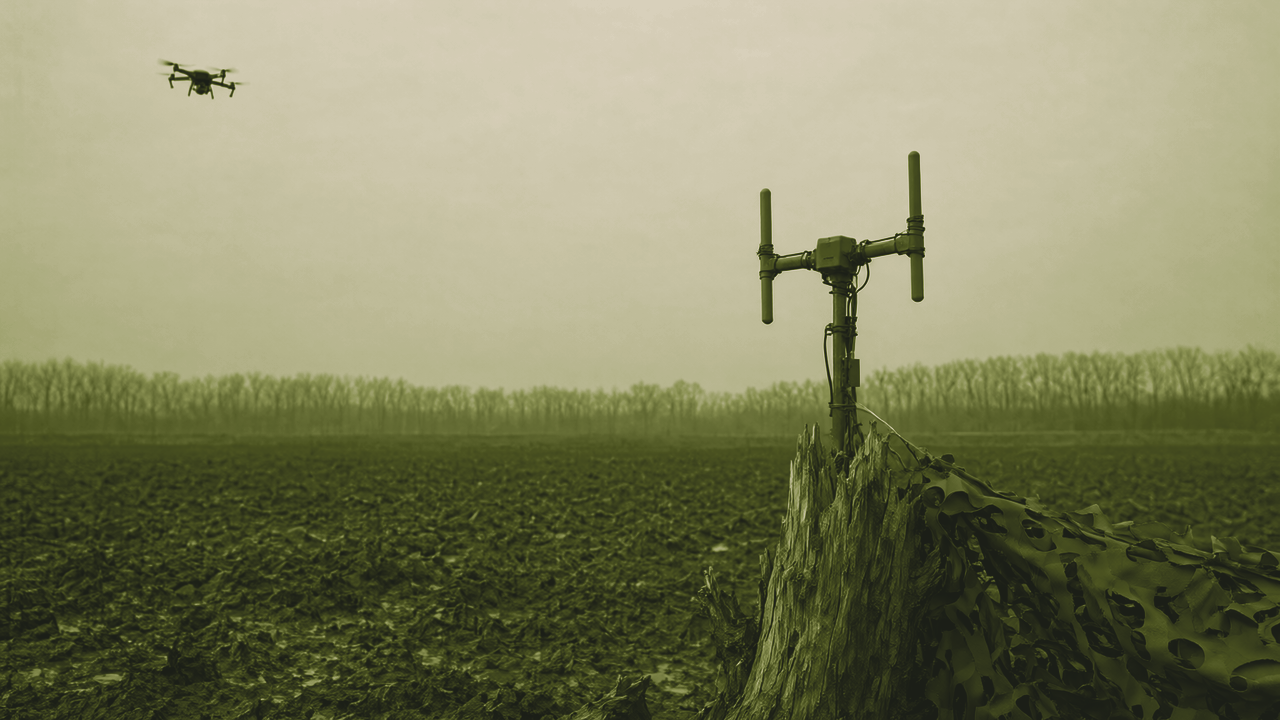
The system listens and does not transmit. Its passive radio-frequency sensors pick up drone transmissions and emit nothing, so they do not give away their own position, the company says. Machine-learning software then identifies the drone type, tracks its location and logs each flight from launch.
Pai claims it has tracked more than 100,000 drone flights, and that the system has been tested in combat and is ready for serial production. Its stated aim is to mine that record for likely routes, the positions of enemy pilots and patterns of activity, and later to recommend where units should place sensors, drone crews and effectors.
"For the most lethal weapon on the frontline, a detector's beep when the drone is almost overhead is far too late," CEO Tonia Zakorchemna said. She founded the company in 2025 with Dmytro Pulmanovsky, chief of staff of the National Guard's Svoboda unmanned systems battalion.
Pai argues that Ukraine's DELTA battlefield management system still lacks automatic real-time marking of friendly and enemy drones, and that operators do much of the detection by hand. Ukraine's Defense Ministry counted more than 43,000 Russian tactical drones neutralized in October.
Sensors that depend on radio emissions cannot detect fibre-optic drones or autonomous drones that do not transmit, Resilience Media reported. The outlet also cautioned that the 100,000 flights are likely "pre-launch tracks." It cited a 2026 briefing for a U.S. Army Europe and Africa staff course that found radio-controlled VT-40 drones flew 67% of tactical strike missions by Russia's Rubikon formation in the period examined. Fibre-optic Vandal drones flew 12%.
KPMG counts five investment and acquisition deals of at least $5 million in Ukrainian defense tech in the first nine months of 2026, up from two a year earlier.
The new money buys more sensors along the front and more engineers. On the Rubikon figures, roughly one strike mission in eight flies on a cable those sensors cannot hear.

Marcus Schuler
Marcus Schuler edits BattlePolicy, a daily defense-technology brief connecting the companies and capabilities behind modern war to the contest among Europe, the US, Russia, and China.