GLSDB
A clever bolt-together weapon — a small glide bomb strapped to a surplus rocket motor to give HIMARS a 150 km punch that can curve around defenses and even strike behind the launcher. On paper a bargain deep-strike round; in Ukraine, blunted badly by Russian jamming.
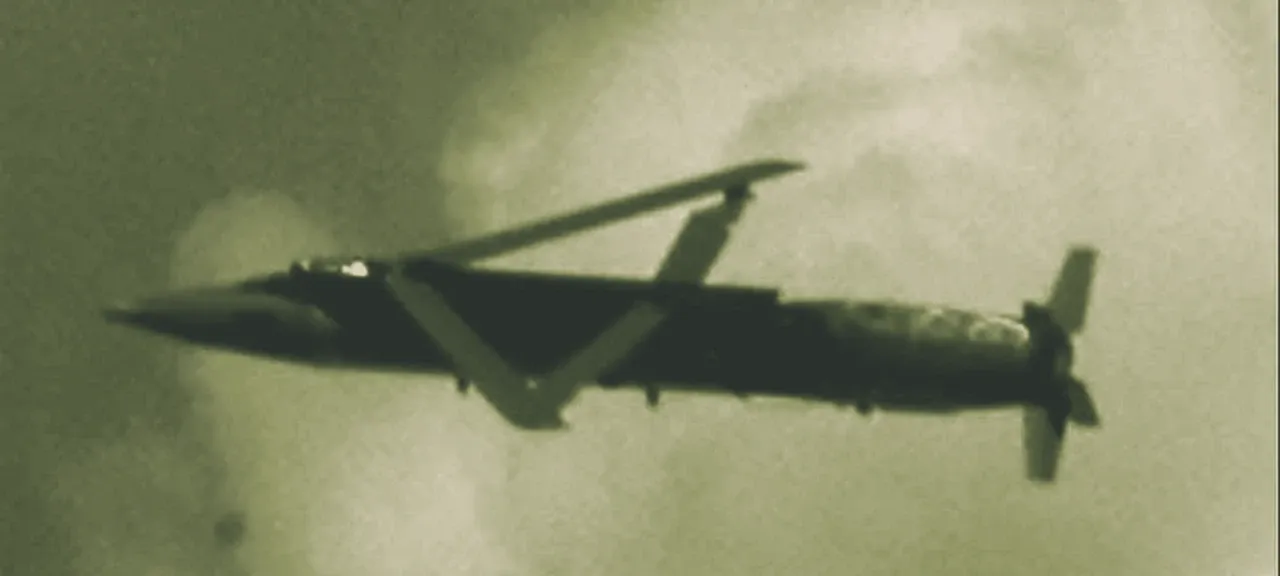

One of the war's cleverest improvisations — and one of its sharpest cautionary tales. The Ground-Launched Small Diameter Bomb bolts Boeing's combat-proven GBU-39 glide bomb onto a surplus rocket motor, turning a cheap air-dropped munition into a 150 km ground-launched precision weapon fired from HIMARS. It can curve around terrain, attack from unexpected angles, even loop back to hit a target behind the launcher. On paper it was a bargain deep-strike round; in Ukraine, Russian electronic warfare blunted it so badly that the program stalled.
Overview
The GLSDB (Ground-Launched Small Diameter Bomb) is a joint Boeing–Saab weapon that combines two existing, combat-proven systems: the GBU-39/B Small Diameter Bomb (a 250 lb-class precision glide bomb with a penetrating blast-fragmentation warhead) and an M26 rocket motor salvaged from older artillery-rocket stocks. The rocket boosts the bomb off a standard MLRS/HIMARS launch pod; the SDB then glides to a target up to ~150 km away, guided by a jam-resistant GPS-aided inertial navigation system. Its signature feature, per Wikipedia, is 360-degree flexibility — it can fly around terrain to hit reverse slopes, approach from any bearing, or circle back to strike targets behind the launch vehicle. The concept promised cheap, long-range, precise fires; the reality in Ukraine proved more complicated.
🔒 The full GLSDB file is for BattlePolicy Pro members. Below the line: development history, design and capabilities, variants, the combat record, advantages and limitations, comparable systems, outlook, the full specifications table, our sourcing, and the analyst assessment — procurement, suppliers and the BattlePolicy verdict. Unlock the full file with BattlePolicy Pro →
Below this point
- Development
- Design & capabilities
- Variants
- Combat record / operational use
- Advantages
- Drawbacks / limitations
- Counterparts
- Outlook
- Key specifications
- Sources
- Analyst Section
- Procurement & contracts
- Suppliers & related companies
- Comparable systems — analyst view
- Analyst note