Helsing unveils a walking robot and a research arm it has no plans to sell
Helsing showed the RX-1 quadruped and its Area 9 research unit in Paris on June 1 and said it will give the robot to universities rather than sell it, as Ukraine fields tens of thousands of ground robots and China's Unitree dominates the quadruped market.
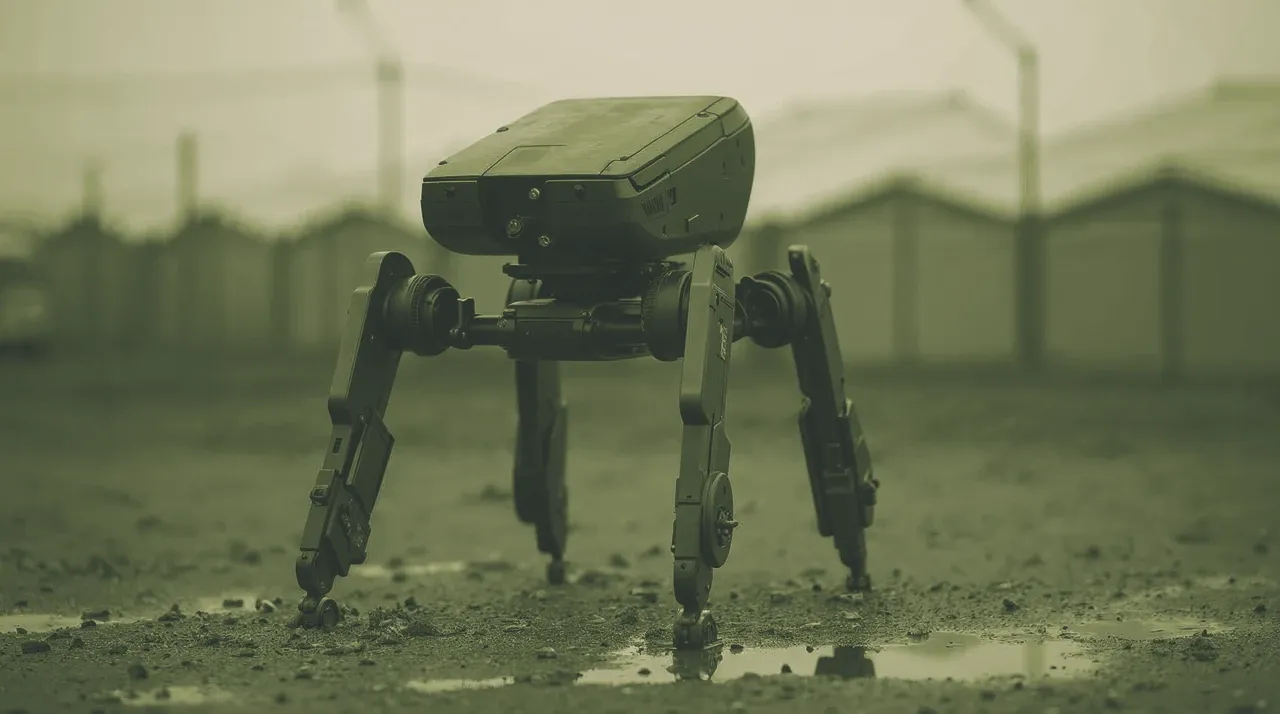
Helsing showed the RX-1 quadruped and its Area 9 research unit in Paris on June 1 and said it will give the robot to universities rather than sell it, as Ukraine fields tens of thousands of ground robots and China's Unitree dominates the quadruped market.
Helsing unveiled a four-legged robot in Paris on June 1 and said it has no plans to sell it. The RX-1, shown alongside a newly public research division the company calls Area 9, is a "robotics research platform" that Helsing will give to universities rather than to militaries. "The goal is not to build a robot, but to advance our autonomous capabilities, not just in the air but also on the ground," Chief Scientist Antoine Bordes told Handelsblatt. The work is at an early stage, Bordes said, and the company does not currently plan to sell robots.
For Europe's most valuable defense startup, the move extends a software-and-drones company into ground robotics at a point when Ukraine is buying ground robots by the tens of thousands and the existing quadruped market is held by Chinese and American makers.
Area 9 and the RX-1
Helsing disclosed few hardware details. It published no weight, payload, speed or battery-life figures. It described the RX-1 as a quadruped designed and built in Europe, including the actuators at each joint, which Bordes said the company engineered in house. He called the platform "exceptionally strong" and able to "withstand the elements." The trade outlet hartpunkt classified it as a quadruped unmanned ground vehicle, or Q-UGV, and noted that Helsing released images of the robot but little technical specification.
Helsing presented RX-1 as a "sovereign alternative to systems produced outside Europe." The trade journal esut noted that four-legged robots of this type have so far come almost entirely from American or Chinese producers. Helsing said it will make the platform available to research labs across Europe, beginning with the robotics group of Marco Hutter at ETH Zurich and INRIA Paris, France's national institute for computer science. "RX-1 is an advanced, European-developed hardware platform enabling exciting field robotics research," Hutter said. "We look forward to collaborating with Antoine's team at Area 9 to push outdoor autonomy."
Helsing founded Area 9 in January 2025 as an internal research unit modeled on Lockheed's Skunk Works, and now staffs it with about 50 people under Bordes, according to Handelsblatt. Its first project was Centaur, which Helsing says was the first publicly known software to fly a combat aircraft, a Saab Gripen-E. Centaur now underpins the CA-1 Europa, the autonomous fighter Helsing unveiled in September 2025 and aims to fly in 2027. Bordes told Handelsblatt the robotics work is the division's next focus.
Helsing's expansion into ground robotics
Helsing has framed RX-1 as part of a wider push into autonomous systems rather than as a product line. The company started in 2021 as a software firm that fused sensor data for militaries. In December 2024 it became a manufacturer with the HX-2 strike drone, a 12-kilogram munition with a 100-kilometer range and onboard AI for targeting where GPS is jammed, and it has supplied the type to Ukraine in large numbers; a Helsing-funded wargame detailed by The Times had Lithuanian and German forces opening a simulated war with a stockpile of 12,000 HX-2 drones. The company has since moved into undersea surveillance with the SG-1 Fathom, which it says can stay submerged for 90 days, and into orbit, joining OHB, Kongsberg and Hensoldt on May 19 in a venture to build a space-based targeting system.
The ground work has a precursor. Helsing acquired the Barcelona robot-dog maker Keybotic, a deal first covered in January, gaining a team that had built autonomous quadrupeds for inspecting refineries and power plants since 2020, according to Novobrief and Tracxn. Helsing has not said RX-1 draws on Keybotic's work. The actuators, locomotion and autonomy software it now describes as in-house cover the same ground Keybotic already worked. Bordes told Handelsblatt the company's interest is the autonomy layer that runs across its drones, submarines and satellites rather than any single machine.
Ukraine's ground-robot buildup
The demand case for ground robots is clearest in Ukraine. On April 18, Defense Minister Mykhailo Fedorov said the country would contract 25,000 unmanned ground vehicles in the first half of 2026, twice the 2025 total; President Volodymyr Zelensky has since set a target of 50,000 for the year, the Defense Ministry said. The robots ran more than 9,000 missions in March and about 24,500 across the first quarter, and the number of units operating them climbed from 67 in November to 167 by March. Fedorov said the aim is for robots to handle "100% of frontline logistics."
The battlefield and the startup story — free in your inbox every week. No paywall.
Subscribe Free →The buildup follows the spread of what Ukrainian troops call the kill zone. FPV and fiber-optic drones have pushed the lethal band dozens of kilometers behind the line, per the Atlantic Council, which has made resupply by truck or on foot far more dangerous. The BBC wrote in November 2025 that up to 90 percent of supplies to Ukrainian positions around Pokrovsk were arriving by ground robot. Ukraine's General Staff has credited the platforms with cutting personnel losses by as much as 30 percent, according to Defense News. The robots resupply positions, evacuate the wounded, lay and clear mines, and in some cases support assaults. In April, Ukraine's 1st Separate Medical Battalion ran six robotic casualty-evacuation missions in a single day, two of its vehicles covering about 300 kilometers between them, according to Defence Blog.
Most of that work does not run on legs. Ukraine's main ground robots are wheeled and tracked, such as the 300-kilogram Bizon-L, a logistics platform with a 50-kilometer range that the military cataloged under NATO standards this spring, Defense News noted. The quadrupeds in the field are mostly Chinese Unitree Go2 units that a British firm refits and sells as the BAD2; soldiers use them as scouts in trenches and buildings, and the type carries about 7 kilograms and runs for roughly two hours, according to AFP. Operators have called the robots too fragile and too costly for most jobs.
Helsing's research target sits past those limits. Hutter's lab at ETH Zurich and INRIA work on autonomy across rough outdoor terrain, the capability that today's remotely piloted robot dogs lack. Helsing has said RX-1 is built for that research rather than for current battlefield use, and Bordes said the work is still early.
A market held by Unitree and Ghost Robotics
The market for legged robots is held almost entirely by non-European firms. Unitree controls roughly 70 percent of the global quadruped market, with developer models starting near $1,600, according to industry coverage. The main Western military quadruped, Ghost Robotics' Vision 60, belongs to a US company that South Korea's LIG Nex1 bought for $400 million in 2024; Spain's INCIBE-CERT disclosed unencrypted-control vulnerabilities in the platform last October. Boston Dynamics bars customers from weaponizing its robots.
Helsing's sovereignty pitch lands against that backdrop, and the financial stakes are large. The company is in talks to raise about $1.2 billion at an $18 billion valuation in a round led by Dragoneer, according to DroneXL and Handelsblatt, up roughly 30 percent in dollar terms from the €12 billion it reached a year earlier in a Series D led by Spotify founder Daniel Ek's Prima Materia. Helsing declined to comment on the round, the Financial Times said.
Where RX-1 fits Helsing's portfolio
RX-1 follows a pattern across Helsing's portfolio. The company sells the autonomy software and sources or acquires the hardware that carries it. Its drones, the SG-1 Fathom and the space venture with OHB all run on Helsing's AI, and the Keybotic purchase brought in the legged-robot hardware. Giving RX-1 to ETH Zurich and INRIA adds access to two of Europe's leading robotics labs, and to their researchers, at the cost of the hardware rather than a product line.
Helsing has not provided any measure of the robot itself. RX-1 has no published specifications and no fielding date, and by Bordes' account no sales plan. The company has shown hardware well ahead of service before. The CA-1 Europa it unveiled in 2025 is not scheduled to fly until 2027, and Helsing has not said whether the robotics work runs on a comparable timeline.
What to watch
Helsing's funding round is the clearest near-term signal. A close near the $18 billion valuation it is reportedly negotiating would give Area 9 room to scale, and could bring a defense variant of RX-1 behind the research one. Work out of ETH Zurich and INRIA is the next thing to track, since progress on outdoor autonomy would appear in the labs before any product reaches a customer. In Ukraine, legged robots remain a small share of a ground fleet built on wheeled and tracked systems, and a shift toward quadrupeds at scale would test the case Helsing is making. Eurosatory, the land-defense exhibition near Paris in June, is the next venue where European firms may show ground-robot work.
Frequently Asked Questions
What is the Helsing RX-1?
A four-legged robotics research platform, or quadruped unmanned ground vehicle, that the defense-AI company Helsing unveiled in Paris on June 1, 2026. Helsing says it was designed and built in Europe, including its actuators, and frames it as a research platform rather than a product.
Is Helsing selling the RX-1?
No. Chief Scientist Antoine Bordes told Handelsblatt the work is at an early stage and the company has no current plan to sell robots. Helsing is giving RX-1 to universities, starting with ETH Zurich and INRIA Paris.
What is Area 9?
Helsing's research division, founded in January 2025 and led by Bordes, with about 50 staff according to Handelsblatt. Its first project, Centaur, became what Helsing calls the first publicly known software to fly a combat aircraft, a Saab Gripen-E, and now underpins the CA-1 Europa autonomous fighter.
Why does the RX-1 matter for Ukraine?
Ukraine is scaling ground robots fast: Defense Minister Mykhailo Fedorov said it would contract 25,000 unmanned ground vehicles in the first half of 2026, and President Volodymyr Zelensky has set a 50,000 target for the year. Most are wheeled or tracked, and legged robots remain niche scouts. The unsolved problem is autonomy across rough terrain, which is what RX-1's research targets.
How does it compare to Unitree and Ghost Robotics?
Those makers dominate the market Helsing wants to enter: Unitree holds roughly 70 percent of global quadruped sales, and Ghost Robotics' Vision 60, owned by South Korea's LIG Nex1, serves Western militaries. Helsing pitches RX-1 as a European sovereign alternative to systems built outside the continent.
AI-generated summary, reviewed by an editor. More on our AI guidelines.

Marcus Schuler
Marcus Schuler edits BattlePolicy, a daily defense-technology brief connecting the companies and capabilities behind modern war to the contest among Europe, the US, Russia, and China.