Europe
Helsing Claims 39 of 41 HX-2 Hits in NATO Trials as a Bundeswehr Qualification Deadline Nears
Helsing's trial figures land weeks before an end-October German qualification milestone and well above the success rates documented in Ukraine.
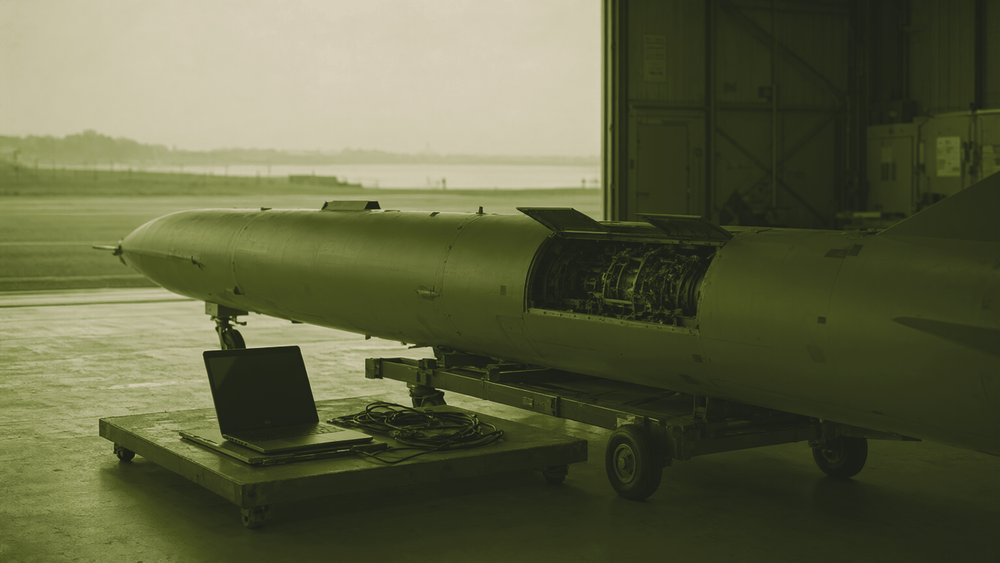
Europe's most valuable defense startup is buying into the Dutch maker of the Ruta cruise missile, and Bloomberg puts its minority stake at a roughly €6 billion valuation.
Helsing's trial figures land weeks before an end-October German qualification milestone and well above the success rates documented in Ukraine.
Dealroom forecasts a record $10.5B for European defence startups in 2026, but mega-rounds are over 85% of it and US investors supply 47%. Russia's jet drones set the test.
Helsing is pitching software-flown combat jets to a Europe without a joint fighter program, but its evidence so far is a simulator result, two prototypes under construction and no announced order.
Ukraine's 59th Brigade says roughly four in five HX-2 launches end in successful strikes. Its complaints concern propellers, catapults and warhead size, which is an industrial problem for a company built around software.
Helsing's first combat drone — a plywood-framed, AI-guided loitering munition co-produced in Ukraine. It launched badly enough that Kyiv stopped ordering, then improved enough to hit better than half its targets around Pokrovsk.
Japan's Ground Self-Defense Force is field-testing a German loitering munition already flying in Ukraine, and Helsing reached the procurement system through a retail conglomerate rather than a defense prime.
Helsing, Quantum Systems and Stark raised $3.5 billion between them this summer. The deal terms underneath show all three scaling on production capacity they do not own.
One day after closing a $1.8 billion round at an $18 billion valuation, Helsing is buying its way into the US industrial base with a West Virginia plant for its Ukraine-fielded HX-2, before it holds a single US contract.
The largest round a European defense startup has ever raised lands with a heavily American investor syndicate, even as Helsing insists it stays European-owned and keeps arming Ukraine's front.
Helsing AI is a European defense-software stack built around Altra, Cirra and Centaur, applying machine learning to land targeting, electronic warfare and combat-aircraft autonomy.
On July 2, Airbus co-led Quantum Systems' $1.2B round and became Brave1's first Western partner. Europe's old primes are buying the defense-tech boom, not fighting it.
The Munich reconnaissance-drone maker more than doubled its valuation in under a year, and its co-CEO says the cash is for acquiring rivals in a crowded European market.
STARK is reported in talks to raise €300M at €2.5B. Its German contract carries qualification gates and a cap, and its Virtus drone has both struck targets in Ukraine and missed them in Western trials.
The first known US Army field test of Germany's AI strike drone gives Helsing an opening into the American market, five months after Ukraine paused new orders.
France and Germany killed the New Generation Fighter on June 8. At ILA Berlin two days later, Boeing, Airbus, General Atomics and Helsing were already selling its replacement, on a 2029 clock.
Germany's software-defined AI one-way attack drone — an electrically propelled loitering munition with 100 km range and on-board AI for jamming-resistant precision strikes, fielded by Ukraine and under evaluation by NATO armies.
Helsing's CA-1EA drone would jam enemy radars 100 km ahead of strike packages by 2031, a role European air forces currently borrow from US Navy Growlers.
The Pentagon's Crucible 2 turns a $54.6 billion autonomy budget line into a contracted shoot-off, and the 25-firm roster shows who the Pentagon is betting on to fly the swarms.
STARK Defence, founded 18 months ago, is scaling into a core Bundeswehr loitering-munition supplier, and says a European NATO buyer just quadrupled its Virtus order.
Helsing showed the RX-1 quadruped and its Area 9 research unit in Paris on June 1 and said it will give the robot to universities rather than sell it, as Ukraine fields tens of thousands of ground robots and China's Unitree dominates the quadruped market.