NLAW
Shoulder-fired, single-use anti-tank missile with overfly top-attack and fire-and-forget PLOS guidance — the weapon that defined Ukraine's close-quarters tank-killing in 2022.
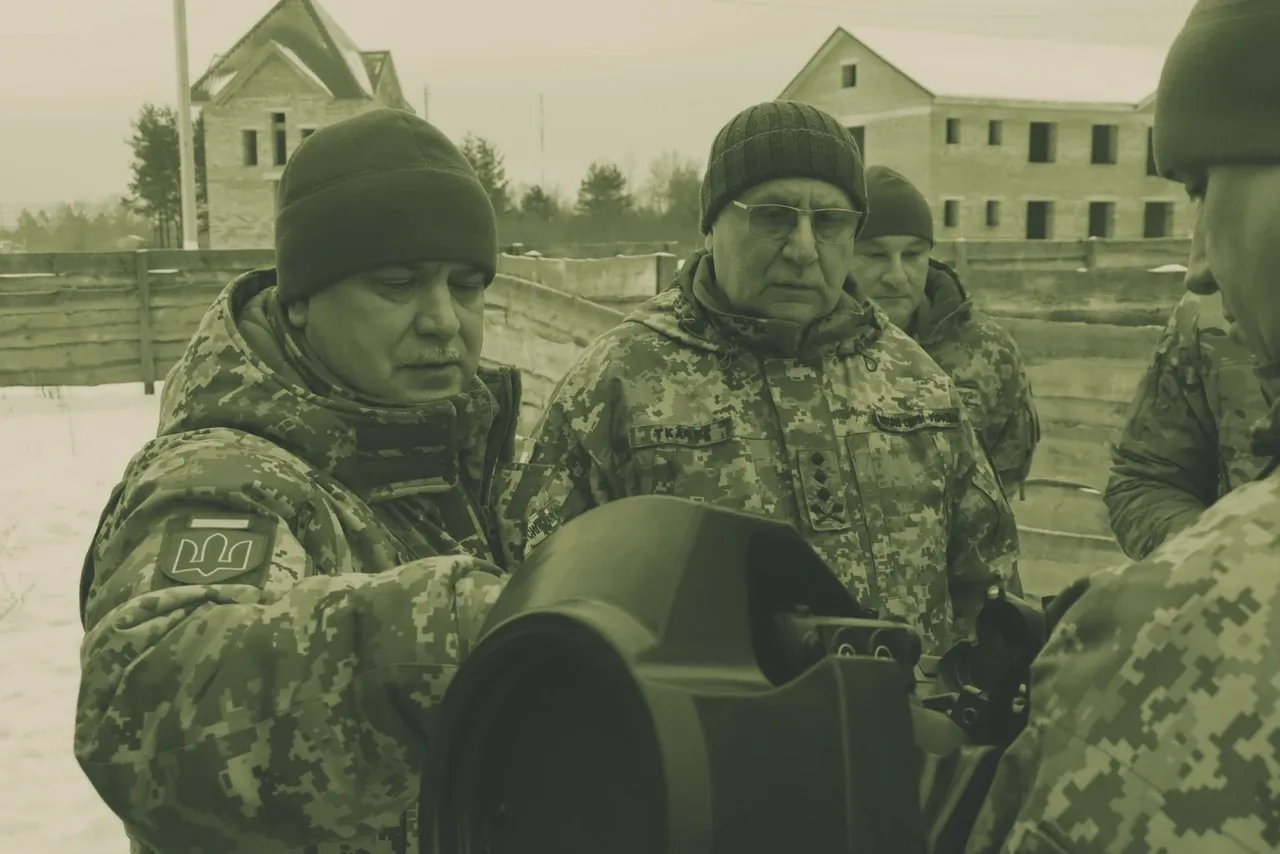
Joint Swedish-British disposable anti-tank guided missile — fire-and-forget top-attack from 20 meters, the weapon that reshaped infantry anti-armor combat in Ukraine.
Overview
The NLAW (Next generation Light Anti-tank Weapon), known in UK service as MBT LAW and in Sweden as Robot 57 (RB 57), is a man-portable, single-use anti-tank guided missile fielded by more than half a dozen nations and made famous by its decisive role in the opening phase of Russia’s full-scale invasion of Ukraine. A 12.5 kg round fired from the shoulder of a single soldier, it uses an inertially guided overfly top-attack flight path to punch through the thin roof armour of a main battle tank from as little as 20 metres away. Designed by Saab Bofors Dynamics and assembled by Thales in Belfast, the NLAW became the “weapon of choice” for Ukrainian small units in 2022, with donated stocks exceeding 5,000 rounds.
Development
Sweden’s 1990s requirement for a disposable, soldier-portable tank killer merged with a British need for a lightweight anti-armour weapon after studies showed existing systems were too heavy or too complex. In October 1999 the UK Defence Procurement Agency selected Bofors (later Saab) to build a prototype, and a joint UK-Sweden contract worth ~SEK 4.8 billion was signed in June 2002, according to a Wikipedia summary of the program. The design drew on technology from the BILL 2 top-attack missile and the AT4 CS confined-space launcher. A “Team MBT LAW UK” of 14 subcontractors was formed, with final assembly centred at Thales Air Defence in Belfast; full-rate production began in 2008 and the British Army received its first rounds in 2009, as noted by Thales.
Design & capabilities
The NLAW’s combat edge rests on a predicted-line-of-sight (PLOS) guidance that requires no laser lock-on. The operator tracks a moving target for 2–3 seconds; an inertial autopilot extrapolates the motion, steering the missile along a computed flight path completely immune to jamming, flares and dazzler countermeasures, as detailed on the Saab product page. In top-attack mode an overfly trajectory is flown ~1 metre above the line of sight; a magnetic and optical proximity fuze detonates the 1.8 kg shaped charge above the tank roof, rated by Saab to penetrate more than 500 mm of rolled homogeneous armour. A direct-attack mode is available for soft vehicles, structures and helicopters. The missile is soft-launched at ~40 m/s by an ejection motor, then boosted to a subsonic ~200 m/s sustainer, giving a stated combat range of 20–800 m — the only system, Saab says, that “can kill a main battle tank from just 20 metres.” A detachable sight unit, reusable control unit and folding bipod weigh the system down to 12.5 kg and allow firing from inside buildings at up to −45° depression, with a 20-year shelf life and an operating envelope from −38 °C to +63 °C. A 2015 software optimisation pushed the effective reach to 800 m against stationary targets, while the absolute self-destruct range is approximately 1,000 m.
Variants
The missile has been produced in UK service A1 and A2 (Mk1/Mk2) builds, differing mainly in software and guidance optimisation, with the 2015 update effectively extending the range envelope to 800 m vs stationary targets. The weapon remains a single configuration with selectable top-attack and direct-attack modes.
Combat record / operational use
The NLAW entered combat in the 2022 Russian invasion of Ukraine and quickly became the signature weapon of Kyiv’s early defence. The UK flew in 2,000 rounds before the invasion and had delivered more than 4,200 by 20 March 2022, when The Guardian reported “some sources reporting an extraordinary 90% hit rate” and noted that the light, easy-to-carry round was preferred to the heavier Javelin for close-ambush work. Ukraine’s own claims, cited by Wikipedia, attributed 30–40% of Russian tanks destroyed in the first weeks to NLAW, and the country declared it the most numerous advanced guided anti-tank weapon in theatre by April 2022. Luxembourg donated its entire stock of 102 missiles, and the UK alone had supplied more than 5,000 NLAWs by May 2023; by July 2024 the UK had provided over 12,000 anti-tank weapons of all types, a large share of them NLAW, according to Army Technology and Militarnyi. The weapon entered wartime iconography as “Saint NLAW,” a spin-off of the Saint Javelin fundraising meme tracked by Wikipedia’s entry on Saint Javelin.
Advantages
- Overfly top-attack defeats the thickest tank armour from as little as 20 m, a capability Saab says is unique in a shoulder-fired weapon.
- PLOS guidance needs no lock-on, works against partially obscured targets and is effectively immune to jamming, flares and dazzler countermeasures.
- At 12.5 kg and with a ~5-second reaction time from detection to launch, one soldier can shoot-and-scoot — a trait UK and Ukrainian officials credited for early-war success.
- Unit cost roughly one-tenth that of Javelin-class systems (est. $30,000–40,000 vs $175,000+), enabling mass distribution to infantry and territorial defence units.
- Confined-space soft-launch and −45° down-fire allow ambush from inside buildings, upper floors and ditches, tailor-made for Ukraine’s urban and suburban fighting.
Drawbacks / limitations
- Short reach: a practical limit of ~800 m (self-destruct at ~1,000 m) versus 2,500 m+ for Javelin-class fire-and-forget missiles.
- Single (non-tandem) shaped charge offers less margin against explosive reactive armour than dual-warhead competitors.
- Effectiveness against moving targets falls beyond 400–600 m, and the operator must maintain a steady 2–3-second track.
- Pre-war production had dwindled; UK restocking ordered in December 2022 stretches into 2026, and the Belfast line had to be rebuilt after years of low output.
- Captured examples have reportedly been transferred to Russian and Iranian forces, feeding reverse-engineering efforts.
Counterparts
- Javelin (USA) — fire-and-forget top-attack ATGM with longer range and tandem warhead.
- Kornet (Russia) — beam-riding ATGM widely fielded by Russian units, with heavier warheads but longer lock-on time.
Outlook
The war in Ukraine transformed NLAW from a niche, stockpiled weapon into a front-line commodity. The UK’s £229 million order of late-2022 will keep Thales Belfast assembling “several thousand” rounds through 2026, Sweden ordered 3,000 more in 2022 and Finland topped up orders in 2023. Saab has doubled its ground-combat production capacity year-on-year and again by 2025, aiming for a combined output of 400,000 Carl-Gustaf, AT4, NLAW and ammunition units annually. With over 24,200 rounds ordered to date and the type combat-proven against a peer armoured force, additional European restocks are the baseline expectation.
Key specifications
| Spec | Value |
|---|---|
| Type | Shoulder-fired disposable anti-tank guided missile (top-attack / direct-attack) |
| Range | 20–800 m (~1,000 m self-destruct) |
| Speed (Mach / km·s⁻¹) | Subsonic; soft-launch ~40 m/s, sustainer ~200 m/s |
| Warhead (type & weight) | Single shaped charge, 1.8 kg, >500 mm RHA; proximity fuze (top-attack) / contact fuze (direct attack) |
| Guidance | PLOS — inertial autopilot, no lock-on; immune to jamming |
| Accuracy (CEP) | Not publicly established; some Ukraine-war reporting cited ~90% hit rate (unverified) |
| Launch platform(s) | Single soldier; shoulder-fired, confined-space launch, −45° elevation |
| Propulsion | Two-stage: soft-launch ejection motor plus solid rocket sustainer |
| Length / diameter / launch weight | 1.02 m / 150 mm (body 115 mm) / 12.5 kg |
Sources
- Wikipedia — NLAW entry. https://en.wikipedia.org/wiki/NLAW
- Saab — NLAW product page. https://www.saab.com/products/nlaw
- Saab — press release: “Saab Receives NLAW Order from the UK”. https://www.saab.com/newsroom/press-releases/2022/saab-receives-nlaw-order-from-the-uk
- Thales Group — “Delivering Resilience: Thales in Belfast to provide next batch of Saab NLAW anti-tank missiles”. https://www.thalesgroup.com/en/news-centre/press-releases/delivering-resilience-thales-belfast-provide-next-batch-saab-nlaw-anti
- Breaking Defense — “Saab’s ‘huge ramp up’ in anti-tank weapon, ammo production targets 400,000 units a year”. https://breakingdefense.com/2023/02/saab-plans-huge-ramp-up-in-nlaw-production-to-reach-400000-units-a-year/
- UK Defence Equipment & Support — “DE&S orders thousands more anti-tank weapons for UK Armed Forces”. https://des.mod.uk/thousands-more-anti-tank-weapons-uk-armed-forces/
- Defense News — “Britain ramps up anti-tank weapon production to refill stocks”. https://www.defensenews.com/global/europe/2022/12/07/britain-ramps-up-anti-tank-weapon-production-to-refill-stocks/
- Saab — press release: “Saab Receives NLAW Order from Finland”. https://www.saab.com/newsroom/press-releases/2023/saab-receives-nlaw-order-from-finland
- The Guardian — “How British ‘tank-busters’ are helping Ukraine halt Russian attack”. https://www.theguardian.com/world/2022/mar/20/how-british-tank-busters-are-helping-ukraine-halt-russian-attack
- Militarnyi — “The UK purchases thousands of NLAW”. https://militarnyi.com/en/news/the-uk-purchases-thousands-of-nlaw/
- Army Technology — “UK has sent 12,000 anti-tank missiles and 400,000 artillery shells to Ukraine”. https://www.army-technology.com/news/uk-has-sent-12000-anti-tank-missiles-and-400000-artillery-shells-to-ukraine/
- Wikipedia — Saint Javelin entry. https://en.wikipedia.org/wiki/Saint_Javelin