Rheinmetall's Second Outlook Cut Turns on 1,800 Unsigned Boxers
Rheinmetall cut its 2026 sales forecast to about €13.2 billion because Germany's Arminius Boxer order and artillery-ammunition acceptances slip into 2027. Hensoldt raised its own forecast the next morning on orders already signed.
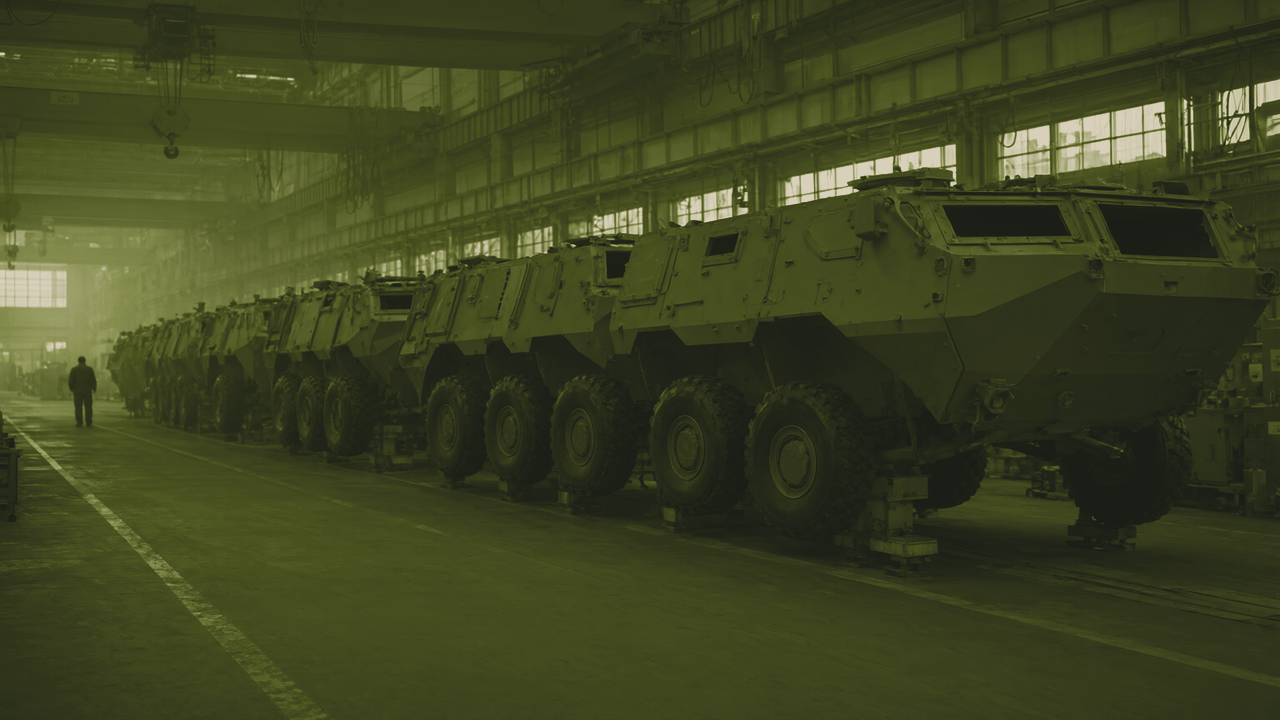
The delayed Arminius contract and artillery-ammunition acceptances push revenue into 2027. Hensoldt raised its forecast the next morning on orders already signed.
Rheinmetall's Nov. 4 forecast cut measures how slowly Germany turns military demand into signed contracts and accepted deliveries. In a disclosure at 17:38 CET, the company lowered expected 2026 sales to about €13.2 billion from a range of €13.7 billion to €14.2 billion and its operating margin target to about 18.5% from about 19%. The quarter behind the warning was strong. The forecast broke on procurement timing.
Rheinmetall's €13.2 billion outlook
Third-quarter sales rose 32% to €3.149 billion from €2.308 billion, the company disclosed. Operating result climbed 62% to €553 million from €342 million, lifting the margin to 17.5% from 14.8%. Order intake reached €2.893 billion, and operating free cash flow improved to minus €82 million from minus €168 million.
Three shortfalls drove the cut. Rheinmetall no longer expects the Bundeswehr's Arminius order this year: a bulk purchase of roughly 1,800 Boxer eight-wheeled armoured vehicles from ARTEC, the joint venture it owns equally with KNDS Deutschland. The advance payments and revenue tied to it move into 2027. Delayed acceptances of artillery-ammunition lots defer further revenue. And new activities, particularly a cooperation with Dutch firm Destinus, will bring in less in the fourth quarter than hoped.
The company also abandoned its assumption of a cash-conversion rate above 40%, which had depended on the Arminius advances, though it still expects positive operating free cash flow for the year. This is its second cut to the 2026 sales forecast in three months. August's €300 million reduction followed Germany's cancellation of the six-ship F126 frigate programme.
The share fell as much as 18.4% on Nov. 5, to €818.70, Boersen-Zeitung recorded. Reuters called it the biggest decline in the STOXX 600 that day.
Less than 13 hours after Rheinmetall's warning, Hensoldt raised its 2026 revenue forecast to around €2.8 billion from around €2.75 billion. The sensor maker's nine-month order intake grew 76.7% to €3.564 billion, and its backlog hit a record €10.367 billion. German rearmament money is reaching suppliers at different speeds: Hensoldt is booking and delivering against contracts already signed, while Rheinmetall waits on a signature and on acceptance decisions.
Frequently Asked Questions
Why did Rheinmetall cut its 2026 forecast?
Rheinmetall said on Nov. 4 that it no longer expects Germany's Arminius Boxer order in 2026, that acceptances of artillery-ammunition lots are delayed, and that new business with Dutch firm Destinus will bring in less than planned. It now expects sales of about €13.2 billion instead of €13.7 billion to €14.2 billion, and an operating margin of about 18.5% instead of about 19%.
What is the Arminius Boxer programme?
The Bundeswehr's planned bulk purchase of roughly 1,800 Boxer 8x8 armoured vehicles in many variants, built by ARTEC, the 50/50 joint venture of Rheinmetall and KNDS Deutschland. Defense Express expects command vehicles and Skyranger air-defence guns to make up most of it, alongside RCH 155 howitzers and Schakal infantry fighting vehicles.
When is the Arminius contract expected to be signed?
Trade outlet hartpunkt reported that the firm order is not expected before February 2027, at a value about 10% below the figure chief executive Armin Papperger gave in August. Defense Express put that at about €22.5 billion against €25 billion and cautioned that the budget still has to be agreed.
Is demand for Rheinmetall's products falling?
The company's figures do not show that. Third-quarter sales rose 32% to €3.149 billion and operating result rose 62% to €553 million, and nine-month sales grew 38% to €8.376 billion. The cut reflects revenue and advance payments moving from 2026 into 2027.
Why did Hensoldt raise its forecast while Rheinmetall cut?
Hensoldt's growth comes from contracts already signed and in delivery, including Eurofighter radars, sighting systems for the Schakal and Puma, and TRML-4D air-defence radars. Its nine-month order intake rose 76.7% to €3.564 billion and its backlog reached a record €10.367 billion, the company said on Nov. 5.
AI-generated summary, reviewed by an editor. More on our AI guidelines.
Read next — from the Lexicon
Below this point
- Arminius: more than €3 billion upfront
- What 1,800 Boxers carry: Skyranger guns, RCH 155 howitzers
- Hensoldt's €10.4 billion backlog
- Deliveries from 2029, a €10 billion satellite order also waiting
- Nov. 10 in London, Nov. 26-27 in Hamburg

Marcus Schuler
Marcus Schuler edits BattlePolicy, a daily defense-technology brief connecting the companies and capabilities behind modern war to the contest among Europe, the US, Russia, and China.