NATO Turns to Ukraine's Deep-Strike Logic. Britain and Germany's Missiles Are Due in 2032 and 2035
NATO is planning for strikes deep inside Russia, as Ukraine already does. Britain and Germany's flagship missiles are due in 2032 and 2035, so Germany is shopping for cheap mass, some of it already in Ukrainian use.
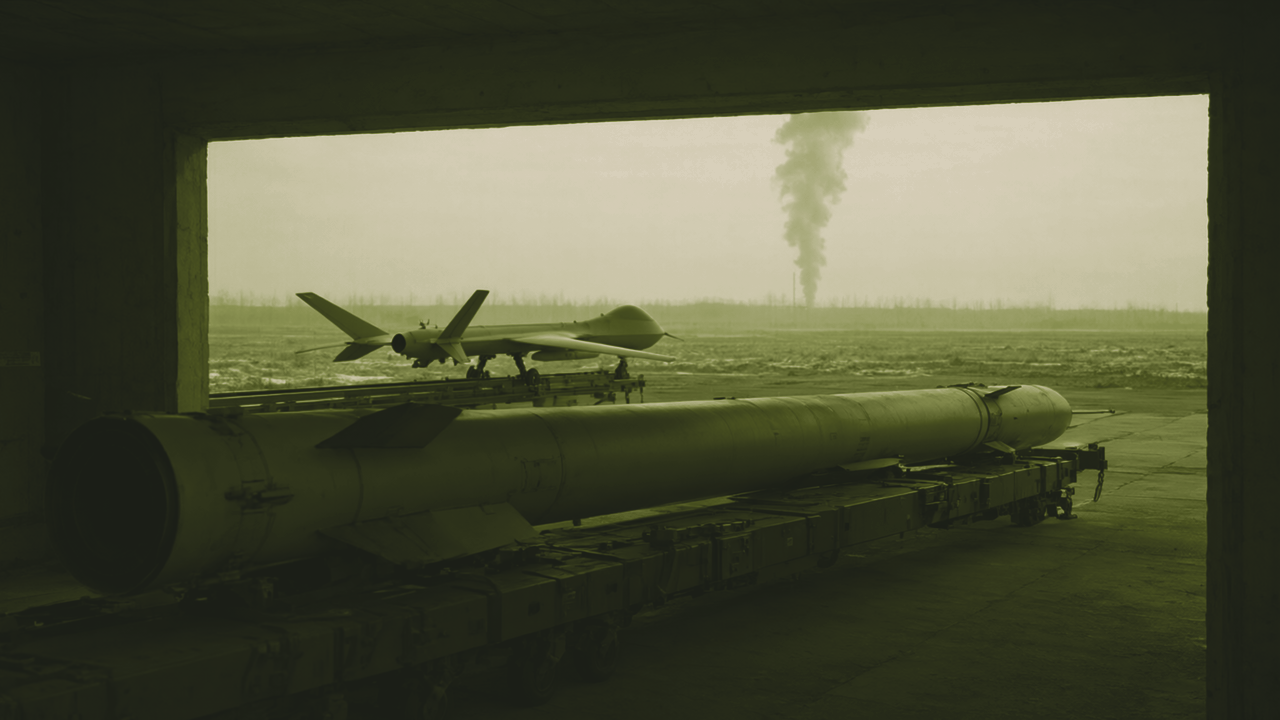
Cheaper weapons could fill the gap sooner, and Germany is shopping for them. Ukraine's campaign shows what that mass can reach, what it has not stopped and how a distant capital can interrupt it.
NATO's June symposium
NATO is turning to the logic Ukraine already fights with while Europe's flagship weapons remain years away. The Wall Street Journal reported on Nov. 3 that the alliance held its first Deep Strike Symposium in June, hosted by Gen. Alexus Grynkewich, with discussions and a wargame. UNIAN's summary of the article lists bases, supply depots and industrial sites behind the front as targets in a war with Russia.
Grynkewich set out the approach in Warsaw on Oct. 12: block an initial attack, blunt its continuation and, if required, break the warfighting system behind it. NATO would "layer high-end and highly effective precision munitions with an overpowering mass of affordable and scalable systems," he said.
The high end is late. Britain and Germany's defense ministers said in a joint statement on Nov. 2 that their Deep Precision Strike capabilities, with ranges over 2,000 kilometers, would be "delivered within the decade." Internal German ministry briefings seen by POLITICO expect the British-led High-End Cruise Missile to be ready for military use in 2032 and aim for Germany's hypersonic weapon by 2035. The ministry declined to comment to POLITICO.
Ukraine is already fighting this way. Its Defense Ministry claims at least 30 Russian military and strategic facilities struck in October. Germany's army chief, by contrast, hopes for first deliveries of his cheap missiles from 2027. That interval makes affordable mass the near-term purchase, and Ukraine's record shows both what it can reach and what it has not stopped.
Frequently Asked Questions
What did the Wall Street Journal report about NATO's plan?
On Nov. 3 the Journal reported that NATO held its first Deep Strike Symposium in June, hosted by Gen. Alexus Grynkewich. UNIAN's summary of the article lists bases, supply depots and industrial sites behind the front as targets in a war with Russia.
When are Britain and Germany's deep-strike missiles due?
The two ministers said on Nov. 2 that Deep Precision Strike would be delivered within the decade. Internal German ministry briefings seen by POLITICO expect the High-End Cruise Missile to be ready for military use in 2032 and aim for the hypersonic weapon by 2035.
What cheaper missiles is Germany looking at?
European Pravda, citing Bloomberg, names Destinus's Ruta and Hypersonica's HS1, talks on a Covenant Anthem contract worth more than €1 billion and discussions with Ukraine on Bars. Army chief Lt. Gen. Christian Freuding said initial delivery from 2027 is fundamentally possible.
How much damage have Ukraine's refinery strikes done?
The bne IntelliNews ledger counts 27 refineries hit. Plants reported halted or cut in October are about 5% of Russian nameplate capacity, rising to 45% if earlier halts still hold. Those figures track reported outages, not confirmed output loss.
Have deep strikes stopped Russia's air campaign?
No. Ukraine's General Staff counted 6,473 long-range Shahed/Geran drones launched in October, and the Institute for the Study of War assesses Russia has kept up ballistic and cruise missile production and is likely stockpiling.
AI-generated summary, reviewed by an editor. More on our AI guidelines.
Read next — from the Lexicon
Below this point
- Ukraine's 30 targets in October
- Russia's 27 refineries and 6,473 drones
- Britain and Germany's long-dated spending
- Germany's 2027 volume requirement
- Kyiv's October pause
- What to watch
Ukraine's 30 targets in October
Ukraine pairs cheap mass with scarcer weapons reserved for harder targets. The ministry's 30 include seven facilities associated with defense and aerospace industries, which reaches into the production system sustaining Russian attacks.
The DWIM monthly assessment from Drone Warfare identifies the division of labor: cheap drones against lightly defended sites and Western cruise missiles against hardened ones. FP-1 drones fly at about 200 kilometers per hour and rely on mass rather than speed. On Oct. 18, FP-1s traveled about 1,000 kilometers to St. Petersburg; several facilities burned despite Russia's claim to have intercepted 145 drones over Leningrad Oblast. Storm Shadow missiles struck Oryol's Proton microelectronics site on Oct. 24.
Ukraine's Defense Ministry also credits Neptune missiles with destroying two Su-34 aircraft at Marinovka on Oct. 29. Russia's Defense Ministry claimed 1,043 Ukrainian drones downed on the night of Oct. 29-30 and 856 on the night into Nov. 3. Those unverified figures indicate claimed volume, not launch totals or interception rates.
Grynkewich traced his mix to lessons from Ukraine and the Middle East, citing "large amounts of affordable mass" paired with high-end precision weapons. NATO's procurement problem is to reproduce that combination in stocks that can sustain combat.
Russia's 27 refineries and 6,473 drones
The refinery campaign demonstrates reach more clearly than it establishes a reduction in Russian output. bne IntelliNews counts 27 refineries hit and 208 dated strikes in its ledger. Plants reported halted or cut in October represent about 14.8 million tonnes of annual capacity, about 5% of Russia's 327 million tonnes of nameplate capacity.
The same ledger reaches 145.8 million tonnes, or 45%, if earlier halts still hold. It tracks capacity tied to reported outages, not confirmed output loss, and older shutdown reports cannot establish current operating conditions.
Deputy Prime Minister Alexander Novak put capacity under repair at about 10% in early September. He maintains the attacks will not disrupt Russian fuel supplies, while the government prepares to extend its diesel export ban to the end of January, with exceptions for some supplies.
The military limit is clearer. Ukraine's General Staff counted 6,473 long-range Shahed/Geran drones launched against Ukraine in October; the Air Force's daily data show 6,158, and the Institute for the Study of War could not explain the gap. ISW assesses that Russia has maintained ballistic and cruise missile production and is likely stockpiling those weapons.
Russia is also adapting its defenses. DWIM describes more than 100 Pantsir positions around Moscow and magazines reconfigured for 48 ready rounds using cheaper Gvozd interceptors. Ukraine's campaign imposes repair and defensive costs, but it has not ended Russia's air campaign.
Britain and Germany's long-dated spending
Europe's long-dated money leaves the immediate volume requirement open. Germany aims to buy about 600 Taurus Neo missiles for around €2 billion, with production planned from 2029, Reuters has reported. That schedule precedes the two Deep Precision Strike weapons, but production is still three years off.
Britain has committed £770 million over four years to the wider missile effort. German budget material identifies more than €9 billion in future spending without a defined timeframe. The ministry briefings envisage competing experimental hypersonic versions from MBDA and Hypersonica by 2029, followed by a decision on how to proceed.
Hypersonica says it has raised €100 million in a Series B round co-led by Lightspeed and General Catalyst to accelerate development and testing. Private capital is following the requirement, but the ministry's 2035 target shows how much work remains between funding a competitor and fielding its weapon.
The American alternative offers limited certainty. Germany's Tomahawk and Typhon purchase could be delayed by up to five years, European Pravda reported. The Pentagon canceled the Army battery's planned 2026 deployment to Germany in May, and military officials say there are no current plans to deploy Typhon to Europe.
Germany's 2027 volume requirement
Germany's procurement talks put a price on the kind of mass Ukraine already employs. Bloomberg reported in October that Berlin plans to buy thousands of precision deep-strike weapons from several manufacturers. European Pravda's account names Destinus's Ruta and Hypersonica's HS1 as candidates, along with talks on a Covenant Anthem contract worth more than €1 billion and discussions with Ukraine over co-production and procurement of Bars cruise missiles. These remain negotiations.
Army chief Lt. Gen. Christian Freuding defined the requirement in a speech manuscript seen by dpa: "We will use them to engage targets at a depth of around 1,500 kilometres en masse," saturating enemy air defenses. He called initial delivery from 2027 "fundamentally possible," and said two systems were under consideration, both still needing qualification. He named neither.
Covenant's targets show the scale of the industrial bet. The company plans production in Leipzig from 2027, with 1,000 Anthem units in the first year and 5,000 in 2028, at a six-figure unit price. Joint Strike Missile has a reported unit cost of about $2.8 million.
Denmark has picked both. Defense Minister Jeppe Bruus announced Anthem and JSM without disclosing quantities, costs or delivery dates. The Baltic Sentinel identifies the constraint: Anthem's operational value depends on a production line that has not yet entered serial manufacture.
Destinus offers a different starting point. The company says it has built 1,750 Ruta B1 missiles used by Ukrainian forces and is nearing 300 a month. If that holds, a weapon already in combat use sits on Germany's prospective list alongside new development programs.
Defense researcher Fabian Hoffmann counts at least 48 new low-cost cruise missile projects from 20 manufacturers, with fielding dates an open question, according to UNIAN's summary of the Journal article. The distinction for buyers is between announced projects and delivered weapons, although combat use alone does not establish suitability for every NATO target.
Kyiv's October pause
Political authorization can interrupt a campaign even when weapons are available. Nico Lange, a former chief of staff at the German defense ministry, describes a gap between military planning that includes offensive action and political leaders who understand defense as building a wall, Agentstvo's summary of the Journal article says. Strategists question whether European politicians would authorize such strikes after an invasion.
Ukraine shows how another capital can press on that choice. In a separate report in late October, the Journal cited people with knowledge of the operations saying Ukraine's military paused refinery strikes after pressure from President Donald Trump. Kyiv announced no pause, and Volodymyr Zelensky said on Oct. 27 that crews had no order against hitting refineries. Novak later said, "There was a pause but attacks resumed today." Fire Point claimed its FP-1 drones hit Novokuibyshevsk's refinery on Oct. 30, including a diesel hydrotreating unit. Campaign continuity depends on political decisions as well as manufacturing.
Retired Maj. Gen. Gordon Davis, a former top NATO deputy, argued in October that forces under attack would not need permission to respond in self-defense. The bigger issue, Stars and Stripes reported, is whether to hit targets inside Russia that enable the attack. "You are not just going to try to catch all the arrows; you are going to strike the archer," Davis said. Ukraine's October record qualifies that promise, since striking launch capacity and its industrial support has not stopped incoming attacks. NATO's plan needs stocks in place before the 2030s and a political decision settled before an attack forces one.
What to watch
- UK-German agreements before year-end. Officials discussed initial agreements to advance Deep Precision Strike. Firm commitments should clarify what delivery means against the 2032 and 2035 dates.
- Covenant's Leipzig output in 2027. Serial production must begin and approach the 1,000-missile first-year target before the volume promise becomes inventory.
- Freuding's two systems. Qualification will show which manufacturers can turn the 2027 ambition into accepted weapons.
- A Germany-Ukraine Bars contract. A signed agreement would move co-production beyond talks and put a Ukrainian missile into Europe's funded order book.

Marcus Schuler
Marcus Schuler edits BattlePolicy, a daily defense-technology brief connecting the companies and capabilities behind modern war to the contest among Europe, the US, Russia, and China.