Shield AI put its aircraft autonomy stack on a satellite already in orbit
The retrofit moves Hivemind beyond Shield AI aircraft, but five virtual satellites show how far the demonstration remains from autonomous fleet operations.
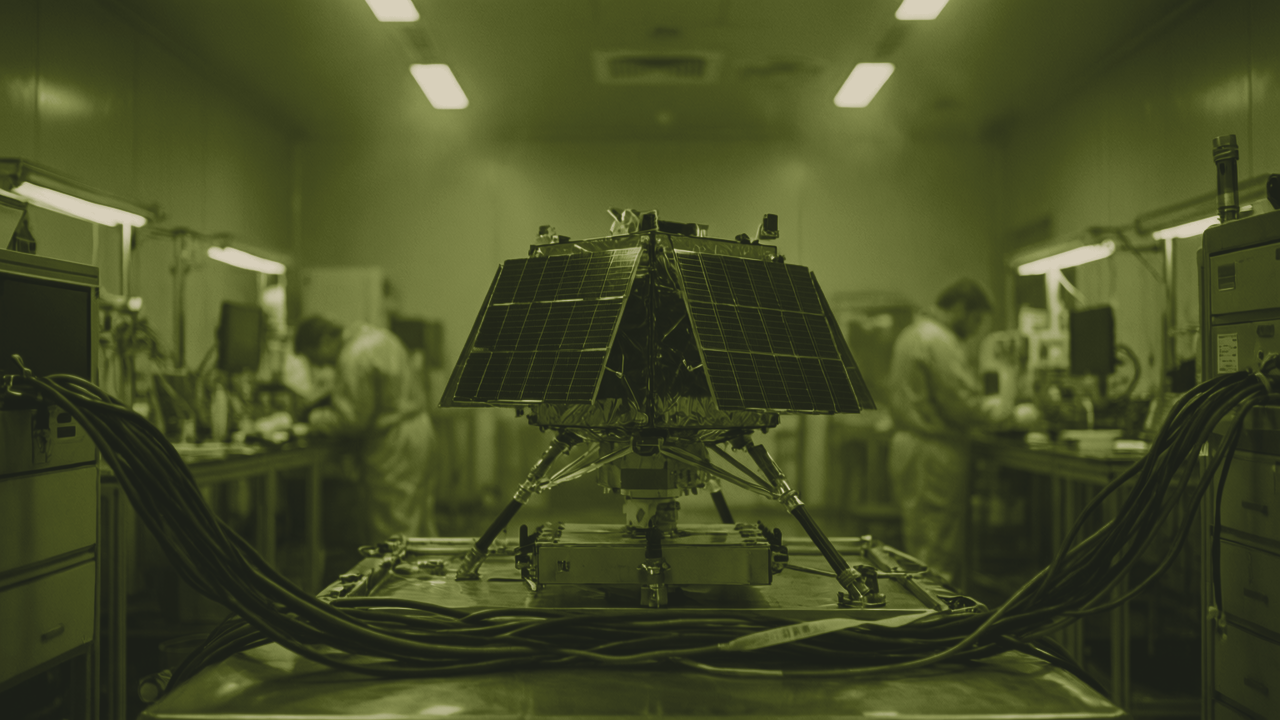
The retrofit moves Hivemind beyond Shield AI aircraft, but five virtual satellites show how far the demonstration remains from autonomous fleet operations.
Shield AI, Sedaro and NOVI Space announced Aug. 24 that Hivemind ran aboard a NOVI satellite in low Earth orbit, the AI pilot's first flight in space, SpaceNews reported. Shield AI built the software for aircraft.
The spacecraft was not designed around Hivemind. Engineers integrated the autonomy stack after the satellite was already in orbit, per the same account. NOVI's LIME satellite launched on SpaceX's Transporter-12 rideshare in January 2025.
Frequently Asked Questions
What is Hivemind?
Shield AI's autonomy software, built to let vehicles perceive their surroundings, decide and carry out missions with limited or no real-time human control. The company has described it as continuously deployed in operational environments since 2018.
What actually happened in orbit?
Over a 24-hour experiment window, a NOVI Space satellite in low Earth orbit executed 189 commands generated by Hivemind and approved by Sedaro's SAFE framework, the companies said. A second experiment raised Iridium contact initiation by 8 percentage points.
Did an AI fly a six-satellite constellation?
No. One physical NOVI spacecraft led five virtual satellites. SpaceNews called that an important distinction from demonstrating autonomous control of six spacecraft actually in orbit.
Was the satellite operating without humans?
The companies did not claim that. Their announcement said the experiments ran with NOVI operator verification and validation, per SpaceNews.
Why does the retrofit matter?
The spacecraft was not designed around Hivemind. The software was integrated after the satellite was already in orbit, which suggests autonomy can be layered onto existing constellations rather than requiring purpose-built hardware.
Who paid for it?
The work builds on a $1.76 million SpaceWERX Phase 2 SBIR award to Sedaro, with the Air Force Research Laboratory and Space Systems Command involved, according to SpaceNews.
Below this point
6 more sections.

Marcus Schuler
Marcus Schuler edits BattlePolicy, a daily defense-technology brief connecting the companies and capabilities behind modern war to the contest among Europe, the US, Russia, and China.