Ukraine's 33rd Regiment clears a Russian position with two gun robots and three drones
A fully unmanned combined-arms assault near Dobropillya, run with $30,000 machine-gun robots and workshop-armed drones, moves robot-led attacks toward routine Ukrainian practice.
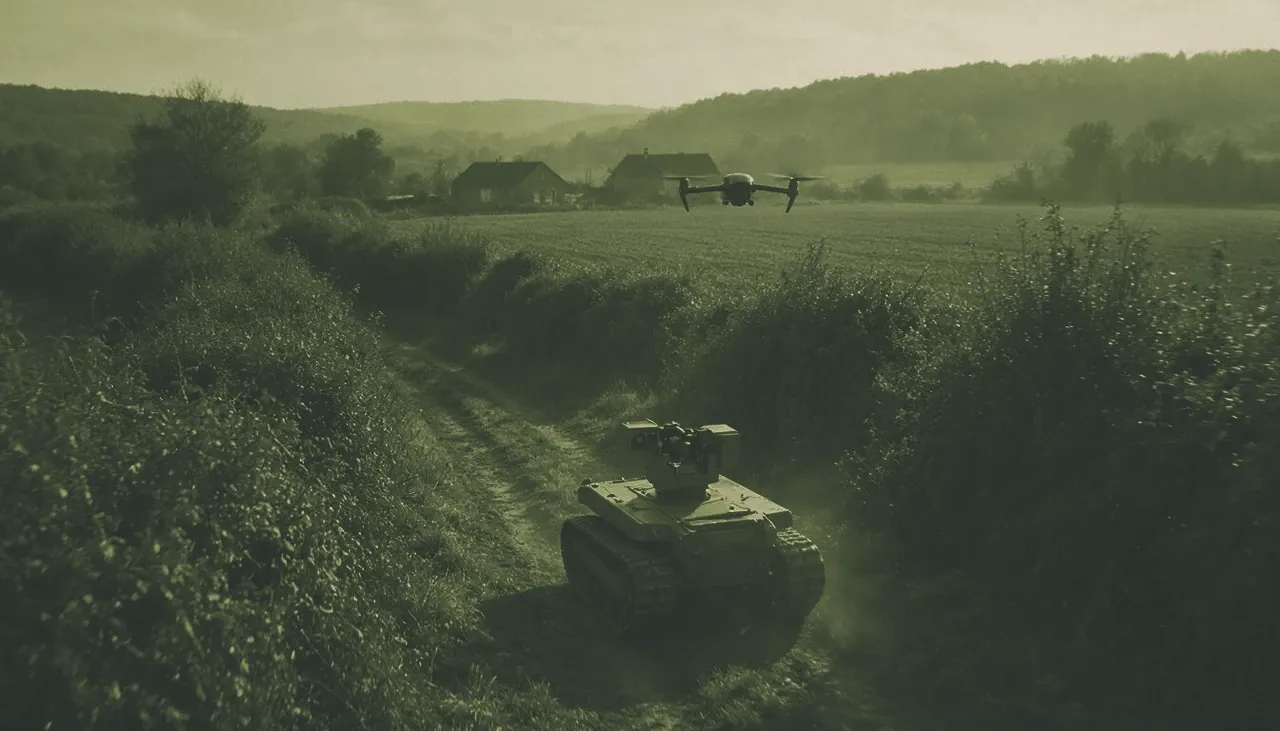
A fully unmanned combined-arms assault near Dobropillya, run with $30,000 machine-gun robots and workshop-armed drones, moves robot-led attacks toward routine Ukrainian practice.
Ukraine's 33rd Separate Assault Regiment cleared a Russian infiltration position near Dobropillya, northwest of Hulyaipole, with two armed ground robots and three aerial drones, and no infantry or artillery in the operation, Forbes reported on July 17.
The target was a five-man Russian team holding two houses, according to the regiment. Reconnaissance drones mapped the Russian observation posts around the site and found a concealed approach roughly 3 km long. Two Droid TW 12.7 tracked vehicles, each carrying a Wolly 12.7 remote weapon station with an M2 Browning 12.7 mm machine gun, drove the route and opened suppressive fire on the buildings. Intercepted communications caught Russian soldiers telling commanders they were under machine-gun fire but could not locate the shooter, per a DevDroid press release covered by United24 Media. When survivors moved to the adjacent house, a heavy bomber drone struck it with munitions built in the unit's own workshop. The regiment said all five soldiers were killed and every robot and operator returned.
DevDroid first fielded the Droid TW 12.7 in December 2024. The platform moves at 12 km/h, engages to 1 km, works a 5 km control radius, and holds its link over radio mesh or Starlink, Forbes noted. A complete unit with its control station reportedly costs about $30,000.
The tactics were standard infantry fire and maneuver, executed by wire: the ground robots served as the support-by-fire element while the bomber drone struck the defenders from above. Speed was the other gain. The robots were staged near the front, and the regiment launched almost immediately after reconnaissance ended, skipping the rehearsals and troop movement a manned assault would demand, the regiment's chief of unmanned systems said in a Telegram interview.
The battlefield and the startup story — free in your inbox every week. No paywall.
Subscribe Free →The demand behind the video is measurable. Ukraine's Defense Ministry counted 16,676 ground-robot missions in June, up from 7,511 in January, Gwara Media wrote, and the 33rd says its next unmanned assault is already in planning.
Frequently Asked Questions
What happened in the 33rd Regiment's unmanned assault?
Two armed DevDroid ground robots and three aerial drones cleared a five-man Russian infiltration team from two houses near Dobropillya, northwest of Hulyaipole, with no Ukrainian infantry or artillery involved, per Forbes and the regiment's own account.
What is the Droid TW 12.7?
A tracked combat robot from Ukrainian firm DevDroid, first fielded in December 2024. It mounts an M2 Browning 12.7 mm machine gun on a Wolly 12.7 remote weapon station, moves at 12 km/h, engages targets to 1 km, and costs about $30,000 with its control unit, per Forbes.
Were any Ukrainian soldiers exposed during the operation?
No personnel entered the assault zone. Operators controlled the robots and drones remotely over radio mesh and Starlink links, and the regiment said all systems and operators returned safely, per United24 Media.
Was this the first robot-only assault of the war?
No. Ukraine's Khartiia unit ran an all-robot assault in December 2024, President Zelenskyy said unmanned systems captured a position and took prisoners in April 2026, and the 123rd Territorial Defense Brigade landed an armed robot from a sea drone on the Kinburn Spit on July 13, per Forbes.
How widely does Ukraine use ground robots?
Ukraine's Defense Ministry counted more than 66,300 ground-robot missions in 2026 through June, rising from 7,511 in January to 16,676 in June, per Gwara Media.
AI-generated summary, reviewed by an editor. More on our AI guidelines.

Marcus Schuler
Marcus Schuler edits BattlePolicy, a daily defense-technology brief connecting the companies and capabilities behind modern war to the contest among Europe, the US, Russia, and China.