A $10,000 Gerbera Exposes the Mediterranean Drone-Defense Gap
France and Italy deny receiving the warning. Russia has already demonstrated the aircraft, ship launch and disruption model that make the scenario credible.
France and Italy deny receiving the warning. Russia has already demonstrated the aircraft, ship launch and disruption model that make the scenario credible.
Sept. 23 and two denials
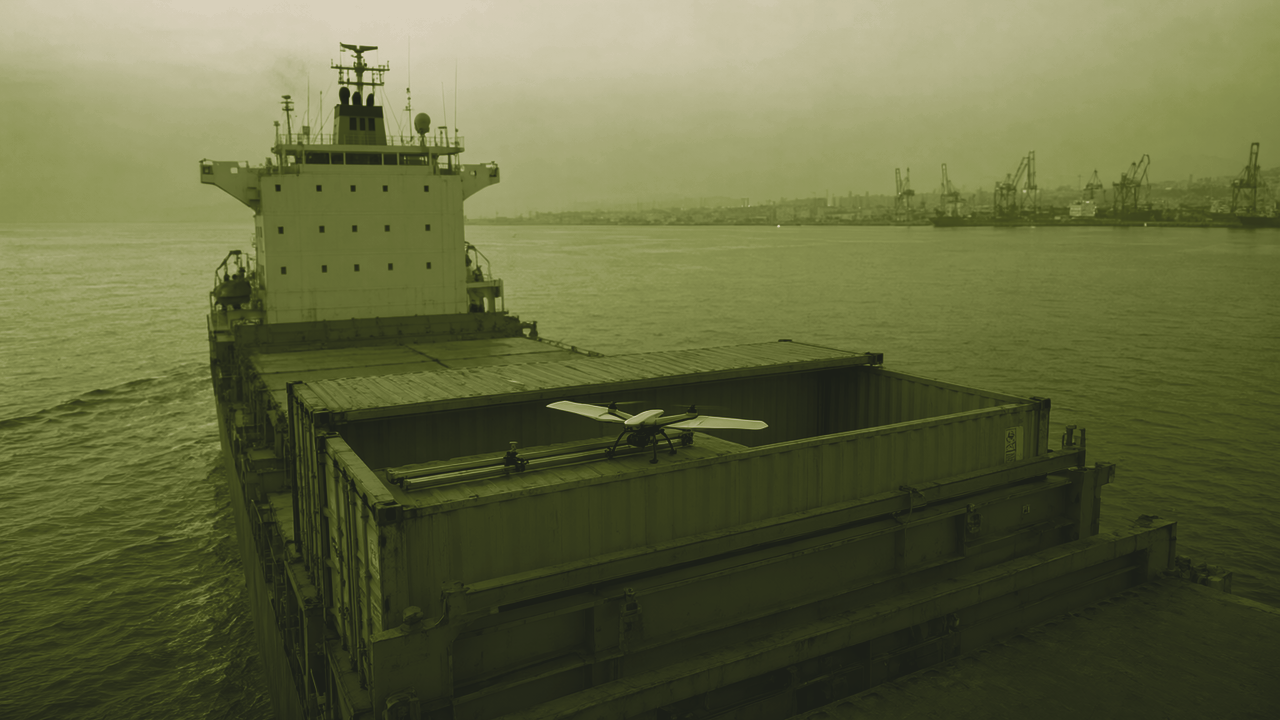
On Sept. 23, El Mundo reporter Xavier Colás described an attack that already sits within Russia’s demonstrated reach: Gerbera drones hidden in shipping containers, catapult-launched from merchant ships in international waters and aimed at Spain, France or Italy. El Mundo said the CIA had warned European governments of the possibility, a claim Defense News noted has not been independently corroborated. Within a day, French President Emmanuel Macron and Italian Defense Minister Guido Crosetto denied receiving such an alert.
“The CIA did not inform France of this information,” Macron said in a joint France 2 and TF1 interview. Crosetto said the warning “serves no one and is not confirmed.” Italian officials told ANSA that no alert had arrived through intelligence, diplomatic, military or operational channels. Spain had not commented publicly by Thursday evening.
The sourcing remains thin. El Mundo relied on anonymous sources, led by a person close to Lithuania’s Defense Ministry, and the CIA report it described has not been published. The newspaper linked the information to CIA Director John Ratcliffe’s Aug. 25 trip to Moscow. Its scenario called for launches 200 to 300 kilometers offshore, giving a Gerbera about 1.25 to two hours to reach land at roughly 160 kilometers per hour. A 4- to 5-kilogram warhead could briefly close a port or airport, damage exposed equipment or start a fire. Spain, France and Italy all hold elections in 2027.
Macron rejected the intelligence claim but not the threat. In the same interview he called a Russian attack on Europe “plausible.” Asked whether France could suffer an attack like the one at Leipzig/Halle Airport in August, he said: “My answer is yes.”
The denials settle who says it received what. They do not change what a Gerbera in a container can do, or the absence of a disclosed maritime detection and port-screening layer across Europe’s southern flank.
Frequently Asked Questions
What did the reported CIA warning say?
El Mundo reported on Sept. 23 that US intelligence told Spain, France and Italy that one of them could be hit by Gerbera drones hidden in shipping containers and catapult-launched from merchant ships in international waters, citing anonymous sources led by a person close to Lithuania's defense ministry.
Did France and Italy confirm it?
No. Macron said the CIA did not inform France, and Italian Defense Minister Guido Crosetto said the alert was not confirmed. Spain had not commented publicly by Sept. 24. The CIA report has not been published.
What is the Gerbera drone?
An Alabuga-built Russian drone, about two meters long with a 2.5-meter wingspan and up to 18 kilograms, flying around 160 km/h with a 300 to 600 km range. It began as a decoy for Geran-2 raids on Ukraine and is now being fitted with explosive warheads. Its estimated cost is about $10,000.
Has Russia launched a drone from a ship before?
Swedish forces observed a drone take off from the Russian intelligence ship Zhigulevsk in the Oresund in February 2026 and jammed it near the French carrier Charles de Gaulle. The IISS counted it as the only observed launch from a named Russian vessel in its 144-incident dataset.
What would it take to defend against a container-launched drone?
Italian security adviser Antonio Teti argues site defenses address only the last stage; earlier layers need maritime domain awareness, port and container controls, radar, signals and satellite intelligence, and coordination between navies, air forces, police and port authorities.
AI-generated summary, reviewed by an editor. More on our AI guidelines.
Read next — from the Lexicon
Below this point
- The $10,000 Gerbera
- Zhigulevsk, Rusinowo and Lithuania
- The southern-flank layer
- Denial, warning and sanctions
- What to watch

Marcus Schuler
Marcus Schuler edits BattlePolicy, a daily defense-technology brief connecting the companies and capabilities behind modern war to the contest among Europe, the US, Russia, and China.