France Plans State-Owned AI for Rafale Wingmen, With a Fighter-Drone Trial in 2028
By owning the AI architecture itself, France aims to swap suppliers and push new mission software to its fighters and combat drones as fast as threats change.
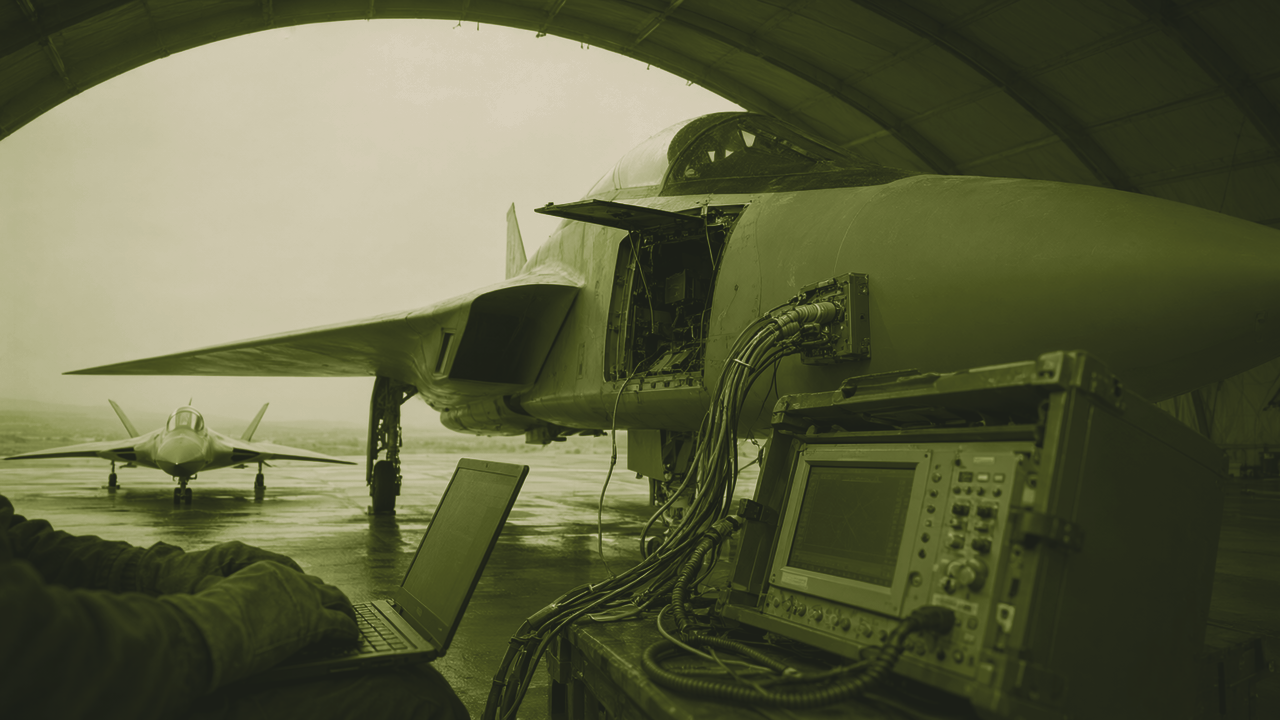
By owning the AI architecture itself, France aims to swap suppliers and push new mission software to its fighters and combat drones as fast as threats change.
France plans a government-owned AI architecture for its fighters and combat drones, with a first full-scale fighter-drone trial in 2028, Col. Cedric said at an Oct. 1 briefing in Paris. He heads the Air Force's capability-development office; the ministry identifies officers by first name only.
"Our goal is to move away from proprietary systems that lock down sensors and weaponry," Cedric told reporters of the program, called Hypairion. The drone flying in 2028 will be a test platform and may not be the wingman eventually adopted for the Rafale F5, he added. The trials will help select one later in the decade.
Frequently Asked Questions
What is Hypairion?
An experimental French Air and Space Force program, launched in July 2026 with the DGA and the defense AI agency AMIAD, that gathers the service's AI work for combat aviation, per the Armed Forces Ministry.
When will French fighters fly with combat drones?
A first full-scale trial is planned for 2028, Col. Cedric said. The drone used may not be the wingman France eventually adopts for the Rafale F5.
Why does France want the state to own the AI?
Officials want open, modular systems the military controls, so it can bring firms in and out and update software as threats change, rather than depend on proprietary systems.
What is France asking industry to build?
The DGA's June request for information seeks multirole uncrewed aircraft carrying up to 500 kg, with a combat radius over 1,000 km and speeds above Mach 0.8, Aviation Week reported.
Will AI decide when to fire?
No. Col. Cedric said the decision to deploy weapons remains a human one because AI can make mistakes.
AI-generated summary, reviewed by an editor. More on our AI guidelines.
Read next — from the Lexicon
Below this point
6 more sections.
The state will keep the overall architecture and bring in the most capable startups or industrial companies, according to Col. Thibault, deputy director for AI applications at the Ministerial Agency for Defence AI (AMIAD). Firms can join and leave while Hypairion keeps its capabilities in-house. AMIAD will supply AI for command and control and for mission autonomy, which assists pilots with planning, in-flight decisions and post-mission analysis.
Two Mirage 2000 fighters at Mont-de-Marsan are getting a new computer for AI trials starting by year-end, per Cedric. Use cases under consideration include optimizing flight paths and tactical decisions such as when to employ air-to-air or air-to-ground weapons. The decision to fire stays human because AI can make mistakes, he noted.
The DGA's June request for information seeks multirole uncrewed aircraft carrying up to 500 kilograms, with a combat radius beyond 1,000 kilometers and speeds above Mach 0.8, Aviation Week reported.
The first concrete application is an algorithm for Thales' Talios targeting pod, due in 2027, that detects and recognizes ground targets and designates vehicles it judges to be threats or priority objectives, said Sebastien, the DGA's Rafale program director. He put the first Rafale F5 version at 2033.
The Armed Forces Ministry ties Hypairion to fast-moving threats in Ukraine and the Middle East, citing Russia's Geran drone, already in its fifth version, as the case for architectures that evolve at the threat's pace. Cedric sketched a crew that flies a morning mission, identifies a fix for an enemy countermeasure, and takes off that afternoon with updated software.
AI trials on the Mirages start by year-end. The Talios algorithm follows in 2027, and the first fighter-drone trial in 2028.

Marcus Schuler
Marcus Schuler edits BattlePolicy, a daily defense-technology brief connecting the companies and capabilities behind modern war to the contest among Europe, the US, Russia, and China.