Palianytsia
Ukraine's home-built jet "missile-drone" — a cruise-missile/drone hybrid named after a hearth-bread that doubles as a wartime shibboleth. Built in 18 months to hit the Russian airfields that bomb Ukrainian cities, it sidesteps the range limits on Western weapons.
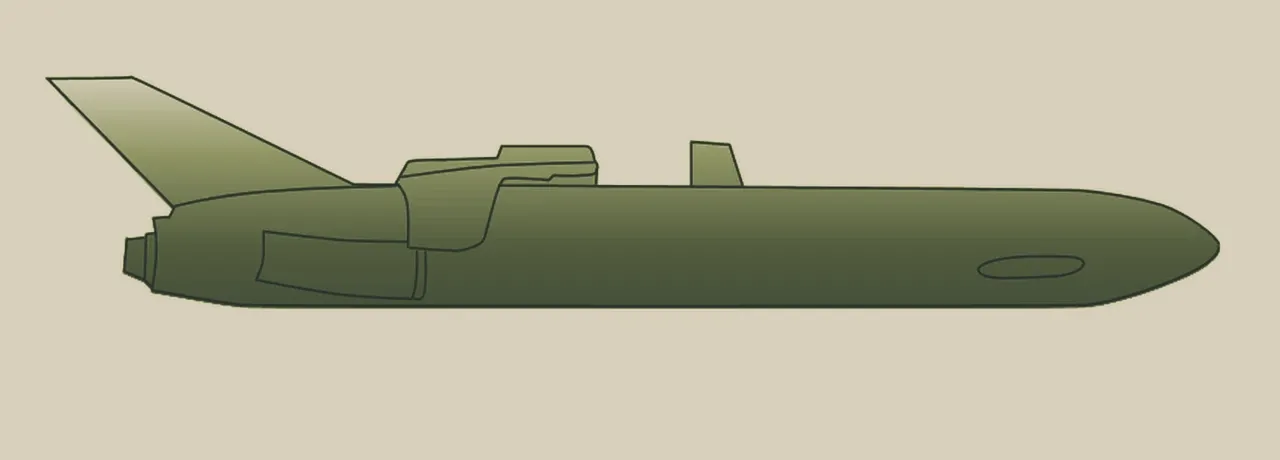

Ukraine's home-built jet-powered "missile-drone" — a cruise-missile/attack-drone hybrid named after a Ukrainian hearth-bread that doubles as a wartime shibboleth Russians struggle to pronounce. Built in 18 months to reach the rear airfields that launch missiles and Shaheds at Ukrainian cities, it is above all a sovereignty weapon: a domestic deep-strike tool that sidesteps the range and use restrictions attached to Western-supplied missiles.
Overview
Palianytsia (Паляниця) is a ground-launched turbojet "missile-drone" — what Ukraine variously calls a rocket-drone or missile-drone, sitting between a cruise missile and a one-way attack drone — built for deep strikes on stationary targets inside Russia, especially the roughly twenty rear airbases from which Russia launches salvos at Ukrainian cities. President Zelenskyy unveiled it on Independence Day, 24 August 2024, declaring its first successful combat use the same day. Its strategic point is autonomy of action: a weapon Ukraine designs, builds and fires on its own terms, free of the range caps and targeting conditions that came with Western systems. It belongs alongside Ukraine's other home-grown deep-strike tools — the heavier FP-5 Flamingo, the R-360 Neptune cruise missile and the ultra-cheap Trembita — and is the direct Ukrainian answer to Russia's jet Geran-3. One honest caveat throughout: Palianytsia is a deliberately secretive program, so combat data is thin and several figures have shifted between the 2024 reveal and the 2025 spec release.
🔒 The full Palianytsia file is for BattlePolicy Pro members. Below the line: development history, design and capabilities, variants, the combat record, advantages and limitations, comparable systems, outlook, the full specifications table, our sourcing, and the analyst assessment — procurement, suppliers and the BattlePolicy verdict. Unlock the full file with BattlePolicy Pro →
Below this point
- Development
- Design & capabilities
- Variants
- Combat record / operational use
- Advantages
- Drawbacks / limitations
- Counterparts
- Outlook
- Key specifications
- Sources
- Analyst Section
- Procurement & contracts
- Suppliers & related companies
- Comparable systems — analyst view
- Analyst note