GRID-REF 37°47′N 122°25′W
DISPATCH 03/26 · 2 Jul 2026
BATTLEPOLICY
Startup to front line. Strategy to consequence.
Lexicon · Russia

S8000 Banderol

The S8000 Banderol is Russia's AliExpress cruise missile — a Kronshtadt-built weapon around a Chinese hobby turbojet, launched from Orion drones: 500 km range, 114 kg warhead, agility Ukrainian intelligence says beats the Kalibr. First used on Kyiv in June 2026.
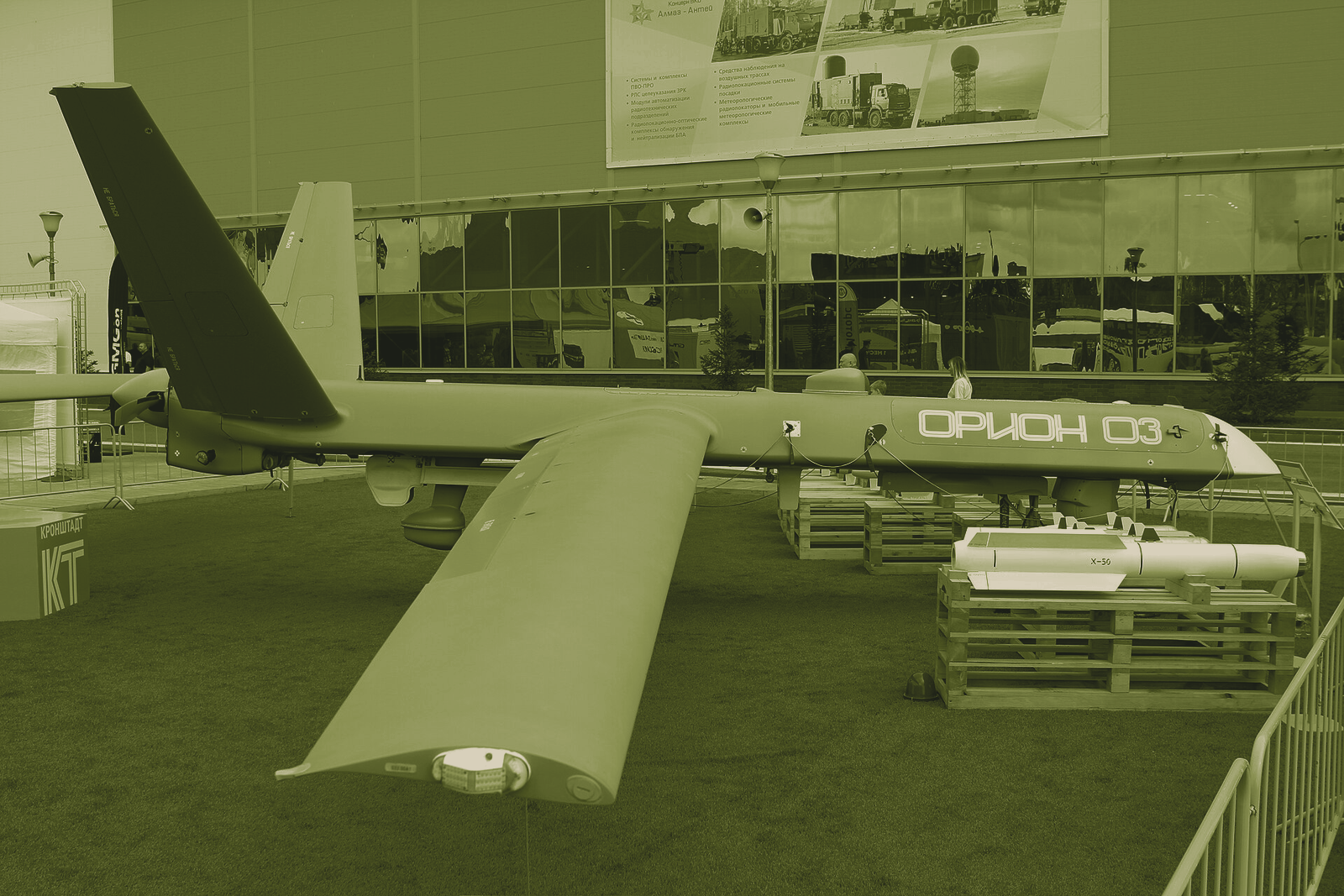
A cruise missile with a model-airplane engine — the S8000 Banderol ("small parcel") is what Russia's drone-industrial base builds when asked for a standoff missile: a five-meter, stealth-shaped weapon powered by a Chinese hobby turbojet sold on AliExpress, launched from Orion drones beyond air-defense reach, flying 500 kilometers at up to 650 km/h with a 114-kilogram warhead. Ukrainian intelligence's teardown says it out-turns the Kalibr, the Iskander-K and the Kh-69. It hit southern Ukraine from April 2025 and reached Kyiv for the first time in June 2026 — a weapon caught between two doctrines: cheap for a cruise missile, expensive for a drone.

Overview

The S8000 Banderol is built by Kronshtadt — maker of the Orion MALE drone that carries it — and classified by Ukraine's GUR as a small cruise missile, though it was born from the cheap-drone playbook: commercial components, a Swiwin SW800Pro turbojet (an 8.5 kg hobby engine, ~81.6 kgf thrust, retailing openly online), and a Kometa-family jam-resistant satellite-navigation antenna shared with the Shahed-136 and UMPK glide bombs. GUR's published teardown gives the load-bearing numbers: ~5 m long, 2.2 m pop-out wing, 620–650 km/h maximum (520–560 cruise), 500 km range, and an OFBCh-150 warhead of 114.3 kg total with 49.5 kg of HMX-based explosive — the "150 kg" in media shorthand is just the designation. Its launch platform is the discriminator: released from Orion drones loitering outside Ukrainian air-defense coverage, it needs no strategic bomber and no ground battery. GUR's most striking claim is agility — tighter turns than the Kh-101, Kalibr, Iskander-K or Kh-69, flown on a low-altitude cruise-missile profile. Visually it resembles a budget LRASM; economically it sits in a contested middle: Defense Express reads it as a deliberately low-cost missile for mass employment, while Ukrainian aviation expert Kostiantyn Kryvolap calls it ~3× the cost of a Shahed — too dear for the "many and cheap" trend. Both are true, and that tension is the weapon's story.

Development

The Banderol announced itself as a mystery. From mid-April 2025 an unidentified jet-powered weapon began striking Odesa Oblast — first publicly flagged on 25–26 April by Defense Express via EW expert Serhii "Flash" Beskrestnov, with early speed estimates near 500 km/h, per Defense Express; early analyst speculation that it was a Russianized Iranian Shahed-238 was disproven within weeks. On 12 May 2025 Ukraine's GUR published the teardown on its War & Sanctions portal: designation S8000, maker Kronshtadt, the Chinese Swiwin engine, the component list, and the launch platform — the Orion UAV, with adaptation to the Mi-28N attack helicopter announced as in progress (and still described as "being adapted," never confirmed operational, more than a year later). A missile matching the type had likely been photographed at the Kapustin Yar proving ground in late 2024 — analyst inference from a Russian media photo. Employment stayed periodic rather than massed through 2025; prosecutors flagged a possible strike in Kharkiv Oblast in May 2026; and on 15 June 2026 the Banderol was used against Kyiv for the first time, inside a combined attack of 680+ munitions, per RBC-Ukraine. Ukraine's answer was to shoot the archer: around 23–24 June 2026, Unmanned Systems Forces destroyed three Banderol-carrying Orions in occupied Crimea, per United24. A claimed companion missile ("Dan") circulates only via a Russian propaganda mirror — unverified.

🔒 The rest of the S8000 Banderol file is for BattlePolicy Pro members. Stop here and you miss the part that actually matters: the full GUR teardown and sanctions-evasion supply chain, the cost paradox examined, how it stacks up against Peklo, Kh-69 and Geran-3, the complete specifications table, and our analysts' assessment notes. Unlock the full file with BattlePolicy Pro →
FIELD DISPATCH · WEEKLY

BattlePolicy Weekly — free.

Defense tech, startups, and security — weekly.

Related
Iran · Russia · missiles · one-way-attack · loitering-munition · shahed-family · russia-ukraine-warPro

Shahed-101

The Shahed-101 is Iran's small one-way-attack drone — the quiet, catapult-launched progenitor of the Shahed-107, used by Hezbollah and Iraqi militias since 2021, confirmed in Ukraine from late 2025 (all-Iranian parts), and refielded in an electric, near-silent variant for Iran's 2026 Gulf strikes.

Iran · Russia · missiles · one-way-attack · loitering-munition · shahed-family · russia-ukraine-war
Russia · missiles · one-way-attack · flying-wing · cheap-mass · russia-ukraine-war · optical-navigationPro

Chernika-2

The Chernika-2 ("Blueberry") is Russia's foam flying-wing strike drone — 3.5 kg warhead, 100 km reach, ~$10k all-in, with Russian-claimed machine-vision navigation that flies under jamming. Over 11,000 claimed built; hitting Kharkiv since June 2025.

Russia · missiles · one-way-attack · flying-wing · cheap-mass · russia-ukraine-war · optical-navigation
Iran · Russia · missiles · one-way-attack · loitering-munition · shahed-family · russia-ukraine-warPro

Shahed-107

The Shahed-107 is Iran's mid-range strike drone reportedly built for Russia's war — announced as a 1,500 km HIMARS hunter, revealed by Ukrainian teardown as a ~300 km, 15 kg-warhead X-tail drone hitting the near rear. The gap between those two descriptions is the story.

Iran · Russia · missiles · one-way-attack · loitering-munition · shahed-family · russia-ukraine-war