Ukrainian Ground Robot Drives 93% of a 20-Kilometer Supply Run on AI, Lava Regiment Says
A Ukrainian regiment says an AI-navigated robot carried supplies through nearly all of a front-line run with less reliance on a constant control link, a step toward one operator running several vehicles.
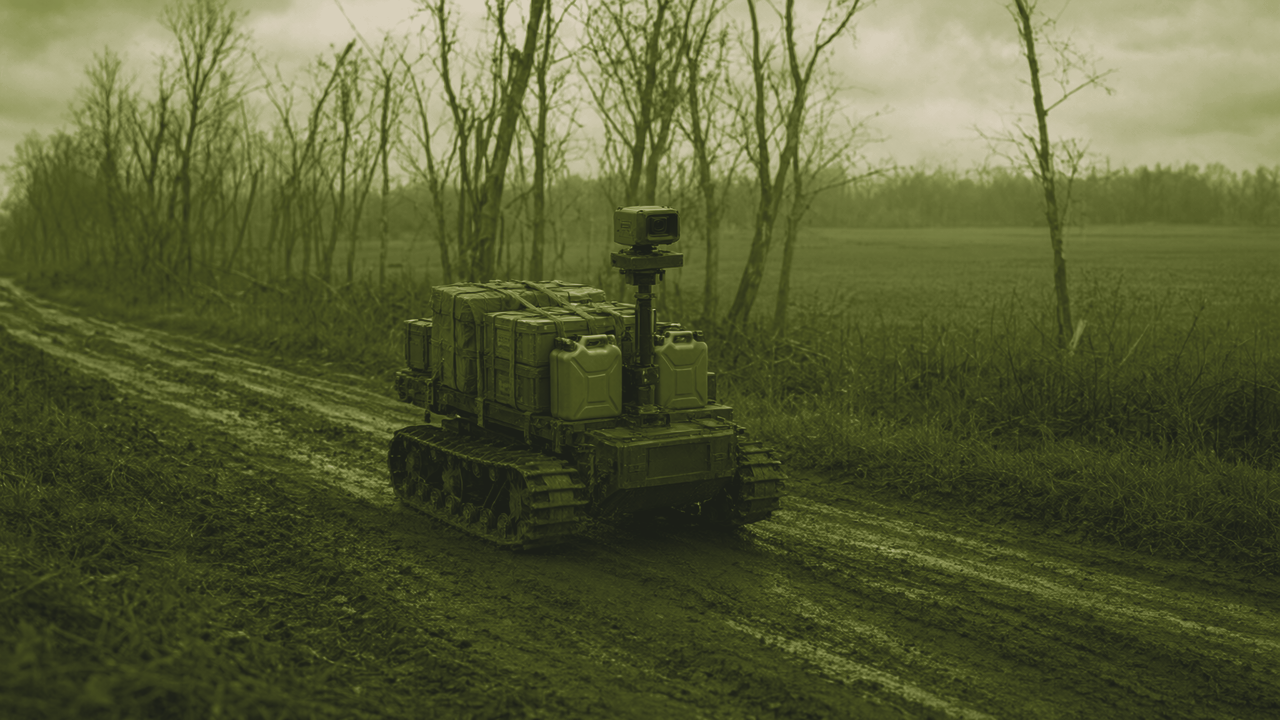
A Ukrainian regiment says an AI-navigated robot carried supplies through nearly all of a front-line run with less reliance on a constant control link, a step toward one operator running several vehicles.
An AI-guided ground robot drove 93% of a 20-kilometer combat supply route in the Kharkiv sector without manual control, Ukraine's Lava Unmanned Systems Regiment said on Oct. 28. An operator took over for a 1.4-kilometer stretch.
Frequently Asked Questions
What did the Lava regiment's ground robot do?
It drove 93% of a 20-kilometer combat supply route in the Kharkiv sector on its own, delivered cargo and returned to its start point, the regiment said on Oct. 28. An operator took over for 1.4 kilometers.
How does the robot navigate?
A separate ground vehicle first scans the route with lidar to build a 3D terrain model. The supply vehicle follows that model while its cameras detect the road, road edges and obstacles and the AI makes maneuvering decisions, per the unit.
Who makes the software?
Apex AI is developing the software, with Lava specialists helping to set technical requirements and run field tests, the regiment said.
Is this the first AI-controlled ground robot mission in combat?
The regiment claims it is the first mission of its kind under combat conditions. That has not been independently verified.
Why does autonomy matter for Ukrainian ground robots?
Battalion commander Andrii Kopach said AI-enabled vehicles depend less on a constant control link such as Starlink and turn the operator from a driver into a dispatcher.
What comes next?
Lava aims for one operator to supervise several vehicles and to extend autonomous missions to evacuating the wounded, Kopach said.
AI-generated summary, reviewed by an editor. More on our AI guidelines.
Read next — from the Lexicon
Below this point
6 more sections.
The regiment, part of the National Guard's 2nd Khartiia Corps, claimed it was the first mission of its kind under combat conditions. The robot delivered its cargo and returned to its starting point on its own.
Before departure, a separate ground vehicle drives the route and scans the terrain with lidar to build a 3D model. The supply vehicle then navigates on that model. Its cameras pick out the road, its edges and obstacles in real time, and the AI makes the maneuvering decisions. The operator can adjust the route and set speeds for individual sections, the unit explained.
Apex AI is developing the software. Lava specialists helped define the technical requirements and took part in field tests.
"The biggest change is that the operator is no longer a driver but a dispatcher," Andrii Kopach, call sign "Matematyk," commander of Lava's ground-vehicle battalion, told Business Insider. The aim is one operator supervising several vehicles.
AI-enabled ground vehicles are less dependent on a constant control link such as Starlink, Kopach added, and autonomy helps on stretches where the connection drops or manual control at speed gets difficult. "When similar UGVs come into widespread use, personnel will be able to carry out significantly more runs," he said.
Next on Lava's list: one dispatcher running several robots at once, and the same software on casualty evacuation.

Marcus Schuler
Marcus Schuler edits BattlePolicy, a daily defense-technology brief connecting the companies and capabilities behind modern war to the contest among Europe, the US, Russia, and China.