The Wire · live GRID-REF 37°47′N 122°25′W
DISPATCH 03/26 · 23 Aug 2026
BattlePolicy
Startup to front line. Strategy to consequence.
Lexicon · Air

C-390 Millennium

The Embraer C-390 Millennium is the fastest-selling Western tactical airlifter — a Brazilian twin-jet eating the C-130 replacement market with ~57 firm orders across ten customers from Portugal to South Korea to the UAE, and an Indian tender worth up to 80 more in play.
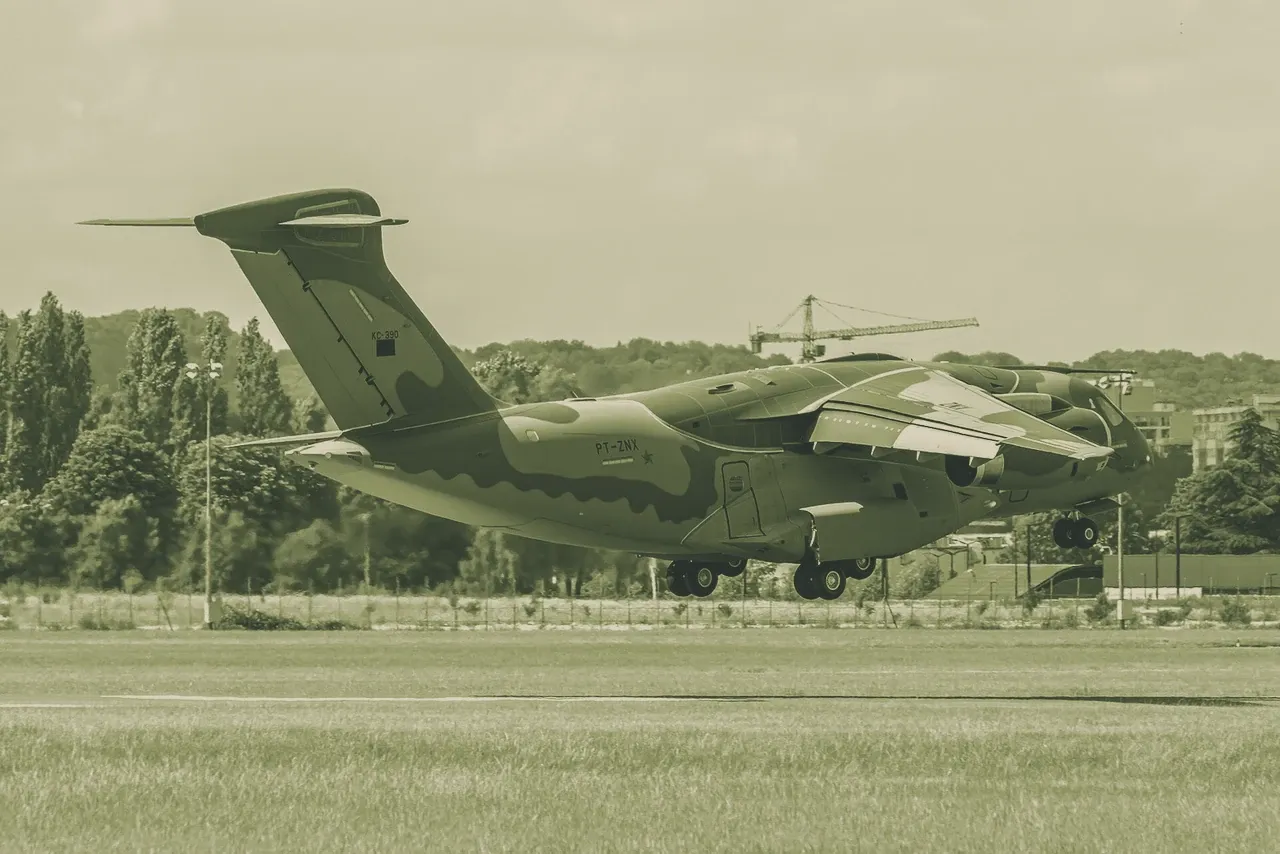
C-390 Millennium
FIG.01 · Air Image - an Embraer KC-390 at the Paris Air Show 2019. Photo by Matti Blume, CC BY-SA 4.0, via Wikimedia Commons.
The airlifter that broke the Hercules monopoly — Embraer's C-390 Millennium is a Brazilian twin-jet that hauls 26 tonnes at Mach 0.8 out of dirt strips, and it is quietly the fastest-selling Western military transport of the decade: roughly 57 firm aircraft across ten customers by mid-2026, from Portugal and Sweden to South Korea and the UAE's twenty-jet deal, with Greece approved, Poland courted and an Indian tender for up to eighty in play. Seventy years after the C-130 defined tactical airlift, its replacement market is being won by a country with no other combat aircraft export at all.

Overview

The C-390 Millennium (tanker-configured: KC-390) is Embraer's answer to a question the market had stopped asking: what does a clean-sheet tactical transport look like? The answer is a jet — two IAE V2500 turbofans from the A320 family — carrying 26 tonnes (against the C-130J's ~19), cruising at 470 knots (~Mach 0.8, some 40 percent faster than a Hercules), with full fly-by-wire, probe-and-drogue tanker and receiver capability, and demonstrated unpaved-runway operations. In Brazilian Air Force service since 2019, the fleet has logged over 14,000 hours at a claimed 99-plus percent availability — manufacturer-adjacent figures, but ones every subsequent customer cited. The story, though, is the order book: Portugal (6 + 10 options), Hungary (2, fleet complete), South Korea (3 — the Asia-Pacific breakthrough), the Netherlands and Austria (9 in a joint 2024 buy), the Czech Republic (2), Sweden (4 + 7, a 2025 C-130H replacement), Uzbekistan (2, thinly sourced), and in May 2026 the UAE's 10 + 10 — the largest export order yet and the Middle East entry. Greece's parliament approved three via Portugal's options in June 2026; Lithuania postponed; Slovakia never firmed; Morocco tests an airframe with a deal unconfirmed; and the prize is India's Medium Transport Aircraft competition — 40 to 80 aircraft, bid with Mahindra and a promised Indian assembly line. Production ramps from five aircraft in 2025 toward a stated ten per year by 2030, with US and Indian lines under study. For a lexicon built around combat systems, the C-390 earns its entry as the decade's clearest case of a new defense-industrial power winning a NATO-standard market on product merit.

Development

Embraer launched the program in 2009 on a Brazilian Air Force contract — a deliberate leap from regional jets into military airlift, reusing commercial-jet economics (the V2500 engine, airline-style avionics and support) against a market frozen around the C-130. First flight came on 3 February 2015; the first FAB delivery on 4 September 2019 put the type in service, per Embraer and program records. Brazil's own order tells the fiscal story of the 2020s — restructured from 28 to 22 to 19 firm aircraft with deliveries stretched to 2034, per Army Recognition — even as the export line filled: Portugal signed in 2019 (first NATO customer, in service from October 2023 and taking its first tanker-kitted aircraft in January 2026), Hungary in 2020 (fleet complete by November 2025), South Korea in December 2023, the Netherlands–Austria joint order at Farnborough in July 2024 (Reuters), the Czech contract that October, Sweden on 6 October 2025 (SEK 8 billion, per The Aviationist), and the UAE on 4 May 2026 — ten firm plus ten options through the Tawazun Council with Emirati industrial participation, per Breaking Defense. Greece's committee approval followed on 11 June 2026 (Reuters). Embraer's CEO laid out the ramp on the Q1 2026 call: six aircraft in 2026, rising annually to ten per year by 2030, with assembly lines eyed in the US and India, per Air Data News — riding a record $31.6 billion company backlog.

Design & capabilities

The C-390's design bet was that tactical airlift's turboprop orthodoxy was habit, not physics. The twin V2500-E5 turbofans — the most-flown engine family in commercial aviation — give airline-grade reliability, a global parts ecosystem, and the speed that changes sortie math: at ~870 km/h the C-390 flies C-130 missions in two-thirds the time, meaning more lifts per day per airframe, which is the arithmetic behind the availability claims. The cargo system moves 26 tonnes — light armored vehicles, a Sikorsky H-60, 80 troops or 74 litters — through a full-width rear ramp, with airdrop, aeromedical, firefighting and SAR kits; fly-by-wire with envelope protection cuts crew workload to two pilots and a loadmaster. Field performance is genuine tactical-class: operations from unpaved, austere strips, demonstrated across FAB's Amazon network. The KC-390 tanker configuration adds underwing probe-and-drogue pods (fighter and helicopter refueling) while retaining the cargo floor — and every C-390 can receive fuel, the persistent-reach feature Austria specified. Portugal's (K)C-390M defines the NATO-standard fit (Link 16, EW self-protection, NATO cryptos), which is the configuration Sweden, the Netherlands and the Czech Republic effectively bought into; OGMA in Portugal (Embraer-majority-owned) anchors European support. Manufacturer claims worth labeling as such: lower operating cost than the C-130J and the 99%+ availability figure — credible directionally given the commercial-engine logic, unverified independently. The boom-refueling "Agile Tanker" concept (with L3Harris, ~70% US content pitched under Buy American) remains paper — but it marks where Embraer thinks this airframe can go: at the USAF.

Variants

  • C-390: baseline transport designation.
  • KC-390: probe-and-drogue tanker configuration (Brazilian fleet standard; Dutch aircraft ordered in tanker fit).
  • (K)C-390M: Portugal's NATO-configured standard — the de facto European baseline.
  • Agile Tanker: boom-equipped concept for US requirements (L3Harris association) — concept stage only.
  • Customer configurations vary by kit (tanker pods, self-protection, SATCOM) on a common airframe — deliberately un-fragmented, one line at Gavião Peixoto.

Combat record / operational use

No combat employment — the record is operational tempo and alliance integration. The FAB fleet (eight delivered of 19) built the type's credibility: COVID logistics across a continent-sized country, the 2024 Rio Grande do Sul flood response, Amazon austere-field work, and the >14,000-hour/99%-availability track record every European tender cited. Portugal flew the type's first NATO force-projection missions within weeks of its October 2023 service entry; Hungary operates both its aircraft in NATO taskings — the first customer with a complete fleet. The buys themselves are the operational story BattlePolicy tracks: Sweden, Greece and the Netherlands each framed the C-390 explicitly as their C-130 replacement, which makes the type the running scoreboard of Lockheed's grip on a market it owned for seventy years. The realistic reading of the map: a NATO-and-partners tactical-airlift bloc is forming around the C-390 (Portugal, Hungary, Austria, Netherlands, Czech Republic, Sweden, likely Greece — plus Korea bridging to the Pacific and the UAE anchoring the Gulf), with common configuration, training and OGMA-centered European sustainment — network effects that compound with every signature and make each next tender easier for Embraer to win.

Advantages

  • Jet speed, Hercules fields — 40% faster cruise with genuine unpaved-strip capability: more sorties per day from the same tasking.
  • Commercial-engine economics — the V2500's airline ecosystem underwrites availability and parts cost in a way no military-only powerplant can.
  • Multi-mission by design — transport, tanker, receiver, aeromedical, airdrop and firefighting on one floor, without variant fragmentation.
  • Momentum as moat — ten customers, NATO-standard configuration, European MRO hub: each order strengthens the network the next buyer joins.
  • Political salability — Brazilian origin carries none of the end-use baggage of US or Russian competitors; the UAE and Uzbekistan orders show the reach.

Drawbacks / limitations

  • Two engines, one class — no stretch to A400M/C-17 loads (Leopard-class armor is out of reach); it wins the medium segment or nothing.
  • Production is the promise — ~5/year today against a ~57-aircraft book plus prospects; the 10/year-by-2030 ramp is a plan, not a record.
  • Thin combat pedigree — no hostile-environment record yet; the C-130's seven decades of shot-at credibility still count with some air forces.
  • Order-book softness at the edges — Greece unsigned, Morocco unconfirmed, Uzbekistan thinly sourced, Lithuania postponed: headline counts outrun signatures.
  • Support network still juvenile — OGMA plus Gavião Peixoto must mature into a global MRO web as fleets triple; growing pains are certain.

Counterparts

The incumbent it displaces is the C-130J Super Hercules — slower, smaller-payload, but combat-proven across every war since Vietnam and backed by the deepest support network in aviation; every C-390 sale is a judgment that speed, payload and operating cost now outweigh that history. Above it sits Europe's A400M (twice the payload, twice the price, a decade of teething) and the strategic tier of the C-17; the non-Western analogues — China's Y-20 and Russia's Il-76 — play in the heavier class and different markets. Below, the C-27J's fate in Lithuania (modernized instead of replaced) shows the C-390's lower boundary. The instructive comparison is industrial: Embraer is doing to Lockheed in airlift what its E-Jets did to Boeing/Airbus's neglected regional segment — attacking a monopolized niche with a clean-sheet product and commercial economics. Within this lexicon's Brazil coverage it pairs with the A-29 Super Tucano: together they make Brazil the only country besides the US selling both ends of the affordable-airpower spectrum into NATO air forces.

Outlook

Three campaigns decide the C-390's ceiling. India's MTA tender is the big one — 40 to 80 aircraft against the A400M and C-130J-30, with the Embraer-Mahindra offer of local assembly and MRO exactly matching New Delhi's industrial doctrine; Embraer's CEO expects movement "in coming months" (June 2026), and a win would roughly double the program and fund the 10/year ramp on its own. The US flirtation — the Agile Tanker concept and a possible American assembly line — is longer-odds but transformative: a Buy-American C-390 derivative in USAF colors would be the final legitimation. Europe's stragglers — Greece's signature, Poland's PGZ production MoUs converting to orders, Slovakia and Morocco resolving — determine whether the NATO bloc consolidates. Execution risks are the mirror image: the production ramp must hold while UAE offsets, Portuguese options and Indian localization all draw on the same engineering base. The wider signal for BattlePolicy readers is the precedent: the C-390 proves a middle-power aerospace industry can take a NATO-standard market from a US prime on product merit — the exact playbook Turkey (KAAN), Korea (FA-50) and Brazil itself are running elsewhere in this lexicon, here at its most advanced stage.

Key specifications

Manufacturer figures (labeled where claims); order data as of 2026-07-01.

Spec Value
Crew 2 flight crew + loadmaster
Length / wingspan 35.2 m / 35.1 m
Max speed 470 kt / ~870 km/h (~Mach 0.8) cruise
Service ceiling 36,000 ft
Combat radius / range Intercontinental with AAR (receiver-capable); ferry ~8,500 km class
Payload 26 t — vehicles, H-60-class helicopter, 80 troops / 74 litters
Hardpoints Underwing tanker pods (KC-390 configuration)
Radar / sensors Weather/tactical radar, self-protection suite (NATO M-standard per customer)
Powerplant 2 × IAE V2500-E5 turbofans
Operators Brazil, Portugal, Hungary, South Korea, Netherlands, Austria, Czechia, Sweden, UAE (+Uzbekistan reported; Greece approved)
Order book ~57 firm (mid-2026); production 5/yr → 10/yr by 2030 (plan); ~€130M unit (Austrian figure)

Sources

  1. Tawazun Awards Contract to Embraer for Up to 20 C-390 Millennium for the UAE — Embraer
  2. UAE to get 10 C-390 aircraft, up to 10 more in the future — Breaking Defense
  3. Greece set to buy Embraer C-390 aircraft — Reuters
  4. Greece selects Embraer C-390 as Hercules replacement — Aviation Week
  5. Embraer expects India to move ahead with military cargo jet tender — Reuters
  6. Embraer, Mahindra plan India MRO for C-390 bid — FlightGlobal
  7. Sweden signs for four C-390 Millennium — Embraer
  8. Sweden buys the C-390 Millennium — The Aviationist
  9. Embraer formalizes C-390 sales to Austria, Netherlands — Reuters
  10. Czech Republic orders two Embraer C-390 Millennium — Aerospace Global News
  11. Embraer completes Hungarian Air Force C-390 contract — Simple Flying
  12. Embraer presents first Republic of Korea Air Force C-390 — Aeromorning
  13. Embraer sees KC-390 production reaching 10 aircraft per year by 2030 — Air Data News
  14. C-390 production ramp-up "moving perfectly" — FlightGlobal
  15. Brazil extends KC-390 deliveries to 2034 — Army Recognition
  16. Lithuania postpones C-390 purchase — defence-industry.eu
  17. Portugal takes delivery of fourth KC-390 with aerial refueling capability — Air Data News
  18. Embraer achieves record $31.6 billion backlog — Forecast International
🔒 The Analyst Section on C-390 Millennium is for BattlePolicy Pro members. Below the line: procurement and contract history, the suppliers and companies behind the system, our head-to-head analyst view of the systems it actually competes with, and the BattlePolicy assessment note. Unlock the full file with BattlePolicy Pro →
Related
Air · attack-helicopter · light-combat-helicopterPro

HAL LCH Prachand

India's indigenous light attack helicopter, designed for armed reconnaissance, escort and anti-armor missions from demanding high-altitude bases.

USA · Air · awacsPro

E-3 Sentry

The E-3 Sentry is the original AWACS — the Boeing 707 with the rotating dome that has been NATO's eyes in the sky since 1977. It quarterbacked the Gulf War, and is now an aging, shrinking fleet in a retirement crisis, its E-7 replacement in turmoil — a gap laid bare when Iran destroyed one in 2026.