GRID-REF 37°47′N 122°25′W
DISPATCH 02/26 · 11 Jun 2026
BATTLEPOLICY
Startup to front line. Strategy to consequence.
Lexicon · Europe

Flakpanzer Gepard

The Cold War-vintage twin-35 mm self-propelled anti-aircraft gun revived as Ukraine's cost-effective counter to massed Shahed drone attacks, and the weapon system that forced Western armies to rethink short-range air defense.
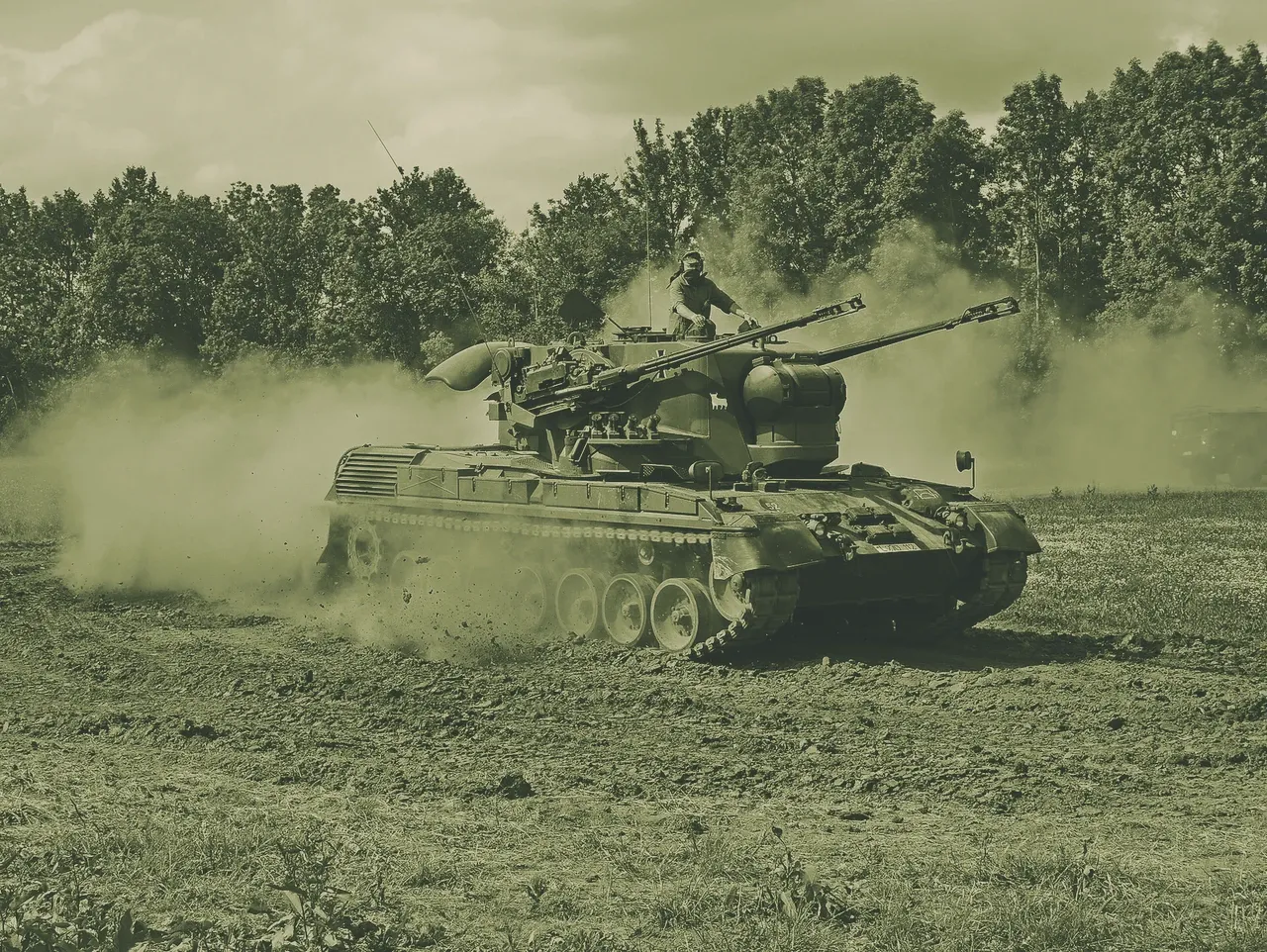
Flakpanzer Gepard
FIG.01 · Europe Image - Flakpanzer Gepard self-propelled anti-aircraft gun. Photo by Rainer Lippert, CC BY-SA 4.0, via Wikimedia Commons.
Cold War twin-35 mm self-propelled anti-aircraft gun, resurrected as Ukraine’s economical shield against massed Shahed drone attacks and the system that rewrote Western short-range air-defense priorities.

Overview

The Flakpanzer Gepard (Cheetah) is a tracked, radar-directed self-propelled anti-aircraft gun (SPAAG) built on the Leopard 1 tank chassis. Developed for the Bundeswehr in the 1970s to protect mechanized divisions from low-level air threats, it was widely retired by the early 2010s — only to emerge in 2022 as Ukraine’s signature counter-Shahed system. By firing bursts of high-explosive and advanced anti-armor ammunition from two 35 mm Oerlikon autocannon, the Gepard engages one-way attack drones, cruise missiles, and reconnaissance UAVs at short range at a tiny fraction of the cost of a surface-to-air missile. Ukrainian crews, Western attachés, and open-source analysts have repeatedly singled it out as the most reliable and cost-effective German weapon delivered to the front.

Development

Design work began in the late 1960s, when West Germany sought a mobile divisional air-defense system that could keep pace with Leopard 1 tanks while providing all-weather, radar-directed gunfire against low-flying aircraft. Two competing consortia — one built around Rheinmetall, AEG, and Siemens (the “Matador”) and the other around Oerlikon, Contraves, and Siemens-Albis (the “5PFZ”) — submitted prototypes. In June 1970 the government selected the 5PFZ-B solution with twin 35 mm Oerlikon KDA cannon, as documented by Wikipedia. Krauss-Maffei received a production contract in September 1973 for 432 turrets and 420 hulls at a cost of DM 1.2 billion; the first series vehicle was handed over in December 1976 and the type entered Bundeswehr service that same year (Wikipedia). The Netherlands built 95 vehicles under the designation Cheetah (PRTL) and Belgium 55, bringing the total production run to roughly 570 airframes. All manufacturing ended in the mid-1980s. By 2012 Germany had retired its entire Gepard fleet, judging the classic low-level air-attack threat obsolete and the system’s operating costs too high, a decision that the drone-centric war in Ukraine would later expose as premature.

Design & capabilities

Mounted on a standard Leopard 1 chassis, the Gepard carries a fully rotating, armored turret housing two 35 mm Oerlikon KDA L/90 autocannon. The combined cyclic rate of fire reaches 1,100 rounds per minute and the ammunition belt stores 320 anti-aircraft and 20 armor-piercing rounds per gun. The primary anti-air round is the high-explosive incendiary-tracer (HEI-T); Frangible Armour-Piercing Discarding Sabot (FAPDS) ammunition with a muzzle velocity of 1,440 m/s extends the effective engagement range to about 5.5 km, while Ukrainian practice shows reliable kills at around 4 km. Each burst typically consumes 7–11 rounds in skilled hands, giving a per-drone cost of a few thousand dollars rather than the hundreds of thousands or millions required by guided SAMs (Euromaidan Press).

An autonomous all-weather engagement chain is the Gepard’s architectural hallmark. An S-band MPDR 12 search radar (15 km range, with IFF) provides continuous 360° surveillance, while a separate Ku-band tracking radar (15 km range) performs delta-lock and fire solution on a single target. The later B2L (Gepard 1A2) variants add a laser rangefinder and a digital fire-control computer. Both radars can be powered by a 90 PS auxiliary diesel engine (APU) without running the main MB 838 CaM 500 multi-fuel engine, enabling silent watch and reducing fuel consumption. Optical backup sights round out the sensor suite. The layout permits a crew of three — commander, gunner and driver — to detect approaching threats, track them automatically, and fire from a halt in all weathers, characteristics that proved indispensable for point-defending Ukrainian energy infrastructure and ports against swarming drones (Army Recognition).

Variants

  • German B2 / B2L (Gepard 1A1/1A2): The baseline B2, followed by the B2L with laser rangefinder; later upgrades brought digital fire control.
  • Dutch Cheetah PRTL (CA1–CA3): Distinct Philips-sourced X/Ka-band radars, otherwise similar to the German version.
  • Belgian Gepard: Essentially identical to the German configuration.
  • Ukrainian-modernized Gepard: At the DSEI 2025 exhibition, KNDS and Ukraine announced a joint project to overhaul the fire-control system with a Ukrainian-developed radar and optical tracker, aiming to overcome reliance on obsolete analog components (Defense Express).
  • Proposed Stinger add-on: A twin Stinger pod was tested in the 1970s but never fielded.
  • Conceptual successor: The Rheinmetall Skyranger 30/35 turret on a Boxer or other modern chassis is Germany’s nominated replacement for the Gepard; the Bundeswehr plans to procure around 600 systems.

Combat record / operational use

Berlin authorized Krauss-Maffei Wegmann to release around 50 refurbished industrial-stock Gepards on 26 April 2022 at the inaugural Ramstein meeting. The first three vehicles arrived in Ukraine on 25 July 2022, and the entire 52-vehicle pledge was fulfilled by December 2023, with a further 15 Gepards and 259,680 rounds promised in January 2024 (Euronews). In parallel, the United States purchased all 60 of Jordan’s ex-Dutch Cheetahs for US$118 million (first deliveries late 2023, remainder by May 2024), and Germany bought back 15 Qatari Gepards for ~US$64 million. Ukraine thus operates at least 80 vehicles, with some sources estimating more than 110.

Once in theater, the Gepard quickly became the platform of choice for intercepting the Shahed-136/131 one-way attack drones that Russia launched in nightly swarms. A leaked Bundeswehr attaché report rated it the “most popular, efficient, and reliable weapon system” Germany had supplied, ahead of far more modern equipment (Euromaidan Press). A single vehicle is credited with over ten Shahed kills and two cruise missiles; a Gepard likely destroyed a Kh-101 cruise missile defending a Kyiv power plant on 18 October 2022. Near Odesa, crews reported shooting down ten drones in succession, often expending only 7–11 rounds per target, so a 200,000-round ammunition package — announced at the July 2025 Ramstein summit and on top of earlier orders — is sufficient to destroy thousands of UAVs (United24 Media).

The ammunition supply chain was a separate front. Switzerland’s neutrality laws blocked re-export of Swiss-made 35 mm stocks, forcing a rapid pivot. Rheinmetall rebuilt a dedicated 35 mm ammunition production line at Unterlüß under a February 2023 contract for 300,000 rounds; the first new HEI-T rounds reached Ukraine in September 2023. A further 180,000 rounds were ordered in December 2024 for delivery starting in 2026, securing the Gepard fleet’s magazine depth through at least the current Shahed escalation (Rheinmetall). As raid sizes grew to over 500 drones per night in mid-2025, the Gepard, alongside a small number of Skynex gun systems, provided the critical mid-range defense layer that massed cheap projectiles against $50,000–150,000 drones, preserving scarce SAMs for higher-profile threats. Combat losses of the vehicles themselves have been remarkably low: the only visually documented incident is an alleged April 2023 Lancet loitering-munition strike in which the Gepard remained largely intact.

Advantages

  • Unmatched cost-effectiveness against cheap drones. Downing a Shahed costs a handful of 35 mm rounds (7–11 in skilled hands, ~20–30 in typical engagements), translating to a few thousand dollars, while a single light SAM can cost half a million or more. Gun systems are preferred over missiles wherever physically possible (Euromaidan Press).
  • Proven all-weather lethality. The Gepard has killed Shaheds by the dozen, crashed a Kh-101 cruise missile, and saturated multiple drones in a single burst. Its radar-guided guns work at night, in fog, and through electronic jamming that often blinds infrared or GPS-dependent weapons.
  • Autonomous point-defense chain. With its own search and tracking radars, optical backup and APU-powered turret, a single Gepard can guard a power plant, rail junction or port without external command, then displace at 65 km/h to evade counter-battery fire (Army Recognition).
  • Exceptionally high Ukrainian crew-rated reliability. In Bundeswehr reports and soldier testimony, the Gepard is praised as the most dependable heavy weapon Germany delivered — a striking endorsement for a design older than its operators (Euromaidan Press).
  • Politically “safe” donation pool. Because its engagement envelope is strictly short-range (≈4–5.5 km), the system is unambiguously defensive. Large retired fleets in Germany, the Netherlands, Jordan, and Qatar provided an immediate supply pipeline without politically sensitive escalatory risk.

Drawbacks / limitations

  • Ammunition dependency that nearly killed the program. Swiss-origin rounds were embargoed, forcing a year-long German-funded restart of 35 mm production at Rheinmetall (Unterlüß). The first new-build ammunition only arrived in September 2023, creating a dangerous supply gap (Wikipedia).
  • Prohibitively long reload times. Ukrainian crews report needing roughly 90 minutes to fully reload the 640-round AA load, which constrains sustained fire during massed raids and limits a vehicle’s “fires-per-night” (Wikipedia).
  • Short and shrinking engagement envelope. With an effective altitude ceiling of about 3 km and a range of ~4–5.5 km, the Gepard is vulnerable to Russian tactics that now route Shaheds above 1.5 km and in large saturation swarms, demanding many systems and layered defenses (Euromaidan Press).
  • Irreplaceable airframes and out-of-production legacy. The Leopard 1 chassis, analog radars and original tooling have been out of production for decades; spares come from cannibalization, and any “new” Gepard would be essentially a clean-sheet redisign. KNDS-Ukraine talks notwithstanding, the industrial path is uncertain (Defense Express).
  • Aging analog fire control requires specialist training and maintenance, precisely the kind of cost burden that led Germany to retire the fleet in the first place.

Counterparts

Outlook

The Gepard’s battlefield revival has triggered a fundamental rethink of Western short-range air defense. Germany is buying ~600 Skyranger gun-based systems as the Gepard’s spiritual successor, while Ukraine — far from retiring its fleet — is investigating joint sustainment, Ukrainian-designed modernized radar/tracking suites, and even the possibility of restarted production. Defense Express cautions that rebuilding a Gepard from scratch in the 2020s would effectively mean a new system, given the lost Leopard 1 chassis line and the obsolescence of the original 1970s radars, and it questions whether the Skyranger isn’t the better future. Meanwhile, with 180,000 fresh shells scheduled from 2026 onward and a 200,000-round Ramstein package announced in mid-2025, the existing fleet enters the coming Shahed escalation with deep magazines. The true limit is no longer ammunition but the altitude at which drones can safely fly above the 35 mm envelope — a challenge that will push Ukraine to complement Gepards with longer-range effectors and, eventually, to transition to a next-generation mobile gun-and-missile SHORAD family.

Key specifications

Spec Value
Type Tracked self-propelled anti-aircraft gun (SPAAG) on Leopard 1 chassis; 3-man crew
Engagement range Up to ~5.5 km (FAPDS); ~4 km effective per open-source Ukrainian reporting
Engagement altitude Up to ~3 km (Ukrainian-reported ceiling; Russian drones now fly above 1.5 km to evade)
Target set Low-flying aircraft, helicopters, Shahed-136/131 one-way attack drones, reconnaissance UAVs, cruise missiles
Interceptor(s) 2 × 35 mm Oerlikon KDA L/90 autocannon (35×228 mm); combined rate 1,100 rds/min; 320 AA + 20 AP rounds per gun
Radar / fire control S-band MPDR 12 search radar (15 km, with IFF); Ku-band tracking radar (15 km); laser rangefinder on B2L/1A2; digital fire-control computer
Reaction time Not publicly established (practical constraint is ~90-min reload)
Simultaneous engagements One target engaged at a time (tracking radar/gun pair) while search radar maintains 360° surveillance
Mobility 65 km/h road speed; 550 km range; 17.5 PS/t power-to-weight; auxiliary 90 PS diesel APU for turret/radars

Sources

  1. Wikipedia — “Flakpanzer Gepard” — https://en.wikipedia.org/wiki/Flakpanzer_Gepard
  2. Euronews — “Four years of Gepard in Ukraine: How the vintage German weapon is proving its worth” — https://www.euronews.com/my-europe/2026/04/17/four-years-of-gepard-in-ukraine-how-the-german-vintage-weapon-is-proving-its-worth
  3. Defense Express — “Can Gepard Guns Return? Ukraine Considers Reviving a Cold War Classic” — https://en.defence-ua.com/industries/can_gepard_guns_return_ukraine_considers_reviving_a_cold_war_classic-15867.html
  4. Euromaidan Press — “Ukraine just solved the hardest math problem in modern air defense – with a 1970s German gun” — https://euromaidanpress.com/2025/07/20/ukraine-drone-defense/
  5. Euromaidan Press — “Gepard flak tank praised as most reliable German weapon in Ukraine” — https://euromaidanpress.com/2025/04/12/gepard-flak-tank-praised-as-most-reliable-german-weapon-in-ukraine/
  6. United24 Media — “Germany Sends 200,000 Rounds for Ukraine’s Gepard Guns—Enough to Down Thousands of Drones” — https://united24media.com/latest-news/germany-sends-200000-rounds-for-ukraines-gepard-guns-enough-to-down-thousands-of-drones-10077
  7. United24 Media — “Rheinmetall to Deliver 180,000 More Rounds to Ukraine for Gepard Systems” — https://united24media.com/latest-news/rheinmetall-to-deliver-180000-more-rounds-to-ukraine-for-gepard-systems-4898
  8. Army Recognition — “How the 60-year-old German-made Gepard anti-aircraft gun keeps frustrating Russia’s aerial warfare in Ukraine” — https://armyrecognition.com/focus-analysis-conflicts/army/conflicts-in-the-world/russia-ukraine-war-2022/how-the-60-year-old-german-made-gepard-anti-aircraft-gun-keeps-frustrating-russias-aerial-warfare-in-ukraine
  9. Rheinmetall AG — “Replenishment for air defence: Rheinmetall delivers 35mm-ammunition for anti-aircraft gun Gepard to Ukraine (press release, 6 January 2025)” — https://www.rheinmetall.com/en/media/news-watch/news/2025/01/2025-01-06-35mm-gepardmunition-fuer-ukr
FIELD DISPATCH · WEEKLY

BattlePolicy Weekly — free.

Defense tech, startups, and security — weekly. No paywall.

Related
Europe · Ukraine · missiles · loitering-munition · one-way-attack · ai-guidance · vtol · STARK Defence · GermanyPro

Stark Virtus

Germany's combat-proven eVTOL loitering munition — a VTOL, AI-guided one-way attacker that pairs with reconnaissance drones for EW-resilient precision strikes.

Europe · Ukraine · missiles · loitering-munition · one-way-attack · ai-guidance · vtol · STARK Defence · Germany
Europe · Land · mlrs · rocket-artillery · hanwha · precision-strike · koreaPro

K239 Chunmoo

South Korea's wheeled multi-caliber multiple launch rocket system — firing guided rockets, tactical ballistic missiles, and unguided munitions from a single 8×8 chassis, now spreading across NATO's eastern flank.

Europe · Land · mlrs · rocket-artillery · hanwha · precision-strike · korea
Europe · Air Defense · shorad · counter-UAS · Rheinmetall · ahead · modular-turret · NATOPro

Skyranger 30

Rheinmetall’s modular, unmanned 30 mm gun-missile turret — NATO’s emerging standard for mobile short-range air defense against drones, loitering munitions and low-flying aircraft, rapidly adopted across five European armies.

Europe · Air Defense · shorad · counter-UAS · Rheinmetall · ahead · modular-turret · NATO