MiG-29 Fulcrum
The Soviet lightweight fighter both sides fly — and the one Ukraine famously hot-rodded, bolting American HARM and JDAM and French Hammer onto a 1970s airframe with an iPad in the cockpit. Agile, short-legged, and attrition-heavy, it became an improvised SEAD jet over Ukraine.
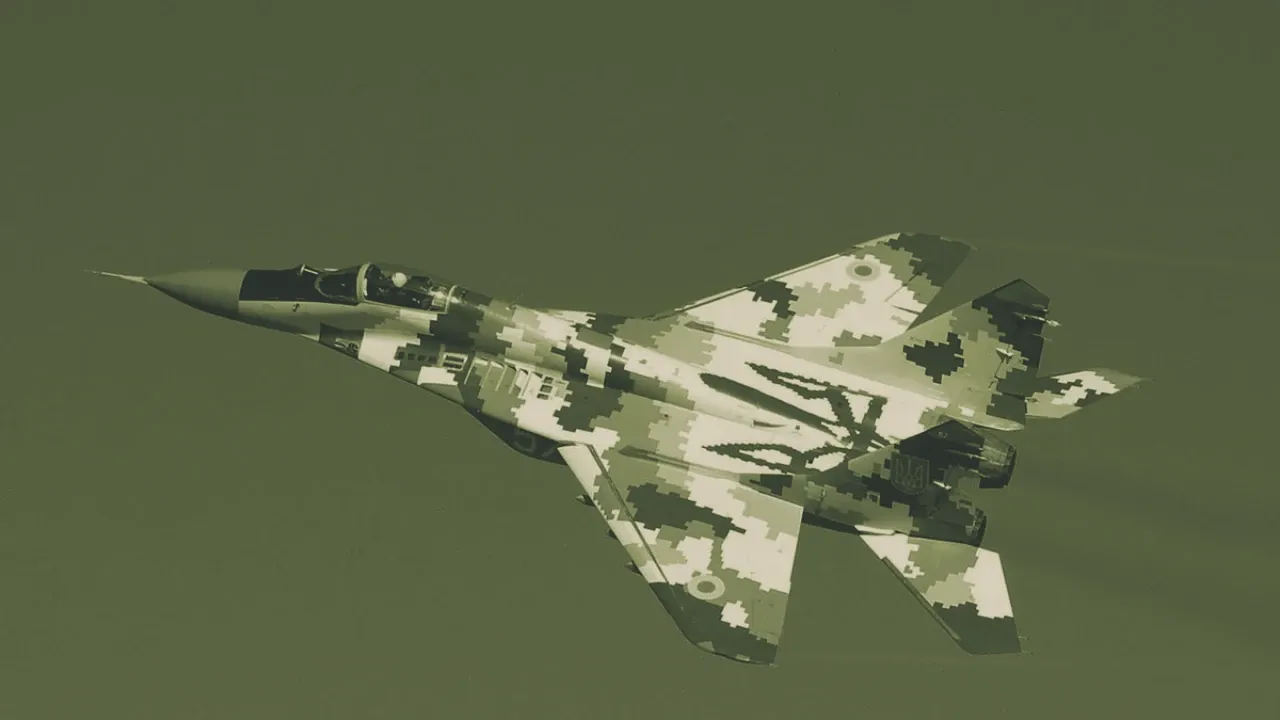

The Soviet-era lightweight air-superiority fighter that ended up on both sides of the war — and the one Ukraine turned into the war's most improbable improvisation, bolting American AGM-88 HARM anti-radar missiles, JDAM-ER and Small Diameter Bombs, and French AASM Hammer munitions onto a 1970s Soviet airframe, often cued through a tablet taped into the cockpit. Agile and combat-proven but short-ranged and heavily attrited, the MiG-29 has become an emblem of how Ukraine wrings new capability out of old steel.
Overview
The MiG-29 (NATO: Fulcrum) is a twin-engine, fourth-generation lightweight fighter designed by Mikoyan as the Soviet Union's nimble, frontline counterpart to the heavier Su-27 — the high-low pairing that mirrored the US F-15/F-16 mix. Built for close-in air combat with a powerful infrared search-and-track, a helmet-mounted sight and the highly agile R-73 dogfight missile, it was for years one of the most feared dogfighters in the world. In the Russo-Ukrainian war it is flown by both air forces, but its defining chapter belongs to Ukraine, which integrated a string of Western precision weapons onto the type to keep it relevant against a numerically and technologically superior Russian air force. It is, alongside the Su-27, the backbone of the Ukrainian fighter fleet even after the arrival of the F-16.
🔒 The full MiG-29 Fulcrum file is for BattlePolicy Pro members. Below the line: development history, design and capabilities, variants, the combat record, advantages and limitations, comparable systems, outlook, the full specifications table, our sourcing, and the analyst assessment — procurement, suppliers and the BattlePolicy verdict. Unlock the full file with BattlePolicy Pro →
Below this point
- Development
- Design & capabilities
- Variants
- Combat record / operational use
- Advantages
- Drawbacks / limitations
- Counterparts
- Outlook
- Key specifications
- Sources
- Analyst Section
- Procurement & contracts
- Suppliers & related companies
- Comparable systems — analyst view
- Analyst note