Su-27 Flanker
The big Soviet air-superiority fighter built to out-range the F-15 — and the parent of the entire Flanker dynasty. Ukraine's pre-war top fighter, now an outclassed but still-fighting workhorse that flew night intercepts in the war's first hours and later flexed into a Western-bomb truck.
.jpg)
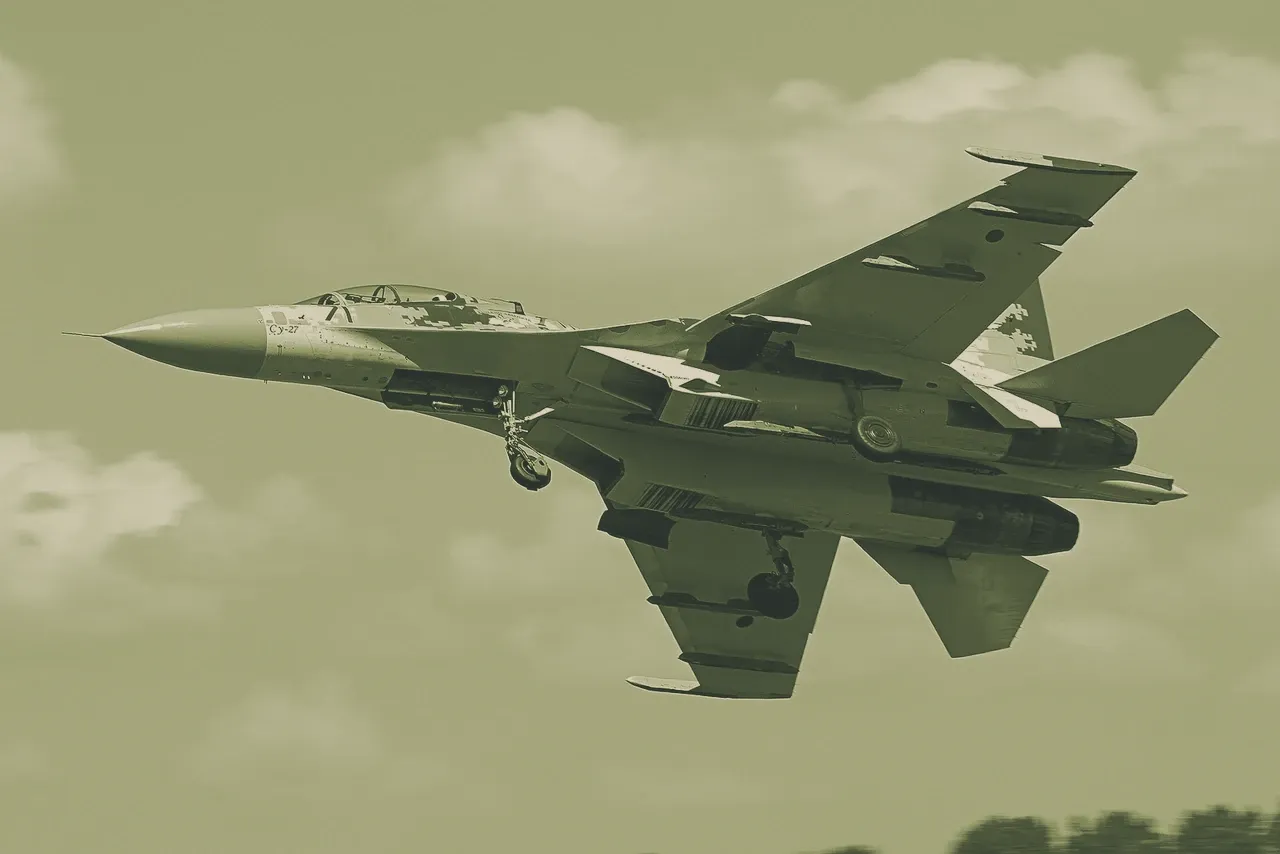
The big, long-legged Soviet air-superiority fighter built to match the F-15 Eagle over the vast distances of the USSR — and the airframe from which an entire dynasty descends: the Su-30, Su-33, Su-34, Su-35 and the Su-57. Ukraine's most capable fighter before the war, the Su-27 flew the desperate night intercepts of the invasion's opening hours, took heavy losses against more modern Russian jets and ground defenses, and — like the MiG-29 — was later adapted to fling Western precision bombs and anti-radar missiles.
Overview
The Su-27 (NATO: Flanker) is a twin-engine, supermaneuverable, fourth-generation heavy fighter designed by Sukhoi as the Soviet Union's answer to the US "teen series" — a direct competitor to the F-15 and F-14, with long range, a heavy weapons load and the agility for which the Flanker became famous (the "Pugachev's Cobra" maneuver was its calling card). It was the high end of the Soviet high-low pairing with the lightweight MiG-29. After 1991, Ukraine inherited a Flanker fleet and entered the 2022 war with around 32 operational across two brigades. As the Ukrainian Air Force's heaviest, longest-ranged fighter, it carried much of the early air-defense burden — and has since become, with the MiG-29, a testbed for grafting NATO weapons onto Soviet jets.
🔒 The full Su-27 Flanker file is for BattlePolicy Pro members. Below the line: development history, design and capabilities, variants, the combat record, advantages and limitations, comparable systems, outlook, the full specifications table, our sourcing, and the analyst assessment — procurement, suppliers and the BattlePolicy verdict. Unlock the full file with BattlePolicy Pro →
Below this point
- Development
- Design & capabilities
- Variants
- Combat record / operational use
- Advantages
- Drawbacks / limitations
- Counterparts
- Outlook
- Key specifications
- Sources
- Analyst Section
- Procurement & contracts
- Suppliers & related companies
- Comparable systems — analyst view
- Analyst note