Starshield's Cap Now Sits Over Occupied Ukraine, Where the Strikes Washington Endorses Happen
SpaceX's Starshield is back to normal over land Kyiv holds but still capped over occupied Ukraine, where mid-range strike drones and interceptors have to work. Pentagon policy chief Elbridge Colby says those strikes are what Washington wants to support.
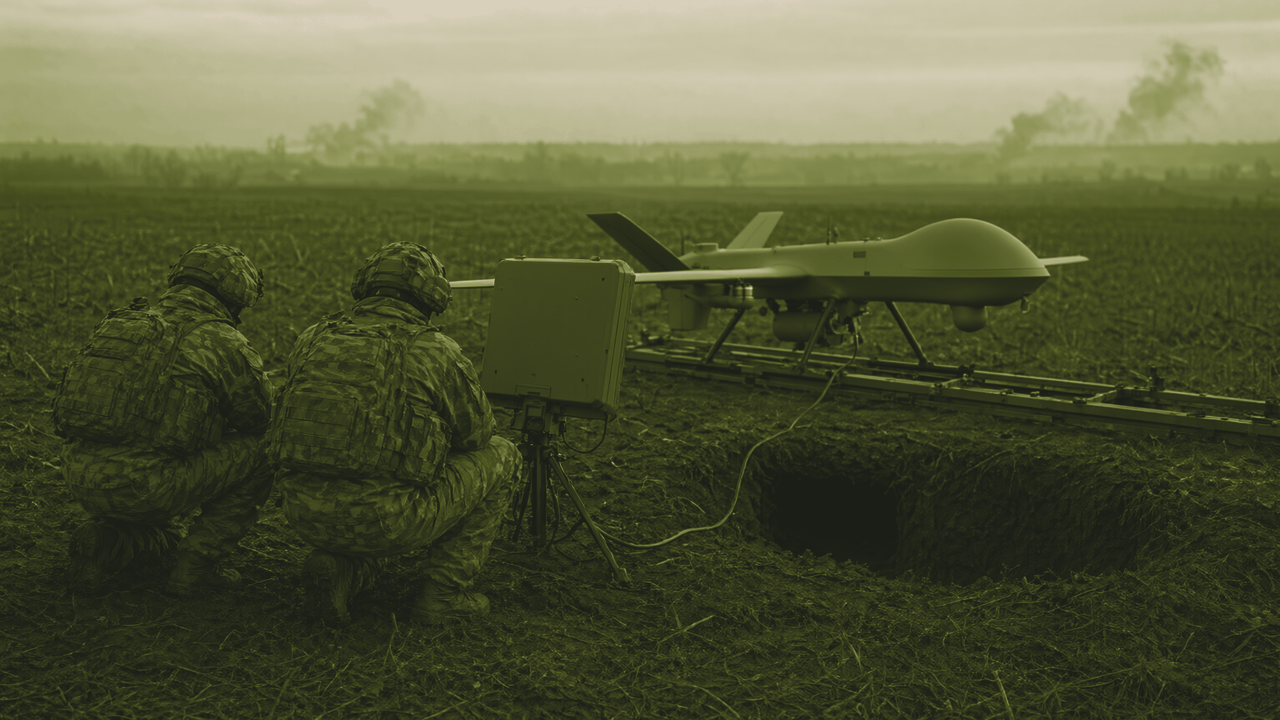
SpaceX's military satellite service is back to normal over land Kyiv holds but still capped over occupied Ukraine, where mid-range strike drones and interceptors have to work. Pentagon policy chief Elbridge Colby calls those strikes the most effective way to enable Ukraine's defense.
Nov. 12 to Nov. 27: the cap shrinks to occupied land
The speed cap on Starshield, the military version of SpaceX's Starlink, now covers only Russian-occupied Ukraine, and it lands on the missions Ukraine flies over that ground. "The speed restrictions on Starshield only exist over territory of Ukraine that is temporarily occupied by Russia," a senior Ukrainian military source told the Kyiv Independent on Nov. 27, calling it "a political decision to hamper the system's function over areas Russia currently controls." A second source said some strike missions suffered extremely high drone losses and others were cancelled outright. Fire Point's FP-2, which can carry up to 200 kilograms over a range of up to 700 kilometers, is among the medium-range strike drones affected.
President Volodymyr Zelensky gave the same geography from the air-defense side. In an interview published by BBC News Ukrainian on Nov. 26, he said service was back to normal over territory Kyiv controls, while Starlink and Starshield were still being restricted in occupied areas. "We cannot catch up with jet-powered Shaheds using interceptors over temporarily occupied territory. We can do it over territory we control, but often by then it is already too late," he said.
That footprint is smaller than the one Kyiv described two weeks ago. On Nov. 12, Zelensky said units had recorded a 161 km/h cap along the entire front line and over occupied territory. Ukraine's chargé d'affaires in Washington, Denys Sienik, had described limits across the contact line on Nov. 9, calling it "the first point for interception of Russian drones."
The partial restoration leaves the mid-range strike campaign constrained over occupied ground, and that campaign is the one Washington says it backs. Colby told Ukraine's backers in Brussels on Nov. 17 that front-line defense and "associated midrange strikes" were the most effective way to enable Ukraine's defense. Nobody has owned the decision. "Technically SpaceX, politically - I don't know," Zelensky said. In Washington, Rep. Jim Himes is now questioning every federal contract with SpaceX.
Frequently Asked Questions
Where does the Starshield speed cap apply now?
Only over Russian-occupied Ukraine, according to two Ukrainian military sources who spoke to the Kyiv Independent on Nov. 27. Zelensky told BBC News Ukrainian that service is back to normal over territory Kyiv controls. On Nov. 12 he had described a 161 km/h cap along the entire front line as well.
Which missions does it affect?
Mid-range strike drones such as Fire Point's FP-2, which hit targets in occupied territory, and interceptor drones chasing Russia's jet-powered Shaheds. Military sources described extremely high losses on some strike missions and cancellations of others.
Who imposed the restriction?
No one has said. Zelensky told the BBC it was "technically SpaceX, politically - I don't know." SpaceX told Ukraine's Defense Ministry it was not restricting anything and blamed a technical issue, and US media told Ukraine's embassy the Pentagon said no restrictions were in place.
Why does the Pentagon's position matter?
Pentagon policy chief Elbridge Colby told Ukraine's backers on Nov. 17 that front-line defense and associated midrange strikes are the most effective way to enable Ukraine's defense. The remaining cap falls on the area where those strikes take place.
Could this affect SpaceX's other government business?
Rep. Jim Himes wrote to Elon Musk that a potentially unilateral contract change "calls into question every contract the U.S. Government has with SpaceX." Ars Technica names the $2.29 billion Space Data Network Backbone contract as a possible focus, but judges a break with SpaceX unlikely.
AI-generated summary, reviewed by an editor. More on our AI guidelines.
Read next — from the Lexicon
Below this point
- 30 to 200 kilometers past the line
- Colby's prescription and the denials
- Himes and the $2.29 billion question
- 45 kilometers of modem, 40 minutes of Rassvet
- What the line on the map does
- What to watch
30 to 200 kilometers past the line
The remaining cap covers the ground mid-range strikes exist to reach. Ukraine's Defense Ministry describes middle-strike operations as hitting targets roughly 30 to 200 kilometers away. In occupied territory those targets include missile and drone launch sites, radar stations, oil and weapons depots and air defense systems. Restoring full speed over held land does nothing for a drone whose target sits on the other side of the contact line.
The failure is binary. Zelensky said in October that once a Ukrainian drone passes the speed limit, its terminal shuts down and the drone is lost. On Nov. 13 he put the occupied-territory threshold at 161 km/h, and the BBC excerpts carry no newer figure. The Nov. 27 military accounts describe the boundary and its consequences but give no count of lost drones or cancelled missions.
Interception shows the same arithmetic. Russia's jet-powered Geran-4 and Geran-5 cruise at up to 600 km/h, and Ukraine's Bars units use Starshield to hunt them. Manufacturers are racing to close the speed gap: Quantum WIY Industries' SPYS interceptor flew at around 520 km/h with a 500-gram payload in a Nov. 23 test certified by Ukraine's National Register of Records, and up to 527.5 km/h without it. An interceptor that can match a Geran still has to engage it somewhere, and over occupied land the link that guides Bars crews stops at 161 km/h.
The cost shows up in where engagements happen. On Nov. 13, when the cap still covered the front line, Zelensky said Bars units could no longer bring jet Shaheds down near the front and had to intercept them at other positions, giving Russia more chances to strike. The front is open again; the airspace in front of it is not. He told the BBC that Ukraine now destroys about 70% of Russia's fastest drones, a figure he said was improving.
Colby's prescription and the denials
The cap now sits over the operating area of the strategy Washington's own policy chief prescribes. Colby's Nov. 17 message in Brussels paired support for mid-range strikes with the judgment that strikes deep inside Russia "have not been effective in driving an end to the war." He repeated the case in a nine-post thread on X on Nov. 22, with Europe in the lead on support, and did not mention Starshield. Asked about the restrictions after Brussels, he declined to comment, saying Washington was "taking steps that are consistent with that policy."
An earlier Foundation for Defense of Democracies assessment drew the line between the two strike categories: the cap hampers mid-range strikes on moving targets but not deep strikes, because Starshield and Starlink are already blocked over Russian territory. The Nov. 27 accounts sharpen that. With service restored over held land, the restriction that remains falls on the mid-range campaign.
The explanations Kyiv has received do not account for the geography. Zelensky said on Nov. 13 that SpaceX had told Ukraine's Defense Ministry it was not restricting anything and blamed a technical issue; he rejected that. On Nov. 16, Sienik wrote that US media had told the embassy the Pentagon said no restrictions were in place. Both answers came before the narrower footprint was reported, and neither addresses why service would differ between held and occupied Ukraine.
There is precedent for location-dependent settings. During the October restriction, according to LB.ua, the same Starlink units operated above 180 km/h in a neighboring EU country while Ukraine was held to the lower limit.
Himes and the $2.29 billion question
Congress is turning a Ukrainian operational problem into a question about SpaceX's place in US national security. Himes, expected to chair the House Intelligence Committee in January, wrote to Elon Musk that "SpaceX's potentially unilateral modification of a U.S. Government contract, combined with its lack of responsiveness to congressional oversight, calls into question every contract the U.S. Government has with SpaceX." He asked Musk to explain the changes made to Starshield in October 2026 and whether SpaceX made them unilaterally or at a US official's direction, and said it was difficult to keep supporting authorization of funding for SpaceX-developed, government-owned systems without answers.
Sen. Chris Coons pressed the same point in Halifax, Nova Scotia. "Those are services paid for by American taxpayers under contract. This is not Elon Musk's personal toy," he said, and promised an early hearing on the Ukraine-Starshield issue if he takes the gavel at the Foreign Relations Committee.
The exposure is concrete. Ars Technica names the Space Force's $2.29 billion Space Data Network Backbone contract, meant to support Golden Dome, and SpaceX's intelligence-satellite work for the National Reconnaissance Office as possible targets of scrutiny. It judges a break unlikely, because no other US company can match those capabilities. The leverage Congress holds is oversight and the power of the purse, not a ready replacement.
45 kilometers of modem, 40 minutes of Rassvet
Neither side has a substitute for the network. Ukraine's Militech Group built the HRIM LTE modem to keep control of drones and ground robots during Starlink disruptions; it pushes output to 1.5 watts and reaches up to 45 kilometers. That covers the near edge of the middle-strike band, not the 200-kilometer far end, and nothing near the FP-2's range.
Russia's alternative is further behind. Maj. Gen. Vadym Skibitskyi, deputy head of Ukraine's military intelligence, told The Times that Rassvet's coverage over Ukraine lasts no more than 40 minutes at a time and that technical problems have delayed the launch of another 16 satellites. HUR estimates Rassvet and the planned InnoSat network will support about 22,000 terminals combined, against more than 10 million Starlink users.
That gap explains why the dispute matters. Ukraine's drone war runs on one supplier whose access terms, in Ars Technica's description, are largely classified.
What the line on the map does
A cap drawn around occupied Ukraine works as a targeting rule. Ukrainian operators fly at full speed over land Kyiv holds and are slowed over their own occupied territory, where the launch sites, radars and depots that middle strikes hit are located. Whoever set it, the effect runs against the priority Colby stated in Brussels.
Kyiv still cannot get a name. Sienik called it a "vicious circle" on Nov. 25: "neither of the key stakeholders has been able to clarify who made the decision to impose these limitations." British Defence Secretary Wes Streeting said on Nov. 23 that the disruptions require a clear explanation.
What to watch
- The boundary. Whether full speed returns over occupied territory, or the line moves again.
- Strike results. Whether mid-range strikes on launch sites and depots in occupied territory resume without the losses and cancellations the military sources describe.
- January oversight. Himes's questions and Coons's hearing once Democrats take both chambers.
- The contract. Ukraine's Starshield contract with the US government expires next year, Sienik said on Nov. 5, and Kyiv wants talks on a new one now.
- Rassvet. Whether the 16 delayed satellites launch and lengthen Russia's coverage windows.

Marcus Schuler
Marcus Schuler edits BattlePolicy, a daily defense-technology brief connecting the companies and capabilities behind modern war to the contest among Europe, the US, Russia, and China.