GRID-REF 37°47′N 122°25′W
DISPATCH 03/26 · 2 Jul 2026
BATTLEPOLICY
Startup to front line. Strategy to consequence.
Lexicon · USA

F-47

The Boeing F-47 is the US Air Force's sixth-generation NGAD fighter — the planned F-22 successor, awarded March 2025, with a claimed 1,000+ nautical mile combat radius and Mach 2+ speed. The first airframe is in build in St. Louis; first flight is targeted for 2028.
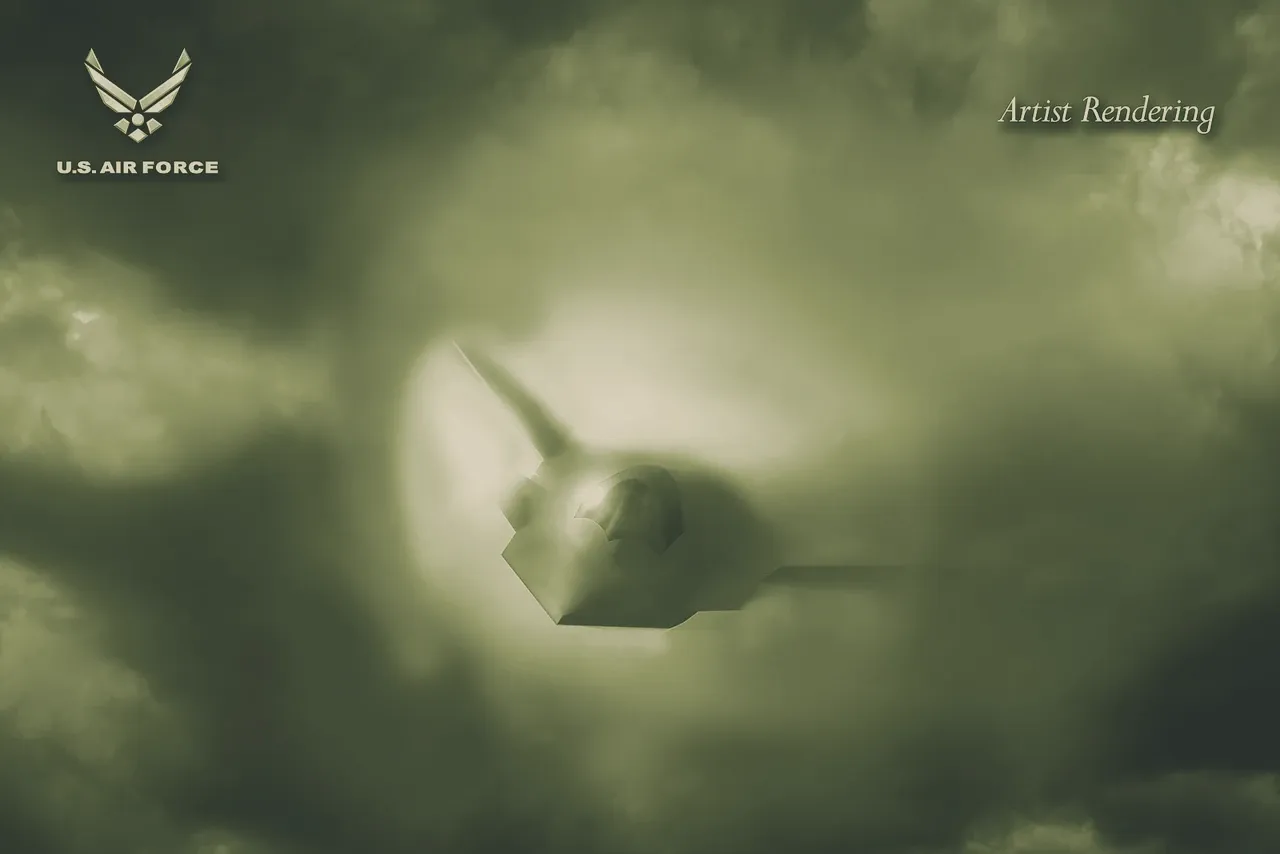
F-47
FIG.01 · USA Image - official US Air Force rendering of the F-47. US Air Force, Public domain, via Wikimedia Commons.
The United States' first sixth-generation fighter — the Boeing F-47 is the crewed centerpiece of the US Air Force's Next Generation Air Dominance (NGAD) family, designed to replace the F-22 Raptor and fight alongside uncrewed wingmen deep inside contested airspace. Awarded to Boeing in March 2025 after a near-death cost pause, it exists so far only as classified test articles and deliberately misleading renderings: the Air Force claims a combat radius over 1,000 nautical miles, speed above Mach 2 and "stealth++", with the first airframe now in assembly in St. Louis and first flight targeted for 2028 — three years after China's rival J-36 and J-50 prototypes started flying in the open.

Overview

The F-47 is the US Air Force's sixth-generation air-superiority fighter, developed by Boeing Defense as the crewed core of the Next Generation Air Dominance (NGAD) "family of systems" and the designated successor to the F-22 Raptor. It is designed for penetrating counter-air — fighting for air superiority inside the densest anti-access environments, above all a Pacific war against China — with much longer reach than today's fighters (the service claims a combat radius beyond 1,000 nautical miles, roughly 70 percent better than the F-22), next-level low observability the Air Force shorthand-brands "stealth++", and built-in teaming with Collaborative Combat Aircraft (CCA) drone wingmen such as the YFQ-42A and Anduril Fury. The engineering and manufacturing development contract went to Boeing on 21 March 2025 in a winner-take-all decision over Lockheed Martin; the Air Force says it wants a fleet of "185-plus" — more than the Raptor force it replaces. Nothing about the aircraft's true configuration is public: every released image is an altered rendering, every performance figure an official claim that cannot be verified until the jet flies, which the Air Force now targets for 2028.

Development

The F-47 grew out of DARPA's 2014 Aerospace Innovation Initiative, which produced classified X-plane demonstrators — the first, built by Boeing, reportedly flying as early as 2019, with a second (Lockheed Martin) airframe following around 2022 and both accumulating hundreds of flight hours, per DARPA and Defense News. By 2023 the Air Force envisioned roughly 200 NGAD fighters flying with as many as 1,000 drone wingmen, per TWZ. Then the program nearly died: in mid-2024, with projected unit costs reported at roughly three times an F-35, Air Force Secretary Frank Kendall publicly confirmed the service was "taking a pause" on the source selection and studying whether a crewed super-fighter was still the right answer, per Breaking Defense. The review concluded there was "no more viable option than NGAD to achieve air superiority in this highly contested environment," per Defense One, and on 21 March 2025 President Trump announced Boeing had won, naming the jet F-47 — a number the Air Force says honors the P-47 Thunderbolt, the service's 1947 founding, and the 47th president's backing, per the US Air Force. The cost-plus-incentive-fee EMD contract — value classified, announced as "worth more than $20 billion" — covers a small number of test aircraft with priced options for initial production. In May 2025 Chief of Staff Gen. David Allvin published the first official performance claims (1,000+ nmi radius, Mach 2+, 185+ fleet), per Air & Space Forces Magazine; by September 2025 he confirmed the first F-47 was in manufacture with first flight expected in 2028. In May 2026 the first airframe was reported on the floor of Boeing's new ~$1.8 billion St. Louis fighter facility, and both competing NGAP adaptive engines — GE's XA102 and Pratt & Whitney's XA103 — passed assembly readiness reviews, per AeroTime. The FY2027 budget requests $5.04 billion for the program plus $730 million for test infrastructure at Nellis AFB, per Air & Space Forces Magazine.

🔒 The rest of the F-47 file is for BattlePolicy Pro members. Stop here and you miss the part that actually matters: how it performs and where it falls short, its program record, how it stacks up head-to-head against China's J-36 and J-50, the complete specifications table, and our analysts' procurement, supplier and assessment notes. Unlock the full file with BattlePolicy Pro →
FIELD DISPATCH · WEEKLY

BattlePolicy Weekly — free.

Defense tech, startups, and security — weekly.

Related
USA · Air · light-attack · close-air-support · isr · trainer-derived · turbopropPro

AT-6 Wolverine

The AT-6 Wolverine is the A-29 Super Tucano's perennial bridesmaid — Textron's armed version of the T-6 Texan II trainer, faster and with ejection seats, sharing thousands of trainers' logistics. Yet it lost every big competition to the A-29 and to the OA-1K, and only Thailand ever bought it.

USA · Air · light-attack · close-air-support · isr · trainer-derived · turboprop
USA · Air · light-attack · close-air-support · isr · special-operations · turbopropPro

OA-1K Skyraider II

The OA-1K Skyraider II is the armed crop-duster that beat the A-29 Super Tucano for the US Armed Overwatch contract — an Air Tractor AT-802 turned into an L3Harris gunship with 10 hardpoints, Hellfires and a WESCAM sensor ball. It won the US buy the A-29 dominates the world without.

USA · Air · light-attack · close-air-support · isr · special-operations · turboprop
USA · drones · interceptor · counter-UAS · ai-drone · defense-startup · russia-ukraine-warPro

Merops

Merops is the Ukraine-proven interceptor drone the US Army bought ~13,000 of — an Eric Schmidt-funded, AI-guided fixed-wing drone that homes on Shaheds when jammed, rams them for ~$15,000 a shot, and recovers by parachute if it misses. The interceptor economy crossing the Atlantic.

USA · drones · interceptor · counter-UAS · ai-drone · defense-startup · russia-ukraine-war