The Wire · live GRID-REF 37°47′N 122°25′W
DISPATCH 03/26 · 25 Aug 2026
BattlePolicy
Startup to front line. Strategy to consequence.
Lexicon · USA

Perennial Hornet

The Perennial Hornet is a ~$5,000 AI-guided one-way strike drone from Eric Schmidt's Perennial Autonomy — an optically navigated fixed-wing aircraft Ukrainian units use to burn Russian supply trucks 50-150 km behind the front, the workhorse of Kyiv's "logistics lockdown" campaign.
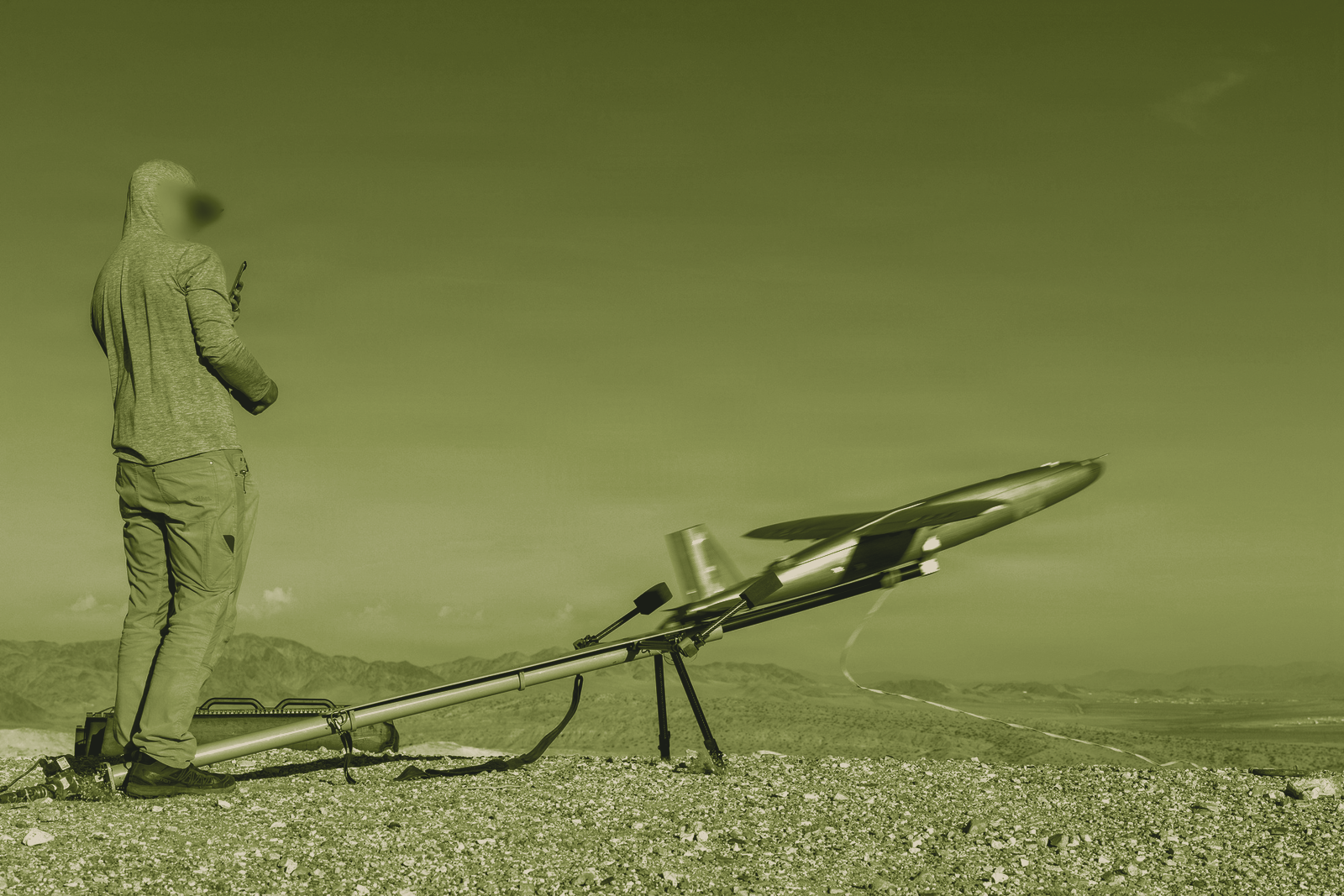
The Perennial Hornet is a ~$5,000 American one-way strike drone — an AI-guided, optically navigated fixed-wing aircraft that Ukrainian units use to hunt Russian supply trucks 50-150 km behind the front line.

Overview

The Hornet is a mid-range one-way attack drone built by Perennial Autonomy, the California defense startup founded and funded by former Google CEO Eric Schmidt. It pairs a cheap, mass-producible fixed-wing airframe with onboard AI target recognition and camera-based navigation that works with satellite navigation switched off — a design aimed squarely at Russian electronic warfare. At roughly $5,000 per aircraft with a warhead of up to ~5 kg and a reach of 50-150 km, it became the signature weapon of Ukraine's 2026 "middle-strike" campaign against Russian logistics, with the Kyiv Independent documenting Azov Corps Hornets methodically burning supply trucks on the roads that feed Russia's southern front. Russian troops call it "Martian-2," and Russian milbloggers have conceded that, for now, they have no answer to it.

The name invites confusion the record should head off: this Hornet has nothing to do with Ukraine's Wild Hornets drone workshop, the Hornet interceptor marketed by Destinus, or the F/A-18 Super Hornet fighter. It is one of three Perennial Autonomy systems — alongside the Merops interceptor and the Bumblebee quadcopter — covered by the Pentagon's $500 million JIATF-401 counter-drone contract of May 2026.

Development

Schmidt quietly launched a drone venture called White Stork in 2023 after meetings with Ukrainian officials, first revealed by Forbes in January 2024 as a US-Ukraine startup planning AI "suicide" attack drones. The company rebranded to Project Eagle in February 2024 and then to Perennial Autonomy, per Inside Unmanned Systems, staffed with engineers from Apple, SpaceX and Google alongside former Pentagon acquisition chief Will Roper. A further entity name, Swift Beat LLC, appears in Ukrainian reporting: Defense Express identifies Swift Beat as the Hornet's producer and notes Ukraine announced cooperation with it in July 2025, with stated plans for hundreds of thousands of drones of various types. Ukrainian officials first steered the company toward intercepting Shaheds — producing Merops — so the Hornet marks the return to Schmidt's original strike mission.

The type surfaced in combat quickly and anonymously: Russian monitoring channels began reporting a mysterious "Martian" drone striking vehicles near Donetsk around March 2026, per Russian analyses collected by Ukraine's Arms Monitor; Ukrainian media later identified it as the Hornet. The US Army tested the Hornet in Germany in March 2026, and on 19 May 2026 JIATF-401 included it — with Merops and Bumblebee — in a three-year, $500 million-ceiling IDIQ, per Defense News.

Design & capabilities

The airframe is deliberately unremarkable — the intelligence is in the software. Russian teardowns of captured examples, summarized by Defense Express, describe a straight-wing aircraft of about 2.2 m wingspan and 1.4 m length and roughly 15 kg takeoff weight (up to 20 kg per Russian analyses cited by Ukraine's Arms Monitor), injection-molded from foamed polypropylene with carbon spars for high-volume production. A tail-mounted electric pusher propeller gives a cruise speed of 100-120 km/h and up to ~200 km/h in a dive; rubber-damped blades and motor mounts make it acoustically quiet. There is no landing gear — launch is by portable pneumatic or tension catapult, typically from a pickup bed — and Perennial has demonstrated an aerostat air-launch that releases the drone kilometers up and dozens of kilometers downrange, extending reach toward ~300 km, per Defence Blog.

The guidance approach is the system's signature. The Hornet navigates primarily by optical flow — a downward-facing camera tracks the terrain — with GNSS reduced to occasional cross-checks or switched off entirely (one captured drone carried a Ukrainian label reading "Do not use GPS," per Ukraine's Arms Monitor), making spoofing and jamming largely irrelevant to its cruise. A Qualcomm QCS5430-based module runs the AI target-search and lock-on algorithms against a stored target database, per Defense Express; a Janes analyst told BBC Verify the targeting system was trained on thousands of hours of footage of Russian military vehicles gathered over four years of war. The drone can cruise with antennas silent, and its radio links reportedly sit in non-standard bands overlapping common Russian radios — so jamming the Hornet means jamming yourself (a Russian-sourced claim Ukrainian practitioners consider only partly plausible). Azov crews added Starlink terminals and mesh modems on their own initiative — a modification Perennial welcomed, Rob Lee of the Foreign Policy Research Institute told the Kyiv Independent. Warheads run to about 5 kg: shaped-charge/penetrator types of 1.5 kg or 4 kg plus a high-explosive fragmentation option. Reported unit cost is under €5,000 per a Bild analyst cited by Militarnyi; no official price is published.

Combat record / operational use

The Hornet's combat record is short, dense and unusually well documented — by both sides. After the first "Martian" sightings near Donetsk in March 2026, Ukraine's Azov Corps began publicizing a systematic anti-logistics campaign in mid-April, striking supply trucks along the R-280 "Novorossiya" highway linking Rostov-on-Don with occupied Crimea and the H-20 Donetsk-Mariupol road, per the Kyiv Independent. Open-source monitor Tochnyi geolocated 55 strikes on Russian logistics vehicles in April and 130 in May; a Kyiv think tank counted 125 trucks hit, over 80 destroyed. BBC Verify confirmed 14 incidents in a single late-May week and cited an analyst who had verified 150 destroyed vehicles more than 20 km behind the line — likely about half the true total. Russian drivers began calling the R-280 the "road of rage"; occupation authorities restricted civilian traffic on it, convoys were shortened, fuel queues appeared in occupied Sevastopol, Melitopol and Mariupol, and some Russian depots and command posts moved back into Russia proper. Azov's claim that the campaign can cut cargo turnover near Mariupol by up to 75% is a combatant claim, not independently established.

Kyiv institutionalized the method: on 27 May 2026 Defense Minister Mykhailo Fedorov announced the "Logistical Lockdown" program with an additional 5 billion hryvnia (~$113 million) for middle-strike units, per Foreign Policy. On the US side, the Army tested the Hornet in March 2026 and acquired initial equipment across all three Perennial platforms, per Inside Unmanned Systems; no US combat use of the Hornet is publicly documented.

Advantages

  • Interdiction economics — a ~$5,000 airframe against trucks, tankers and cargo worth far more, plus the route disruption each burning vehicle imposes.
  • EW resistance by architecture — optical-flow navigation with GNSS off and AI terminal homing removes the jamming and spoofing surfaces most drones expose.
  • Low observability in practice — quiet propulsion, low-altitude flight and radio-silent cruise mean late detection, as Russian sources repeatedly concede.
  • Mass-producibility — injection-molded structure and commercial electronics support the stated hundreds-of-thousands production ambition.
  • Fast field iteration — the maker embraced Azov's Starlink/mesh modification and demonstrated aerostat launch within weeks of fielding.

Drawbacks / limitations

  • Compromised hardware — Russia has captured, disassembled and published the design; Defense Express judges the "hard" side copyable, leaving software and the target database as the real moat.
  • Starlink dependence in extended-range modeUkraine's Arms Monitor notes Starlink-controlled operation limits use to internationally recognized Ukrainian territory, including Crimea — not Russia proper.
  • Small warhead — ~5 kg kills trucks and light armor, not hardened or large targets.
  • Source caution — figures come from Ukrainian outlets, Russian teardown channels and the maker's ecosystem; range claims span 100-200 km, weight 15-20 kg, and no official specification sheet exists.
  • Countermeasures pending — Russian units are already adapting with shortened convoys and dirt-road detours; milblogger despair ("for now, there's no solution") is a snapshot, not a verdict.

Counterparts

The Hornet's closest functional analogue is Russia's Lancet — the other purpose-built hunter of vehicles in the operational rear — though the Hornet flies farther and leans harder on optical autonomy. Western program-of-record loitering munitions like Switchblade and HERO-120 offer comparable or smaller effects at multiples of the price — the gap Perennial built into. Fiber-optic FPV drones achieve absolute jamming immunity through a physical tether but only to tens of kilometers; the Hornet trades that certainty for ten times the depth. Its sibling Merops is the defensive mirror image — same company, same cheap-mass logic, pointed at incoming drones instead of trucks.

Outlook

The Hornet sits at the center of two scaling bets. Ukraine's is operational: the Logistical Lockdown program pays for more of exactly this, and aerostat launch plus relay modems point toward deeper reach into occupied territory. Washington's is industrial: the JIATF-401 IDIQ gives the Pentagon a standing vehicle to buy the Hornet at scale, though published reporting so far documents testing and framework coverage rather than large disclosed Hornet orders. The open question is the countermeasure race: Russia has the airframe on a bench, but not — per Defense Express — the software, the four-year target-video corpus, or a cheap defense against a quiet drone that navigates by looking at the ground. If effective counters arrive, the campaign's economics compress; if not, the summer-2026 Russian commentary — "logistics will collapse" — marks the moment cheap autonomous interdiction became a standing fact of the war.

Key specifications

No official specification sheet is published; figures below are from Ukrainian reporting and Russian teardown analyses and vary between sources.

Spec Value
Type Fixed-wing one-way attack drone (mid-range strike)
Range ~100-150 km typical employment; up to 200 km reported; ~300 km demonstrated via aerostat launch
Speed (Mach / km·s⁻¹) 100-120 km/h cruise; up to ~200 km/h in dive
Warhead (type & weight) Up to ~5 kg; shaped-charge/penetrator (1.5 kg or 4 kg) or HE-fragmentation
Guidance Optical-flow visual navigation (GNSS auxiliary/off); onboard AI target recognition (Qualcomm QCS5430-based); optional Starlink/mesh datalink
Accuracy (CEP) not publicly established (video shows direct hits on moving vehicles)
Launch platform(s) Portable pneumatic/tension catapult (pickup-bed); aerostat air-launch demonstrated
Propulsion Electric pusher propeller, industrial brushless motor, ~2 kg Li-ion battery
Length / diameter / launch weight ~1.4 m long; 2.2 m wingspan; ~15 kg takeoff (up to ~20 kg per Russian teardown)

Sources

  1. Kyiv Independent — "Analysis: How Ukraine's new middle strike drone campaign aims to strangle Russian logistics." https://kyivindependent.com/analysis-how-ukraines-new-middle-strike-drone-campaign-aims-to-strangle-russian-logistics/
  2. Defense Express — "What's Special About Hornet UAV Ukrainians Using to Destroy Russian Logistics." https://en.defence-ua.com/weapon_and_tech/whats_special_about_the_hornet_uav_that_ukrainians_using_to_destroy_russian_logistics_where_did_it_come_from_and_what_are_its_key_features-18597.html
  3. BBC Verify — "Ukraine using AI drones to strike vital convoys supplying Russian troops." https://www.bbc.com/news/articles/cdjp0n7rn41o
  4. Inside Unmanned Systems — "Pentagon Awards $500M to Perennial Autonomy for Counter-Drone Interceptors Proven in Ukraine." https://insideunmannedsystems.com/pentagon-awards-500m-to-perennial-autonomy-for-counter-drone-interceptors-proven-in-ukraine/
  5. Ukraine's Arms Monitor (Olena Kryzhanivska) — "Drone warfare in Ukraine: Hornet strike drones." https://ukrainesarmsmonitor.substack.com/p/drone-warfare-in-ukraine-hornet-strike
  6. Militarnyi — "American Hornet: Strike UAV Destroying Russian Logistics." https://militarnyi.com/en/articles/american-hornet-destroying-ru-logistics/
  7. Foreign Policy — "Ukraine's Mid-Range Drones Drive Battlefield Successes in War Against Russia." https://foreignpolicy.com/2026/06/03/ukraine-mid-range-drones-russia-war-success/
  8. Forbes (David Hambling) — "Why Russians Are In Despair Over Truck-Busting 'Martian' Drones." https://www.forbes.com/sites/davidhambling/2026/05/22/why-russians-are-in-despair-over-truck-busting-martian-drones/
  9. Defense News — "Pentagon inks $500 million deal with Perennial Autonomy for counter-drone tech." https://www.defensenews.com/industry/techwatch/2026/05/19/pentagon-inks-500-million-deal-with-perennial-autonomy-for-counter-drone-tech/
  10. Forbes (Sarah Emerson) — "Eric Schmidt's Secret 'White Stork' Project Aims To Build AI Combat Drones." https://www.forbes.com/sites/sarahemerson/2024/01/23/eric-schmidts-secret-white-stork-project-aims-to-build-ai-combat-drones/
  11. Defence Blog — "Ukraine tests Hornet strike drone launched from aerostat." https://defence-blog.com/ukraine-tests-hornet-strike-drone-launched-from-aerostat/
  12. The Times — "How Silicon Valley helped give Ukraine the tech edge in war with Russia." https://www.thetimes.com/world/russia-ukraine-war/article/silicon-valley-ukraine-technology-google-palantir-v5ljjczfj
  13. US Department of War — "Joint Interagency Task Force 401 Awards $500 Million Counter-UAS Contract." https://www.war.gov/News/News-Stories/Article/Article/4495165/joint-interagency-task-force-401-awards-500-million-counter-uas-contract/
🔒 The Analyst Section on Perennial Hornet is for BattlePolicy Pro members. Below the line: procurement and contract history, the suppliers and companies behind the system, our head-to-head analyst view of the systems it actually competes with, and the BattlePolicy assessment note. Unlock the full file with BattlePolicy Pro →
Related