Ukraine's Drone Links Are Back. Musk's Terms-of-Service Claim Keeps Them Revocable
Starshield speeds returned on Oct. 24 after Trump reportedly called Musk. Musk then said SpaceX had enforced its terms against offensive drone strikes, leaving Kyiv's drone links on permission rather than contract.
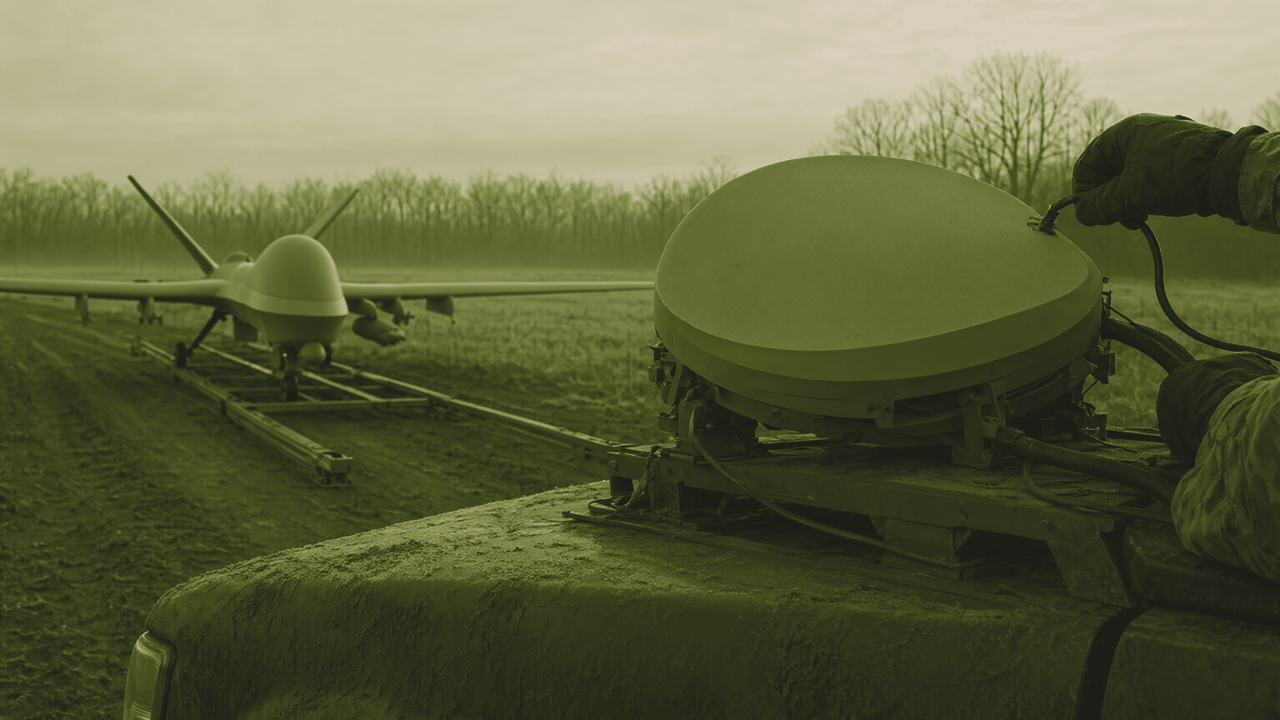
Starshield speeds returned on Oct. 24 after Trump reportedly called Musk. Musk then said SpaceX had enforced its terms against offensive drone strikes, leaving Kyiv's drone links on permission rather than contract.
Ukraine's high-speed satellite links came back on Oct. 24 after a political intervention, not a contract fix, and the man who owns the network has since said what he thinks it may not be used for. A person familiar with the matter told CNN that Donald Trump called Elon Musk to ask for full access to be restored. Trump would not confirm the call, saying only that Musk "put it back." Kyiv credited Zelensky's own "direct dialogue."
Oct. 24 restoration
For ten days from Oct. 14, Starshield terminals on Ukrainian drones lost their link above roughly 161 km/h, a ceiling that hit interceptor drones and mid-range strike drones alike. Defense Minister Yevhenii Khmara said on Oct. 24 that his ministry was recording a stable connection at speeds exceeding 400 km/h. Zelensky confirmed it the same day: "The speeds are now where they need to be."
The Institute for the Study of War put a number on the ten days: Ukraine's interception rate against Russian jet-powered drones slipped from about 77% to about 74% while the cap was in force.
Musk then supplied a rationale. In posts on X on Oct. 24-25, he wrote that Ukraine's military "violated Starlink terms of service and used it for offensive drone strikes to kill people. That loophole was closed last week." He added: "We simply enforced our terms of service when they were bypassed."
Starlink and Starshield
Musk's explanation covers the commercial service and leaves the military-service outage unexplained. On Oct. 14, he had assigned decisions about Starshield speed and usage limits to "the US military and ultimately POTUS." He still maintains that Starshield is controlled by the US government: "What they decide to do is up to them."
Serhii Beskrestnov, Zelensky's defense-technology adviser, disputed the allegation on Telegram. Ukrainian drones on commercial Starlink had been capped at 70-90 km/h for months, he wrote, and the service does not work over Russia: "we physically cannot use commercial Starlink for deep strikes and medium-range strikes."
Former Defense Ministry drone adviser Serhii Sternenko described how the split works in practice. A terminal on the move had to be placed on a special list connected to Starshield, so "all drone missions that required satellite communication could only be carried out using Starshield."
The outage Ukraine measured was therefore on the system Musk says he does not control, while the rule he invoked covers the one Kyiv says it could not have used. The Wall Street Journal has reported that Musk personally ordered the Starshield cap; Trump, asked who did, said: "I have no idea, but I wouldn't tell you if I did." The restored link solves the immediate operational problem. Nobody on the record has yet taken responsibility for the restriction it replaced.
Frequently Asked Questions
Is Ukraine's Starshield service fully restored?
Ukraine's Defense Ministry said on Oct. 24 it was recording a stable connection above 400 km/h, and Zelensky said speeds were back to pre-restriction levels. Operator logs compiled by UNITED24 show links holding at up to 470 km/h again, though a source in Donetsk told CNN that speeds there were still capped at 160 km/h on the morning of Oct. 24.
What did Elon Musk say caused the restriction?
Musk wrote on X that Ukraine's military violated Starlink's terms of service by using it for offensive drone strikes and that SpaceX "simply enforced" those terms. He maintains Starshield, the military service, is controlled by the US government.
Could Ukraine use commercial Starlink for drone strikes?
Ukrainian officials say no. Adviser Serhii Beskrestnov said commercial Starlink drones in Ukraine were capped at 70-90 km/h and the service does not work over Russia; former ministry adviser Serhii Sternenko said all satellite-linked drone missions ran on Starshield.
How much did the cap hurt Ukraine's air defense?
The Institute for the Study of War found Ukraine's interception rate against jet-powered drones fell from about 77% to about 74% between Oct. 14 and 24, and noted the data do not prove the cap alone caused the drop.
What alternatives to Starlink is Ukraine pursuing?
Ukraine's Defense Ministry signed an Oct. 22 letter of intent with Nokia and ICEYE to develop sovereign satellite communications. The EU's IRIS² constellation is not expected to launch before 2029.
AI-generated summary, reviewed by an editor. More on our AI guidelines.
Read next — from the Lexicon
Below this point
- From 161 to 470 km/h
- ISW's three-point decline
- Nokia, ICEYE and the 2029 timetable
- Congress and Musk's mission rules
- What to watch in November
From 161 to 470 km/h
The restored speed matters because 161 km/h constrained the aircraft carrying the terminal, not an operator's internet connection. UNITED24's operator timeline records stable Starshield links approaching 470 km/h before Oct. 14. At 1:43 a.m. that day, the threshold fell to 60 km/h; by 8:13 p.m., it had risen to 161 km/h. Roughly that limit persisted through the disruption.
The same timeline places the recovery between 1:10 a.m. and 6:10 a.m. on Oct. 24, when tests again held connections at 470 km/h, two days after Trump's assurance that service was back.
Restoration leaves a separate speed problem intact. A soldier with the call sign Gendalf in the 112th Territorial Defense Brigade told the Kyiv Independent that the rotary-wing interceptors available to his unit reach about 320 km/h at full throttle. Some Russian jet-powered drones, the paper's reporters noted, fly at about 600 km/h. Removing the communications ceiling lets an interceptor use the performance it has. It does not make a slower aircraft faster.
A Ukrainian Armed Forces officer interviewed by CNN described connection losses lasting 10 to 15 seconds and said units "lost a lot of assets, much more than usual." The account supplies no loss total. The officer said the cap hit reconnaissance drones and drones carrying Starlink-equipped systems.
The same dependency runs through Ukraine's strikes on Russian supply lines. UNITED24 places Middle Strike operations at 50 to 300 kilometers over Ukrainian territory, including occupied areas, and recorded a significant drop in successful attacks on Russian logistics routes and vehicles on the day the cap began.
ISW's three-point decline
Ukraine absorbed the disruption without a collapse in jet-drone defense. ISW's Oct. 25 assessment found interceptions fell from about 77% to about 74% over Oct. 14-24. Three percentage points is a measurable deterioration, and the data do not establish that the communications cap alone caused it.
The aggregate rate also hides what the fallback costs. ISW identifies interceptor drones as Ukraine's most effective layer against jet-powered drones, and those drones depend heavily on Starshield at high speed. The fallback is F-16s firing scarce air-to-air missiles or closing to cannon range, which demands skill, raises the risk to pilots and aircraft, adds maintenance load to a fleet already short of it, and pulls fighters off other missions. ISW also describes gun turrets around Kyiv, while cautioning that a nationwide rollout would take time and resources and would not suffice alone.
The layered defense held for ten days with those costlier layers behind the interceptor drones. That is a tolerable exposure once, not a plan for a restriction that can recur whenever the network owner's reading of "offensive" changes.
The latest reported night gives a reference point. Ukraine's Air Force said defenses shot down or suppressed 56 of 70 jet-powered drones overnight on Oct. 26, 80%, out of 140 drones launched in total. One night proves little, but it is a baseline later nights can be measured against.
Industry is moving on the speed gap. Andrii Hrytseniuk, then head of Brave1, said on Oct. 18 that seven Ukrainian interceptor types had already downed jet-powered drones, 22 teams were developing high-speed systems, and the government had ordered more than 1,000 of the new interceptors, with production still expanding. Faster airframes and a link that holds at their speed have to reach units together.
Nokia, ICEYE and the 2029 timetable
Ukraine's Oct. 22 letter of intent with Nokia and ICEYE targets the part of the dependency faster interceptors cannot solve. The Defense Ministry's stated objective is "sovereign satellite communications." A letter of intent establishes an intention. It does not yet establish an operational replacement with delivery dates.
Zelensky stated the requirement directly when the deal was announced: "We must all rely on capabilities that we can control." For a drone unit, control means more than buying access. It means knowing which missions the network will carry and that the answer will not change while aircraft are in the air.
Paying for access has not bought that. Starlink generated $5.25 billion in revenue in the third quarter of 2026, up from $3.1 billion a year earlier, with $2.13 billion from government and enterprise customers, by CNBC's figures. Poland, France and the Pentagon are among those paying for Ukraine's hardware and service. None of those payments prevented an unannounced change to the service.
Poland is drawing up national plans of its own, and the EU does not expect the first launches of its IRIS² constellation until 2029.
The commercial opening is therefore narrower than satellite internet in general: terminals small enough for an aircraft, links that hold at interceptor speeds, and a customer who decides the mission. Moritz Brake of the Center for Advanced Security told NBC News that Musk's ability to limit Starlink gives him "enormous leverage." Until the Nokia-ICEYE letter becomes a contract with a delivery schedule, that leverage stands.
Congress and Musk's mission rules
Washington's unresolved chain of authority now has congressional consequences. Rep. Jason Crow called Musk's apparent ability to restrict the service "beyond disturbing" on Face the Nation, and said he had written to Trump with Adam Smith of the Armed Services Committee and Jim Himes of the Intelligence Committee demanding answers.
Sen. Adam Schiff said that if Democrats win the Senate, Defense Secretary Pete Hegseth should testify about the slowdown: "Somebody is lying here." Sen. Richard Blumenthal has opened an investigation into how Ukraine lost access, according to Reuters. Restored speeds answer none of their questions about who ordered the cap.
Musk's posts state both Ukraine's dependence and his politics. "Were Starlink to be turned off, the Ukrainian front line would collapse immediately," he wrote, calling it "NOT a threat." Hours later he answered "Yes" to a user who wrote that Zelensky needs to go.
His stated boundary permits Starlink to serve "infrastructure that is military" while barring "unequivocally offensive strikes that make it fair game to be struck back." He has not said which missions fall on which side of that line, or why Starshield, which he assigns to government control, lost speed. Middle Strike drones hunting fuel trucks up to 200 kilometers behind the front run on Starshield, not commercial Starlink, yet they lost speed with everything else, and nobody has said under which rule. Kyiv needs the rule written down by someone accountable before another restriction makes operators discover it in flight.
What to watch in November
- Starshield terms: whether SpaceX or the Pentagon publishes Ukraine's permitted uses and names who can alter the service.
- Speeds through the talks: whether high-speed connections hold through the trilateral negotiations Russia agreed to resume next month.
- Congressional records: whether the Crow-Smith-Himes letter or Blumenthal's investigation establishes who ordered the cap.
- Nokia-ICEYE: whether the letter of intent becomes a contract with delivery dates.
- Jet interceptors: whether deliveries against the government's 1,000-plus interceptor order hold the jet-drone rate at or above the 80% the Air Force claimed on Oct. 26.

Marcus Schuler
Marcus Schuler edits BattlePolicy, a daily defense-technology brief connecting the companies and capabilities behind modern war to the contest among Europe, the US, Russia, and China.