Russia Fired 36 Ballistic Missiles at Kyiv Before Abu Dhabi. Ukraine Stopped Four
Ukraine goes into the Abu Dhabi talks with its Patriot magazine nearly empty and its refinery drones still flying. The strike war is the leverage both sides carry, and the U.S. agenda does not name it.
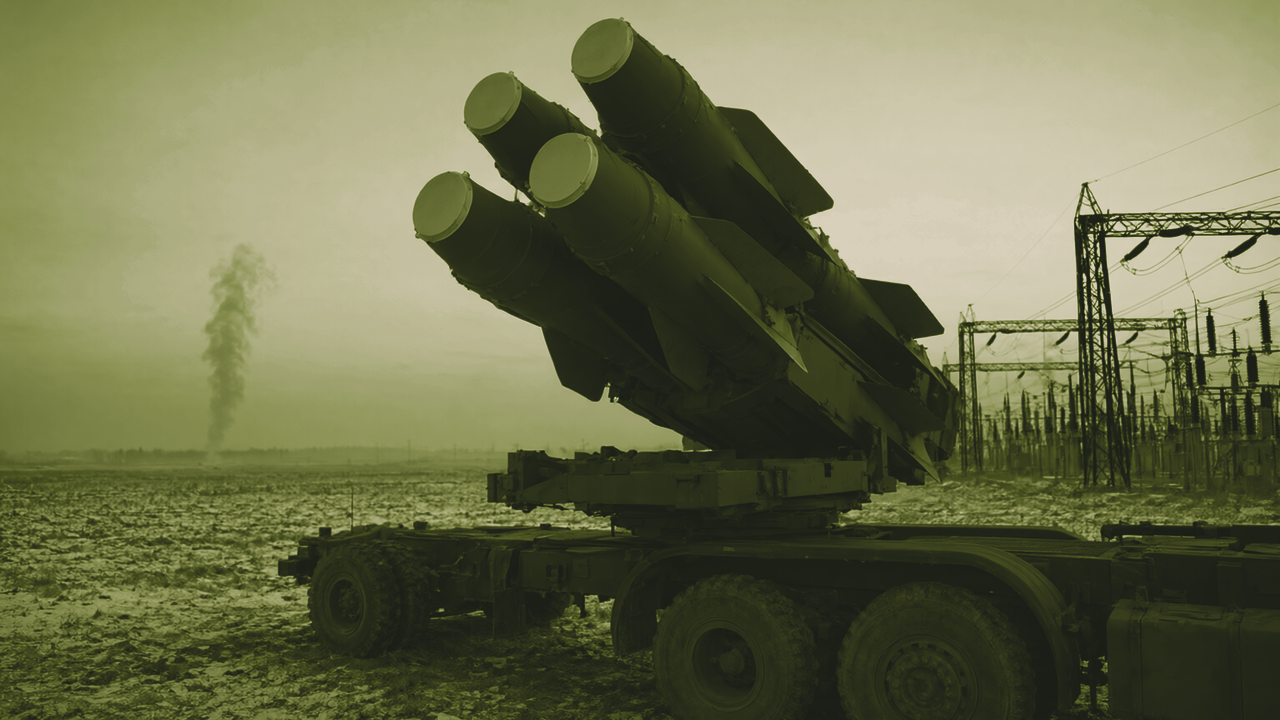
Ukraine goes into the Abu Dhabi talks with its Patriot magazine nearly empty and its refinery drones still flying. The strike war is the leverage both sides carry, and the U.S. agenda does not name it.
Kyiv, Nov. 7
Ukraine enters the Nov. 10-11 Abu Dhabi talks unable to stop Russian ballistic missiles in any number. Russia fired 36 of them at Kyiv and Kyiv Oblast overnight Nov. 6-7, and only four were neutralized, President Volodymyr Zelensky said. He blamed a "significant shortage of interceptors for Patriot systems" and said forensic teams had found North Korean KN-23s among the missiles fired at an energy facility.
Ukraine's Air Force counted 172 Shahed-type drones that night, 137 of them jet-powered, and claimed four ballistic missiles and 149 drones shot down or suppressed. The strikes hit substations that connect the Rivne and Khmelnytskyi nuclear plants to Kyiv and central Ukraine, Zelensky said. Six missiles were fired at the Northern Bridge and four struck it; Mayor Vitaliy Klitschko closed the crossing in both directions.
Ukraine answered with the one long-range lever it builds itself. Its forces struck the Saratov refinery the same night, at least the eighth strike on that plant in 2026, according to the Institute for the Study of War. On Nov. 9, Leningrad Governor Alexander Drozdenko said Ukrainian long-range drones had started a fire at KINEF near St. Petersburg, one of Russia's largest refineries.
Kyiv has already put a price on that campaign. Zelensky told Fox News Ukraine would stop hitting refineries if Russia stopped attacking its energy system, or in exchange for Patriots: "give me Patriots for one month" for a month without refinery strikes.
That is the trade that sits under the talks. Russia can exploit a depleted air defense, and Ukraine can hold Russian fuel production at risk. The agenda Washington has published is about something else.
Abu Dhabi, Nov. 10-11
The delegations meet for the first time in nine months, since February's round in Geneva. Davyd Arakhamia said foreign intelligence chief Rustem Umerov would lead Ukraine's team, with Kyrylo Budanov, Serhiy Kyslytsya and Arakhamia himself. The Kremlin has named Vladimir Medinsky to lead Russia's, with deputy foreign ministers Sergei Ryabkov and Mikhail Galuzin, military intelligence chief Igor Kostyukov and Yuri Zhygarlovsky of the General Staff.
U.S. envoy Steve Witkoff has listed security guarantees for Ukraine, Europe's postwar security architecture and reconstruction economics. Jared Kushner named four priorities: ending the conflict, preventing it from reigniting, reviving Ukraine's economy and humanitarian aid. Neither list names the strikes on refineries and power grids that both sides were still trading on the eve of the talks.
Frequently Asked Questions
How many Russian ballistic missiles did Ukraine intercept on Nov. 7?
Four of 36 fired at Kyiv and Kyiv Oblast overnight Nov. 6-7, according to President Zelensky, who blamed a shortage of Patriot interceptors.
When will Europe's Patriot shortage ease?
In about a year, Bloomberg reported, when missiles ordered from European production arrive. Ukraine is due 600 German-built PAC-2 interceptors in 2027 and 2028. The 500 PAC-3 MSE approved by the U.S. on Oct. 30 are not expected before 2030.
What is the RM-48U?
A converted air-defense target missile Russia now fires at ground targets from adapted S-400 systems. Ukraine's HUR says it carries a 199 kg warhead, has a 400 km range, and that Russia plans to build more than 480 in 2026.
Who is attending the Abu Dhabi talks?
Ukraine's delegation is led by Rustem Umerov, Russia's by Vladimir Medinsky, and the U.S. mediators are Steve Witkoff and Jared Kushner. An EU team, the E3, Italy and NATO will be present, though the Kremlin says the format is trilateral.
What has Zelensky offered on refinery strikes?
He told Fox News Ukraine would halt refinery strikes if Russia stopped attacking Ukraine's energy system, or for one month in exchange for one month of Patriot interceptors.
Read next — from the Lexicon
Below this point
- The interceptor arithmetic
- Russia's cheap ballistic supply
- Bryansk launchers and Russian refineries
- Witkoff's security agenda
- What to watch
The interceptor arithmetic
Europe cannot refill Ukraine's launchers this winter. European PAC-2 and PAC-3 inventories have fallen to minimal levels, Bloomberg reported Nov. 9, and governments will not transfer more without firm U.S. guarantees of replacement. Relief is expected in about a year, when missiles ordered from European production begin to arrive; Ukraine is due 600 German-built PAC-2 interceptors in 2027 and 2028.
Germany has reached its limit. "Everything we provide now, we would not be able to replenish for the time being," Defense Minister Boris Pistorius told Focus. "More is not possible right now."
The U.S. approved a possible $2.1 billion sale of 500 PAC-3 MSE interceptors on Oct. 30. Those are new-build missiles, and diplomatic sources told Kyiv Post deliveries will not begin until after 2030. Approval of a sale does not put a single round in a launcher this winter.
Zelensky has put Ukraine's need at no fewer than 100 PAC-3 interceptors a month. His "queue-swapping" plan seeks 10 to 30 missiles from partners' active inventories. Set those numbers against Nov. 7: 100 a month requested, four of 36 stopped in a single night.
Two longer-term fixes sit on paper. Bloomberg's report noted a PAC-3 production agreement for Poland announced in late October and a Trump pledge to allow interceptor production in Ukraine that has not been implemented. Neither changes what is in European depots now, and access to those depots depends on Washington's replacement guarantees.
Russia's cheap ballistic supply
Russia's side of the ledger is growing. Ukraine's military intelligence directorate, HUR, estimated a stockpile of up to 700 ballistic missiles as of October 2026, with Iskander-M production at 65 a month and the Iskander-M stockpile 13% higher than in August.
The cheaper weapon matters more. HUR's technical assessment describes the RM-48U as a target missile, originally built to simulate ballistic threats in air-defense training, that Russia is restoring and converting into a ground-attack weapon fired from adapted S-400 systems. It carries a 199-kilogram fragmentation warhead and has a range of 400 kilometers. Ukrainian intelligence expects Russia to produce more than 480 in 2026, against just over 200 in 2025. In July, Russia launched a record 158 ballistic and hypersonic missiles, 87 of them RM-48Us, according to Ukrainian intelligence data reviewed by Reuters.
The RM-48U is inaccurate: Ukrainian military experts cited by Reuters put its average miss at about 300 meters. bne IntelliNews assessed that its growing use lets Russia conserve Iskander-M, KN-23 and Zircon missiles for the winter strikes on energy. Ukrainian officials have not said which type hit the Northern Bridge.
HUR found 117 foreign electronic components in the missile, 95 of them from U.S. brands. That is an export-control problem for another year. This winter, a converted training missile still forces Kyiv to choose between spending a Patriot round it cannot replace and accepting the hit.
Bryansk launchers and Russian refineries
Ukraine is trying to stop the missiles before launch. ISW assesses that Kyiv is targeting launch sites and missile production to reduce Russia's ability to conduct ballistic strikes as its air-defense stocks dwindle.
Ukraine's General Staff claimed strikes on two Iskander launchers and a Pantsir-S1 air-defense system in Bryansk Oblast on Nov. 6-7. It also claimed a Neptune cruise-missile strike on the Proton-Electrotex plant in Oryol, which makes optoelectronic equipment including Iskander-M parts. Those claims establish the targets. They do not show how many launches were prevented.
The refinery campaign kept running into the talks. On Nov. 9, Russia's Defense Ministry said it had targeted four substations in the Kyiv, Dnipropetrovsk, Cherkasy and Vinnytsia regions, and Ukraine's Air Force counted 317 drones overnight, 105 of them jet-powered. The same day, Drozdenko reported the KINEF fire.
Kyiv wants more reach. ISW argues that a relatively small number of Western missiles, Tomahawks among them, would let Ukraine strike Russia's drone plants at Alabuga and the bombers at Engels-2. Zelensky asked Germany on Nov. 5 for Taurus cruise missiles to hit ballistic-missile launchers.
The refinery strikes are what Kyiv can offer to suspend; the strikes on launchers and factories are what it does instead of intercepting. If Washington wants the first paused, it has to deliver either Russian restraint on the grid or the Patriots Zelensky asked for.
Witkoff's security agenda
The U.S. agenda widens the negotiation without naming the attacks that shape it. Russian Foreign Minister Sergey Lavrov said Trump's team had put "collective security," covering a wider area than Russia and Ukraine, at the top of the agenda. The Washington Post reported that Moscow is celebrating a strategic win, according to Western and Russian officials and analysts, after drawing Washington into calling for "a broader European security architecture."
Kyiv and Brussels see danger in that framing. Zelensky called the broader arrangement Trump had described "dangerous" and invoked Yalta. "Any European security framework is up to the European Union to decide," Commission spokesperson Paula Pinho said. Russian Foreign Ministry spokesperson Maria Zakharova called any foreign deployment to Ukraine "categorically unacceptable."
Europe will be in the building, if not at the table. An EU team led by Bjoern Seibert and Anna-Maria Boura will attend with national security advisers from France, Germany and Britain, plus Italy, and NATO will send Chief of Staff Geoffrey Van Leeuwen, the Commission and a NATO official said. Kremlin spokesperson Dmitry Peskov insisted the format is trilateral; Umerov said Kyiv will coordinate separately with the Europeans.
Commission President Ursula von der Leyen backed Zelensky's call for a ceasefire covering food and energy infrastructure. It is the one proposal on the table that addresses the strike war directly. An energy truce would trade Ukrainian restraint on refineries for Russian restraint on the grid, and it would blunt the advantage Russia draws from Ukraine's interceptor shortage.
Trump told "60 Minutes" the two sides are "very close" and that Ukraine would have "a little bit different shape." Former U.S. ambassador John Herbst wrote for the Atlantic Council: "Perhaps the only outcome of the talks will be to agree to another round." A readout that names an energy ceasefire would be a firmer measure of progress than either forecast.
What to watch
- An energy-infrastructure ceasefire. Whether any Abu Dhabi readout names refinery and grid strikes, the reciprocal restraint Zelensky has proposed.
- Existing PAC-3 stocks. A European release against U.S. replacement guarantees would matter this winter; another production announcement would not.
- The next ballistic salvo. The ratio of missiles fired to missiles stopped, as Zelensky reported it on Nov. 7. Ukraine's military stopped regularly publishing launch and intercept counts on Aug. 11.
- Ukraine's target list. Strikes on launchers and plants such as Proton-Electrotex against refinery strikes while the talks run.
- Europe's Nov. 13 meeting in Ireland. EU leaders will take up Giorgia Meloni's complaint about fragmented representation and her call for a special envoy, which decides who carries Europe's position into the next round.

Marcus Schuler
Marcus Schuler edits BattlePolicy, a daily defense-technology brief connecting the companies and capabilities behind modern war to the contest among Europe, the US, Russia, and China.