RussiaPro
ZALA KUB-BLA
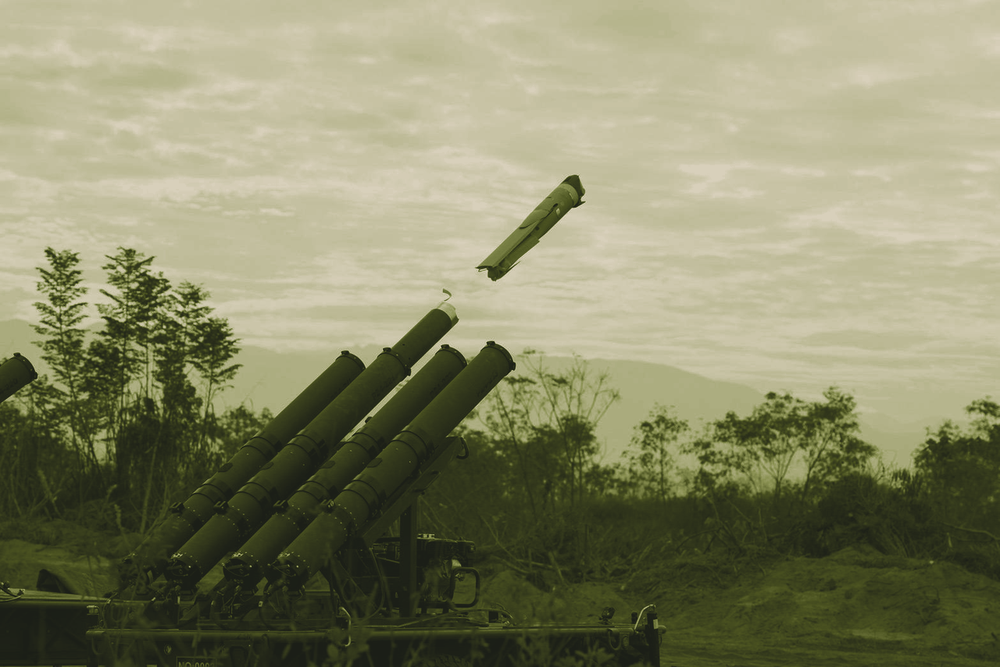
The ZALA KUB-BLA is a Russian catapult-launched loitering munition designed to attack fixed coordinates, with an expanding family of longer-range and electro-optically guided derivatives.
ALTIUS-600M and 700M are Anduril one-way attack drones, with 600M delivered to Taiwan and both models contracted for Ukraine.
The ZALA KUB-BLA is a Russian catapult-launched loitering munition designed to attack fixed coordinates, with an expanding family of longer-range and electro-optically guided derivatives.
LUCAS is a US long-range one-way attack drone derived from the Iranian Shahed-136 and designed to deliver affordable mass through coordinated, expendable strike formations.
The RAM-2X is a Ukrainian X-wing loitering munition designed to attack air-defense systems, radars and other high-value targets at ranges of up to 180 km.
Helsing's first combat drone — a plywood-framed, AI-guided loitering munition co-produced in Ukraine. It launched badly enough that Kyiv stopped ordering, then improved enough to hit better than half its targets around Pokrovsk.
The small Shahed. About two-thirds the weight of a Shahed-136 with roughly a third of the warhead and a rotary engine, it entered Russian service as the Geran-1 in 2022 and is still a separately planned production line four years later.
Russia's second Shahed line — built not at Alabuga but by Almaz-Antey subsidiary Kupol in Izhevsk, with Chinese engineering help. Heavier warhead than a Geran-2, now sold abroad by Rosoboronexport and fielded in Mali.
The largest and fastest member of Russia's Geran family — a 6.5-metre, cruise-missile-shaped "missile-drone" flying at up to 600 km/h with a 90 kg warhead, air-launchable from a Su-25 and reportedly able to carry an air-to-air missile of its own.
UVision's CORTEX is a battle-intelligence and mission-management layer, launched in June 2026, that fuses sensor feeds and routes targets to the company's Hero, Viper and Peregrine loitering munitions, letting one operator supervise many munitions across air, land and sea.
The Shahed-101 is Iran's small one-way-attack drone — the quiet, catapult-launched progenitor of the Shahed-107, used by Hezbollah and Iraqi militias since 2021, confirmed in Ukraine from late 2025 (all-Iranian parts), and refielded in an electric, near-silent variant for Iran's 2026 Gulf strikes.
The Shahed-107 is Iran's mid-range strike drone reportedly built for Russia's war — announced as a 1,500 km HIMARS hunter, revealed by Ukrainian teardown as a ~300 km, 15 kg-warhead X-tail drone hitting the near rear. The gap between those two descriptions is the story.
The V2U is Russia's autonomous AI strike drone — Nvidia Jetson brain, terrain-matching navigation, and late-2025 builds recovered with no radio link at all: nothing to jam. CSIS assesses Russia has likely fielded a fully autonomous weapon in combat. Maker unknown.
The "bigger brother" of the Shahed-136 — Iran's large, long-range kamikaze drone, unveiled with the boast that it was built to hit Tel Aviv and Haifa. Claimed to fly ~2,000 km with an anti-radar seeker, it's real and fielded — and US forces have already blown one up.
Russia's jet-powered Shahed, built to outfly the cheap interceptor drones that were knocking propeller Shaheds down. Early figures said the speed cost it range. A year of upgrades says otherwise: 850 km declared, 960 km flown, 96% of Ukraine in reach.
The jam-proof attack drone reshaping the front: a standard FPV flown down a hair-thin glass fiber instead of a radio link — immune to every electronic-warfare countermeasure, and the weapon that pushed the "kill zone" from 10–20 km out to 50.
Anduril's man-portable VTOL loitering munition — AI-guided, returnable if no strike, and the U.S. Marine Corps' first squad-level autonomous organic precision fires system, ordered under the $249M OPF-L program.
Germany's combat-proven eVTOL loitering munition — a VTOL, AI-guided one-way attacker that pairs with reconnaissance drones for EW-resilient precision strikes.
Iran's jet-turbine loitering munition — a faster, costlier successor to the Shahed-136, fielded by Russia as the Geran-3 and by Iran itself in the Gulf.
Israel's air-launched turbojet loitering cruise missile — man-in-the-loop precision and multi-platform flexibility from F-16s to PULS MLRS. Combat-proven since the 2006 Lebanon War, and used to suppress Iranian air defences in the 2026 Iran campaign.
Turkey’s man-portable quadcopter loitering munition — embedded machine-learning autonomy, swarm-capable, and the world’s most cited alleged lethal autonomous weapon system.
Israel's pioneering anti-radiation loitering munition — a delta-wing flying-wing drone that autonomously hunts and destroys radar emitters over 200 km, firing no active signal, and the genealogical root of the Harop family that reshaped SEAD in Nagorno-Karabakh and South Asia.
A canister-launched, electric-propulsion loitering munition for precision anti-armor strikes with man-in-the-loop control, adopted by the US Army and Marine Corps.
Elbit Systems’ SkyStriker — a canister-launched, electric loitering munition with a 5–10 kg warhead, 100–200+ km range, abort-and-relaunch capability, and tight integration with the PULS rocket launcher.
Israel Aerospace Industries' canister-launched, man-in-the-loop loitering munition — built to hunt and kill air defenses, high-value targets and radars after hours of silent search.
Germany's software-defined AI one-way attack drone — an electrically propelled loitering munition with 100 km range and on-board AI for jamming-resistant precision strikes, fielded by Ukraine and under evaluation by NATO armies.
Russia's first jet-powered Shahed — a turbojet bolted onto a Geran-2 airframe to outrun cheap interceptors. It worked well enough to prove the concept and badly enough to be cancelled: Moscow halted production in August 2026 in favour of the purpose-built Geran-4 and Geran-5.
Ukraine’s primary strategic one-way attack drone — a 2,000 km-range pusher-prop system that has carried the war to Russia’s energy heartland, hitting refineries and military plants from the Caspian Sea to the Komi Republic.
China's tube-launched, electric loitering munition — a man-portable, recoverable-or-lethal reconnaissance-strike system that can be launched singly or in swarms from a 48-tube vehicle, and is being aggressively export-marketed alongside the larger Rainbow and Wing Loong families.
Russia's dominant loitering munition — an electric X-wing anti-materiel drone with shaped-charge, fragmentation, and thermobaric warheads, used at mass scale against artillery, armor, and air-defense assets in Ukraine.
The Switchblade family of tube-launched, man-portable loitering munitions — the 300 for anti-personnel and the 600 for anti-armor — delivers precision strike with real-time operator oversight, and has been battle-proven in Ukraine.
Iran-origin, Russia-built long-range one-way attack drone — the saturation-strike icon of the Ukraine war, fired in mass nightly salvos to exhaust air defenses and strike infrastructure at a cost-exchange ratio that has rewritten the economics of strategic bombardment.