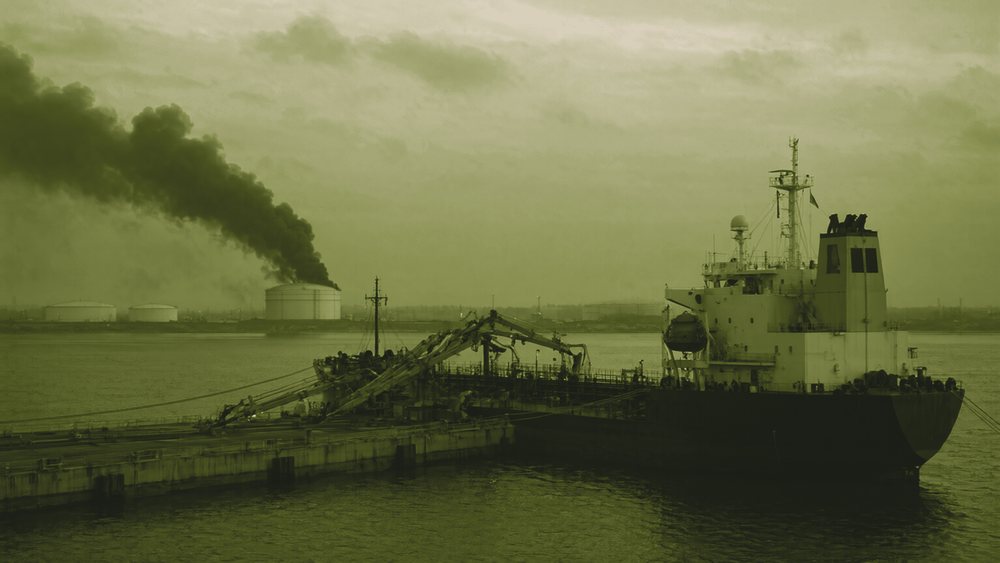
Russia's first diesel tanker for the US sails Thursday with 40,000 tonnes. How many follow depends on refinery units and export terminals that Ukraine's drones keep hitting.
Kyiv says money, not factory space, caps its drone output, and EU loan money already pays for Ukrainian drones. The extra €70 billion it wants for 2027 has no source yet.
Lockheed showed a Patriot successor due in 2031 on the day Poland said its own PAC-3 deliveries will slip. Ukraine's ballistic defense this winter rests on missiles allies already hold.
Freya is a Ukrainian-led European ballistic-missile defence project combining Fire Point's FP-7.x interceptor with European sensors and command systems. It remains in development, without a demonstrated ballistic interception.
FP-9 is Fire Point's developmental Ukrainian ground-launched ballistic missile, with a claimed range of up to 850 km and payload of up to 800 kg. No flight or combat use is publicly documented as of 10 October 2026.
The European Commission disbursed €1.24 billion for Ukrainian-made weapons the same morning Moscow claimed it struck Fire Point's missile and drone facilities.
Ukraine's first announced FP-7 combat launch gives Kyiv a domestic ballistic strike weapon. Fire Point's faster FP-7.x interceptor faces a harder test, and both depend on production Ukraine has not yet shown.
Fire Point’s FP-7 tests and delayed Danish propellant plant show how technology access, procurement and factory output condition Kyiv’s negotiating leverage.
Fire Point can now damage Moscow's oil economy, but Russia brings more weapons, industrial capacity and societal slack to a winter campaign that is already spilling into NATO airspace.
Kyiv's strike ledger overstates the Russian refining capacity offline at one time. The harder metric is whether repeat strikes keep plants broken faster than Moscow can repair them, and that is the leverage Trump wants frozen.
Zelensky listed a weapon called Pelican in the largest strike on Moscow Oblast. It may be Fire Point's FP-7 ballistic missile or a fixed-wing drone, and the FP-7's published range rules out a direct hit on Moscow.
Fire Point makes 300 to 400 long-range attack drones a day. Washington is asking Kyiv to curb their refinery mission while the Gulf drives the larger diesel shock.
The FP-7 is a Ukrainian ground-launched tactical ballistic missile under military evaluation, designed to carry up to 150 kg over a stated 200 km range.
The FP-1 is a Ukrainian long-range one-way attack drone built by Fire Point for high-volume strikes against static targets deep inside Russian territory.
The Ukrainian manufacturer tied two deep strikes inside Russia to the mass-produced weapons it says fund its FP-7 ballistic missile, now weeks from combat use.
Ukraine's Special Operations Forces struck two gas condensate plants in Yamalo-Nenets on Sept. 9, a record 3,200 km out. The campaign has moved past oil refining into Gazprom's Arctic production core, 600 km from the LNG project Europe still buys from.
Ukraine's long-range drone volume is forcing Russia to halt its own flights, and that is changing the risk calculation for the foreign carriers that still profit from shorter routes across the country.
Denmark removed more than 20 legislative barriers so Fire Point could cast solid rocket propellant at Vojens, beyond the strikes hunting its Ukrainian plants. The site now carries a 150 million euro budget, nearly triple the original, and slips to the end of 2027.
Ukraine's FP-1 drones finished a Tambov warehouse they first struck in July, turning repair for Russian owners from a one-time expense into a recurring cost.
The Navy's $22.9 billion, seven-year Tomahawk award gives Raytheon the certainty to build toward 1,000 missiles a year. It does not buy back the 1,000-plus fired at Iran: rocket-motor lead times set the clock, while Ukraine's Fire Point builds 100 cheaper cruise missiles a month.
Ukraine is containing Russia's cheap drones but failing against ballistic missiles, so Kyiv is attacking the ground network that generates strike mass while it races to build a domestic interceptor.
Fire Point has closed agreements with 13 European partners, but national licensing rules now threaten a mid-2027 interceptor that Ukraine needs before Patriot supplies recover.
One Kirov factory supplies K-36DM escape seats for Russia's fighter fleet and feeds the Tor missile line. Ukraine reached it with a domestic cruise missile at roughly 1,200 kilometers.
Ten nations adopted Fire Point's FREYJA as Europe's anti-ballistic program, France licensed Aster and SCALP production inside Ukraine, and five companies signed on to build the layer above it. The air-defense pipeline just reversed direction.
Russia suspended shipping across the Sea of Azov after Ukrainian drones hit 105 vessels in eight days. The blockade was imposed without a single major warship, and the bill is landing on wheat, fuel and the shadow fleet.
A $50,000 drone flew 2,500 kilometers to Omsk and completed a target list Kyiv worked through for two years. Reach is no longer the problem. What remains is a race between repair crews and strike tempo, and a second front against the tankers that move whatever Russia still refines.
Trump granted Ukraine a license to build Patriot interceptors and said the US would buy Ukrainian drones, while Germany signed to produce Kyiv's Bars missile-drone. In one Ankara afternoon, the four-year one-way arms pipeline became two-way trade.
On NATO summit day, Ukraine flew drones 3,000 km to hit Russia's largest refinery and stopped none of 29 ballistic missiles over Kyiv. The split is the war's next phase.
A new S-400 ring is rising in Moscow's parks just as Kyiv fields balloon-launched, jam-proof weapons built to drift over it. The capital's fortification is an admission, not a solution.
The war is pushing Ukraine's battlefield-proven drone and electronic-warfare firms up the value chain into missiles and air defense, and they are already selling the idea to Europe.
Russia says it stopped 660 Ukrainian drones in one night. The number, not the price tag, is the new weapon, and the damage has now crossed into Kazakhstan.
Ukrainian maker Fire Point now fields strike drones from 50 to 3,000 kilometers, the range behind Kyiv's deepest strike of the war and a worsening Russian fuel crisis.
Ukraine's largest strike on Moscow in years broke three layers of reinforced air defense and burned the same refinery twice in a week, turning the deep-strike campaign into a sustained bombing of Russia's energy economy its scarce interceptors cannot stop.
Combat-proven Ukrainian strike weapons are becoming NATO's shortcut around a deep-strike gap that Europe's own programs will not close until the 2030s.
Ukrainian intelligence says Moscow is burning through its S-300 interceptors faster than it can replace them, and the same arithmetic now drives Ukraine and its partners toward a cheaper interceptor.
The Armiansk strike leaves Russian units on the Huliaipole axis without an intact road bridge out of Crimea, Ukraine's strike units say, and fuel stations on the peninsula are already running dry.
Ukraine's second Flamingo strike on the Cheboksary plant that builds Kometa anti-jamming antennas shows a deep-strike campaign that now targets the components keeping Russia's Shaheds and Iskanders on course.
Britain, France and Germany agreed to back an anti-ballistic system built around Ukraine's FP-7.x interceptor, a $700,000 missile that just hit 25 km in testing, while German industry showed its own cheap-intercept hardware at ILA Berlin.
Ukraine's homegrown deep-strike cruise missile — a 3,000 km-range, heavy-warhead missile built for mass production at low cost to hit Russian military-industrial targets.
Kyiv's homegrown cruise missile returned to Cheboksary and hit VNIIR-Progress, the sanctioned producer of Kometa anti-jamming antennas that steer Russia's drones, missiles and glide bombs through Ukrainian jamming.
Syrskyi's new Rocket Forces and Artillery concept commits Ukraine to mass-producing its own missiles out to 2,000 km. The real target is dependence on weapons Kyiv cannot build, buy freely, or fire without permission.
Ukraine's largest missile maker flew a prototype interceptor it says could stop ballistic missiles for under $1 million each, against a PAC-3 that runs $5.3 million, if it works by 2027.